The Harsh Reality of Data Governance
💥 80% of data governance initiatives fail. Not because of tools. Not because of frameworks. But because the business isn’t involved, and no one agrees on what data truly matters. That’s where Critical Data Elements (CDEs) change everything. They force a conversation between IT and business about what matters. And that’s when governance stops being overhead and begins driving results.
What Are Critical Data Elements?
Critical Data Elements (CDEs) are specific data points that are vital for core business functions and processes. Unlike the traditional “all data matters” approach, CDEs recognize a key truth: some data elements are much more important than others. These aren’t just any data points—they are the backbone of your operations, the foundation of your decision-making, and often the difference between business success and failure.
Identifying CDEs is a vital step in data governance because it changes how organizations handle data quality. By focusing on the quality and accuracy of these critical elements, organizations can run more smoothly, reduce risks, and make better data-driven decisions.
What Defines a Data Element as “Critical”?
High Impact Errors: Errors in CDEs can lead to major issues like financial losses, dissatisfied customers, or legal complications. For instance, incorrect customer account numbers result in failed transactions, while inaccurate patient medication data can jeopardize lives. Business Process Backbone: Critical data elements are essential for key business functions, serving as the gears that enable smooth operations. Regulatory Compliance: Certain data must meet legal standards. Regulations such as GDPR, BCBS 239, and HIPAA not only suggest good data practices but also mandate them.
While specific CDEs differ across industries, here are some real-world examples. In finance, focus areas include customer account numbers, transaction details and amounts, security codes, authentication data, credit scores, and risk assessments. Healthcare prioritizes patient identifiers, medical history, diagnoses, medication details, dosages, and insurance and billing information. Retailers emphasize product data and SKUs, customer purchase history, pricing, promotional codes, inventory levels, and supplier data.
The Three-Step Framework for Operationalizing CDEs
Step 1: Identify What’s Critical: Automatically
Use a manual scoring model to assess which data elements impact customer experience or regulatory reporting, are used to calculate KPIs, appear in multiple systems or dashboards, are identified as critical by the business, or trigger downstream processes. Each criterion should be weighted based on your organization’s specific priorities. As a rule of thumb, if a data element scores ≥5 points across these criteria, it’s a CDE that deserves prioritization.
Automated CDE Discovery: While manual scoring provides business context, modern data platforms can accelerate CDE identification through intelligent automation. DataOps Data Quality TestGen uses data profiling and semantic models to automatically surface potential Critical Data Elements, dramatically reducing the time and effort required for discovery.
Data Profiling Intelligence With Semantic Model Recognition: Advanced data quality tools can recognize common business patterns and data types that typically represent CDEs. Customer identifiers, financial amounts, regulatory codes, and other semantically significant elements are automatically tagged for review, saving data teams from manually sifting through thousands of data points.
This automated approach doesn’t replace business judgment—it enhances it. Your data teams can focus on validating and refining the algorithmically identified CDEs rather than starting from scratch, significantly accelerating your path to effective data governance.
Step 2: Certify & Test: Data Quality Testing CDEs
Apply strict data quality controls to your CDEs: Implement rigorous data validation rules, ensure consistent naming conventions, track comprehensive metadata, and assign clear ownership. If you can’t name the owner, it’s not certifiable. Accountability is non-negotiable for CDEs.
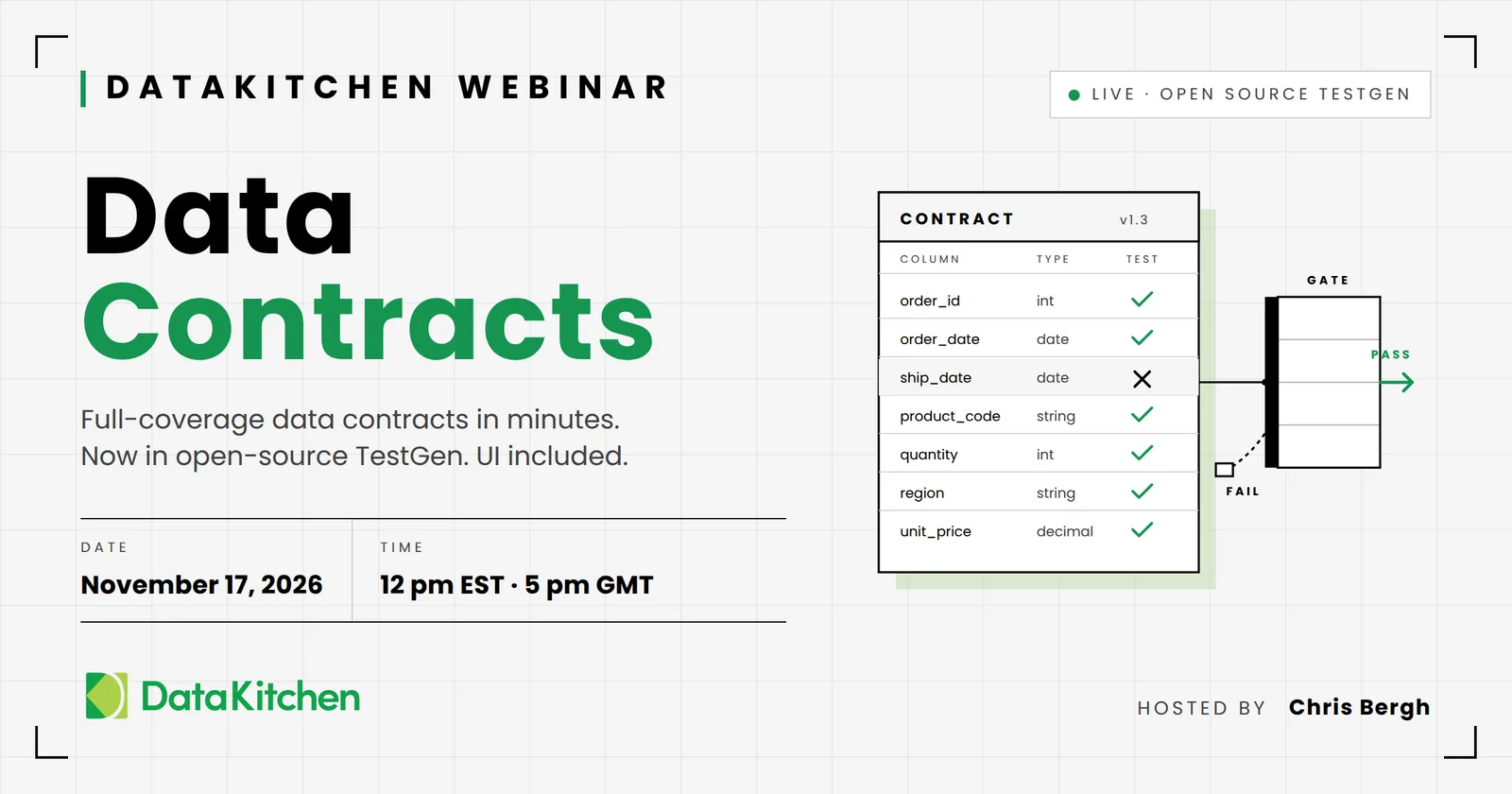
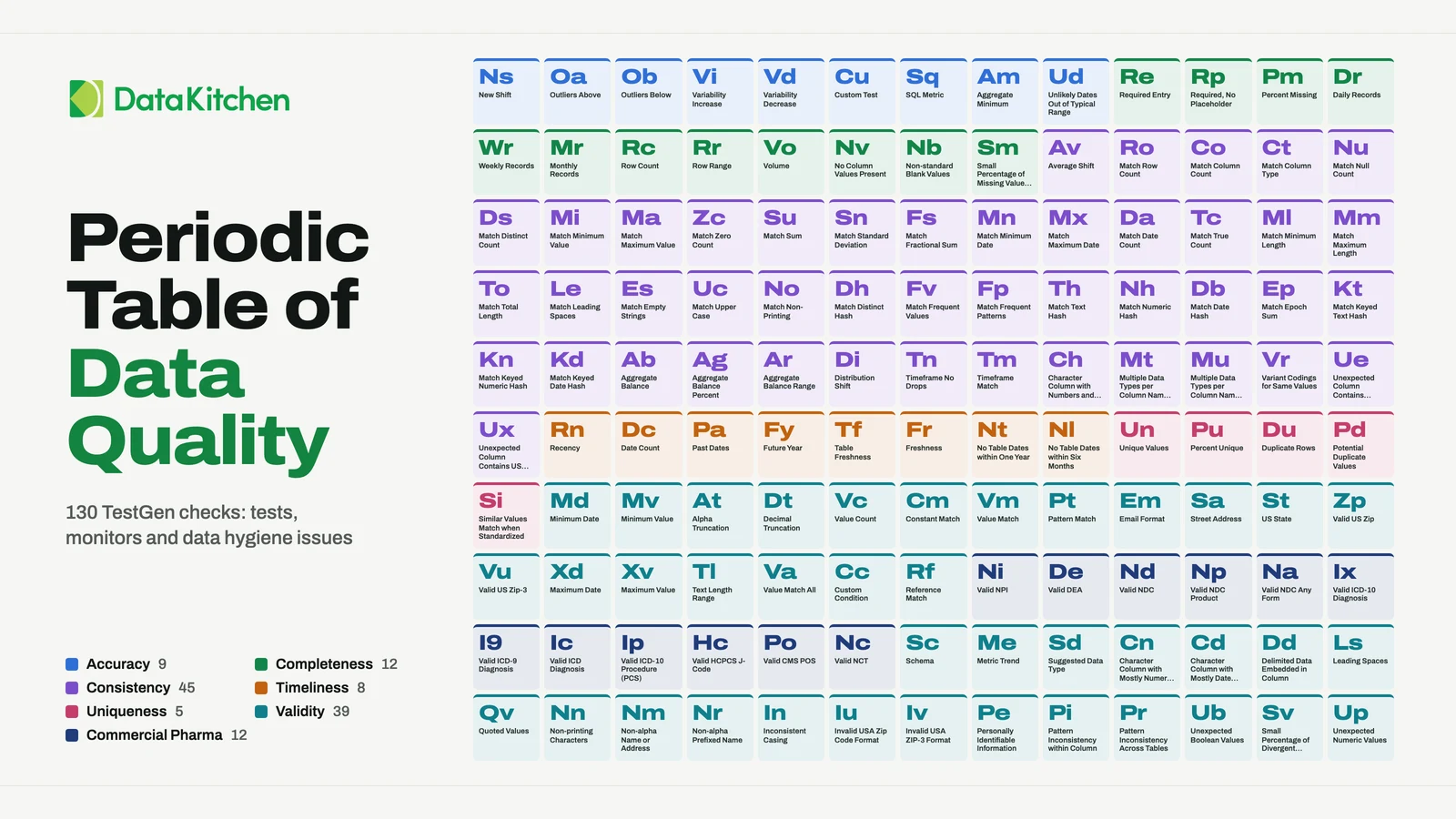
DataOps Data Quality TestGen has revolutionized this certification process by automatically creating over 30 different test types for CDEs with just the click of a button. These automated tests include completeness checks, format validation, range verification, referential integrity tests, statistical anomaly detection, and business rule validation. What once required weeks of manual test development can now be accomplished in minutes, allowing data teams to focus on governance strategy rather than getting bogged down in technical implementation. The platform intelligently selects the most appropriate test types based on data profiling results and semantic understanding of each CDE, ensuring comprehensive coverage without overwhelming teams with unnecessary complexity.
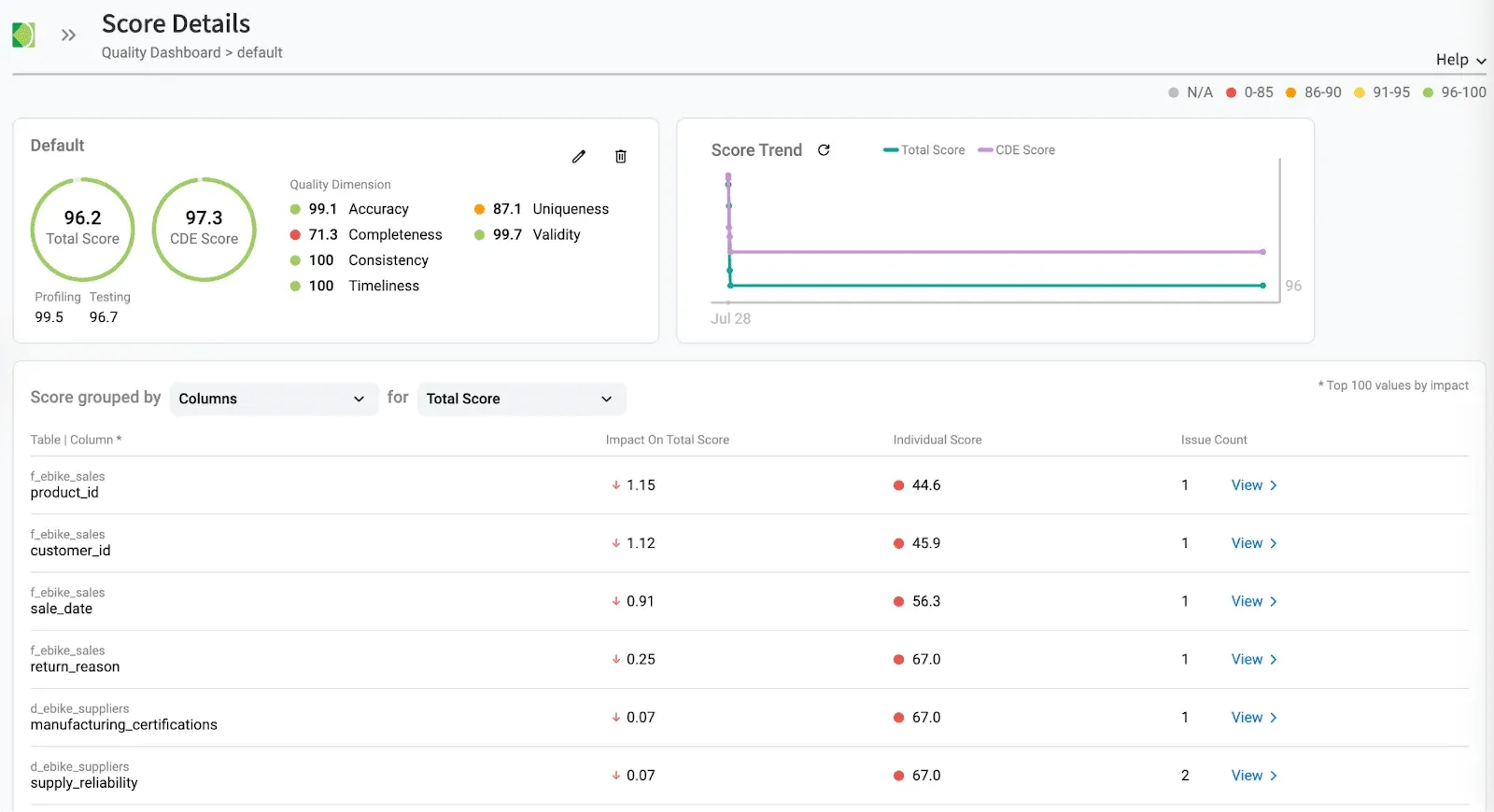
Step 3: Govern Like a Product: The Power of Data Quality Dashboards in CDE Monitoring
Don’t just “fix data.” Manage CDEs like products across their lifecycle: Define → Deliver → Monitor → Improve. This mirrors agile product development, treating your most important data with the same rigor you’d apply to your core products.
The “Monitor” phase of CDE lifecycle management is where data quality dashboards become indispensable. Just as product teams rely on analytics dashboards to track user engagement and performance metrics, data teams need comprehensive visibility into their Critical Data Elements.
Modern data quality platforms like DataOps Data Quality TestGen provide open-source solutions that make CDE monitoring accessible to organizations of all sizes. These dashboards offer:
Real-Time CDE Health Monitoring: Track the quality metrics of your most critical data elements in real-time, with alerts when thresholds are breached. Instead of discovering data quality issues during monthly reports, you catch them as they happen.
Historical Trend Analysis: Visualize how your CDEs perform over time. Are customer account numbers becoming less accurate? Is there a pattern to when product pricing data fails validation? These trends reveal systemic issues that need addressing.
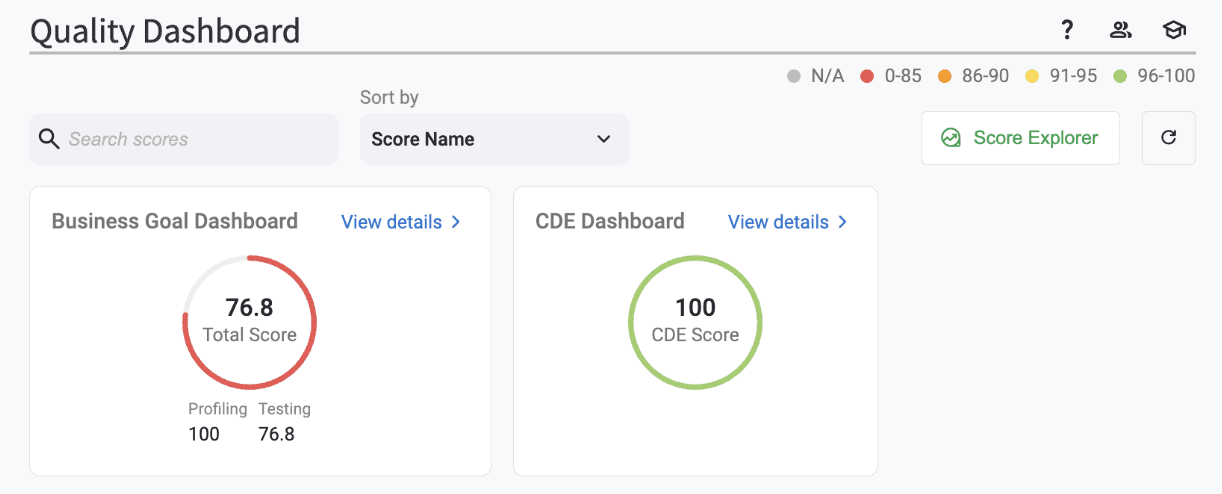
Automated Quality Scoring: Implement the scoring models discussed in Step 1 directly into your dashboard. Watch as data elements automatically get flagged as critical based on their usage patterns, business impact, and quality metrics. Data Quality Tests show you precisely what is wrong.
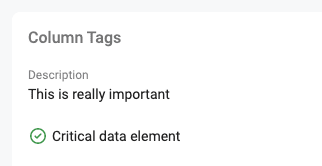
Collaborative CDE Metadata: Modern DQ dashboards enable data stewards, business users, and IT teams to collaborate on quality issues directly within the platform. Comments and metadata tracking keep everyone aligned on CDE efforts.
The beauty of open-source solutions like TestGen is that they democratize data quality monitoring. You don’t need enterprise-level budgets to implement sophisticated CDE tracking—you need the right approach and commitment to treating your critical data like the valuable assets they are.
The Focused Impact of CDEs on Data Quality Testing
CDEs transform data quality testing by offering: Prioritization of efforts—allowing organizations to concentrate resources on the most impactful data elements instead of trying to perfect everything. Targeted data quality rules—applying validation, cleansing, and standardization processes where they are needed most. Enhanced regulatory compliance—making it easier to meet legal requirements when knowing precisely which data elements are regulated. Improved decision-making—providing a dependable base for data-driven choices through high-quality CDEs. Risk mitigation—protecting critical data to help prevent operational, financial, and reputational damage.
Breaking the 80% Governance Failure Rate
CDEs address the root cause of data governance failure: lack of business alignment. When you can point to specific data elements that directly impact revenue, customer satisfaction, or compliance, suddenly everyone understands why data quality matters. This isn’t about perfect data everywhere—it’s about perfect data where it counts. Ask yourself and your team:
- Can we name our CDEs? If not, you’re managing data blindly.
- Are they agreed upon? Uncertified critical data is a ticking time bomb.
- Do we trust that those CDEs are accurate? If the data is of poor quality and not monitored, why bother?
- Can we measure and monitor these CDEs over time?
CDEs serve as your quick access to data value, enabling focused governance, simplifying compliance, and increasing trust in AI and BI projects. More significantly, they turn data governance from a cost center into a strategic advantage. The organizations that succeed will be those that identify their critical data elements and give them the attention they require.
FAQ
What are the key points in this blog?
Roughly 80 percent of data governance initiatives fail, usually because the business is not involved and nobody agrees on which data matters. Critical Data Elements fix that by narrowing governance to the fields with real consequence. The post gives a three-step framework: identify what is critical using a scoring model, certify and test those elements, then govern them like a product with a dashboard.
What is a Critical Data Element (CDE)?
A Critical Data Element is a data field whose accuracy carries real operational, financial, or regulatory consequence. Customer identifiers, revenue figures, and fields named in regulations like GDPR, BCBS 239, or HIPAA are typical examples. The point of naming CDEs is to stop treating all 4,000 columns as equally important, because a governance program that prioritizes everything prioritizes nothing.
How do you identify Critical Data Elements?
Score each candidate element against criteria that matter to your organization: customer impact, financial exposure, regulatory obligation, and how many downstream systems depend on it. As a rule of thumb, an element scoring 5 or more points across those criteria is a CDE worth prioritizing. Scoring beats debate, because it produces a defensible list instead of the loudest stakeholder’s opinion.
Why do most data governance initiatives fail?
Because they start with frameworks and tools rather than with agreement about which data matters. Around 80 percent fail, and the pattern is consistent: the business never gets involved, so governance becomes a documentation exercise that data teams maintain alone. CDEs break that cycle by forcing a specific, short list the business has a reason to care about.
How do you test and monitor Critical Data Elements?
Apply stricter validation to CDEs than to ordinary fields, then track them on a dashboard the business actually reads. Open-source DataOps TestGen generates over 30 test types against CDEs from a profiling run, so certification does not depend on somebody hand-writing rules for each one. Score them continuously rather than certifying once and assuming it holds.
What is the difference between a CDE and a data quality dimension?
A dimension describes how you measure quality: completeness, accuracy, timeliness, consistency, uniqueness. A CDE describes what you measure it on. Dimensions are a broad brush across everything, which makes them abstract and hard to act on. CDEs narrow the scope to fields with consequence, which is what makes the resulting score persuasive to somebody outside the data team.