DataGovOps
Modernize Data Governance with DataGovOps
Your governance docs go stale the day they ship. CDE lists in a Confluence page, PII tags in a spreadsheet, lineage diagrams a consultant drew last year. TestGen and DataOps Observability replace those docs with metadata that updates on every run, so your team stops apologizing when an auditor asks for the latest version.

Key points
- Governance documents go stale the day they ship: CDE lists in a Confluence page, PII tags in a spreadsheet, lineage a consultant drew last year.
- DataGovOps replaces the static artifact with a monitor, so the critical data element list is tested continuously instead of reviewed annually.
- A catalog and process lineage derived from what actually runs cannot drift from production the way a hand-drawn diagram does.
- Continuous data quality monitoring is what makes a governance claim auditable rather than aspirational.
Continuously Monitor Data Quality
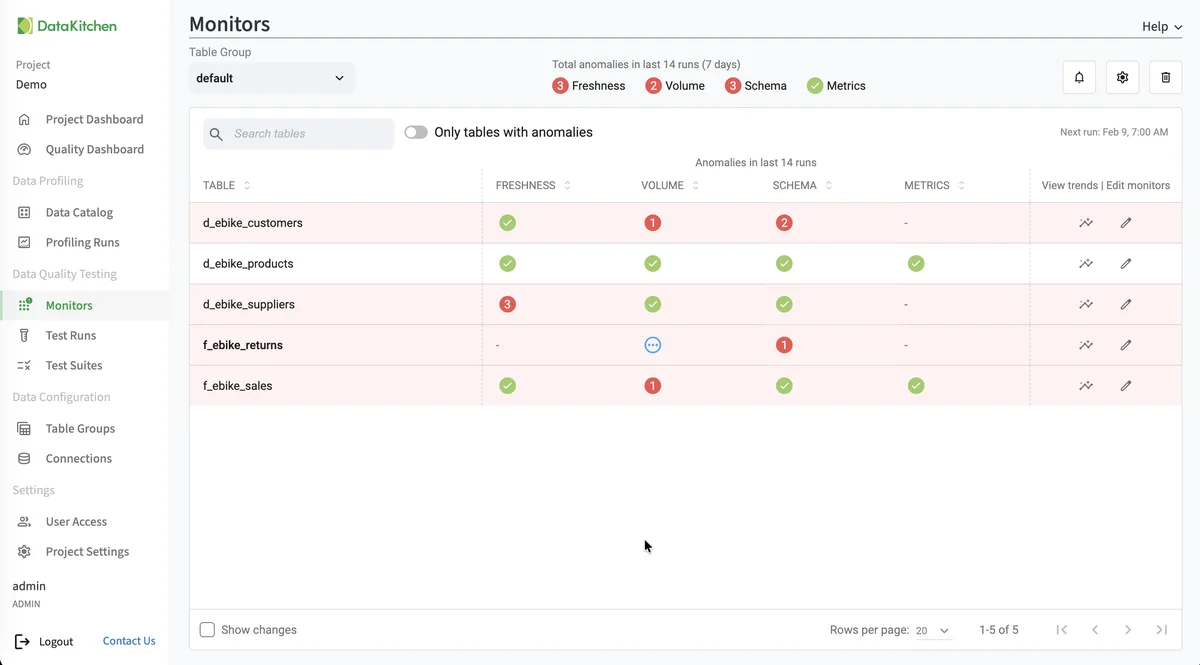
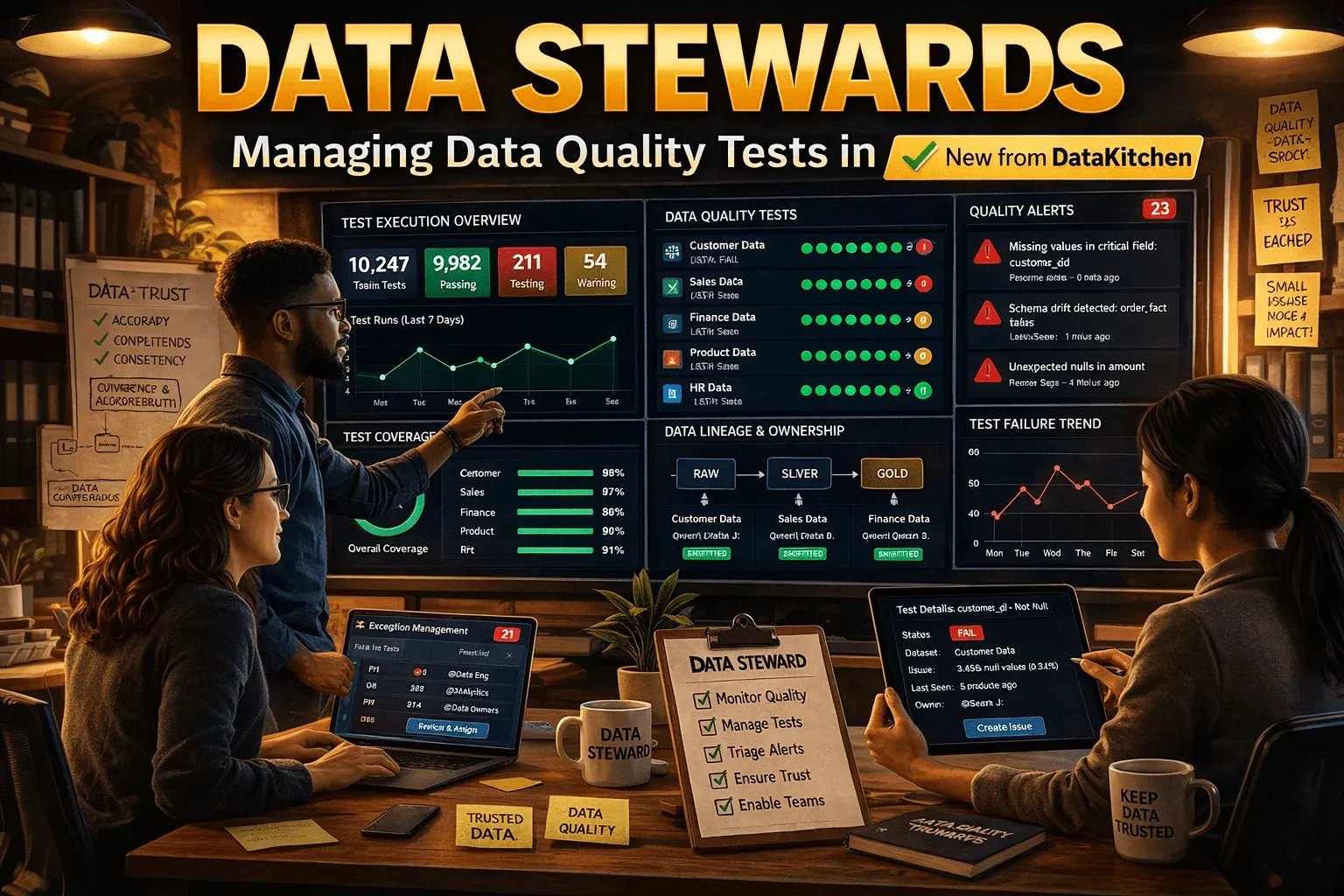
TestGen is open source. Point it at your tables and it profiles every column. It generates thousands of data quality tests automatically, then re-runs them on every refresh. The Monitors page rolls anomalies up by table across freshness, volume, schema, and metrics, so at a glance you see which tables are healthy and which are drifting. Drill into any table for a 14-day trend chart with anomaly markers. Set notifications when a test fails, score every column with a quality grade, and tag CDEs and PII as you find them. No vendor lock-in. No consultant required to stand it up.
View your Data Catalog
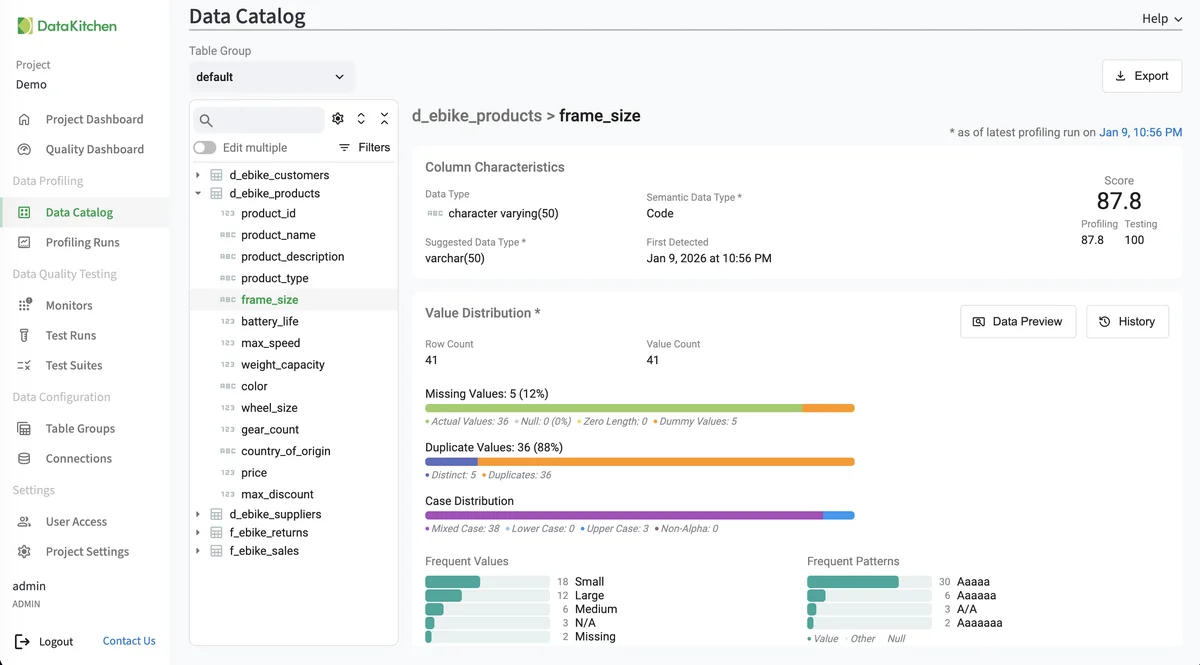
TestGen profiles every column in every table and writes the results into a built-in Data Catalog. You see data type, suggested type, value distribution, missing-value rate, duplicate count, and a quality score on every column. Mark a column as a CDE or PII, name a business owner, set a semantic data type. Those tags stick. The next profiling run refreshes every fact about the data underneath while preserving what you wrote. Your governance catalog stays current because TestGen runs on a schedule, not on a quarterly spreadsheet update somebody forgot about.
Process Lineage at Your Fingertips
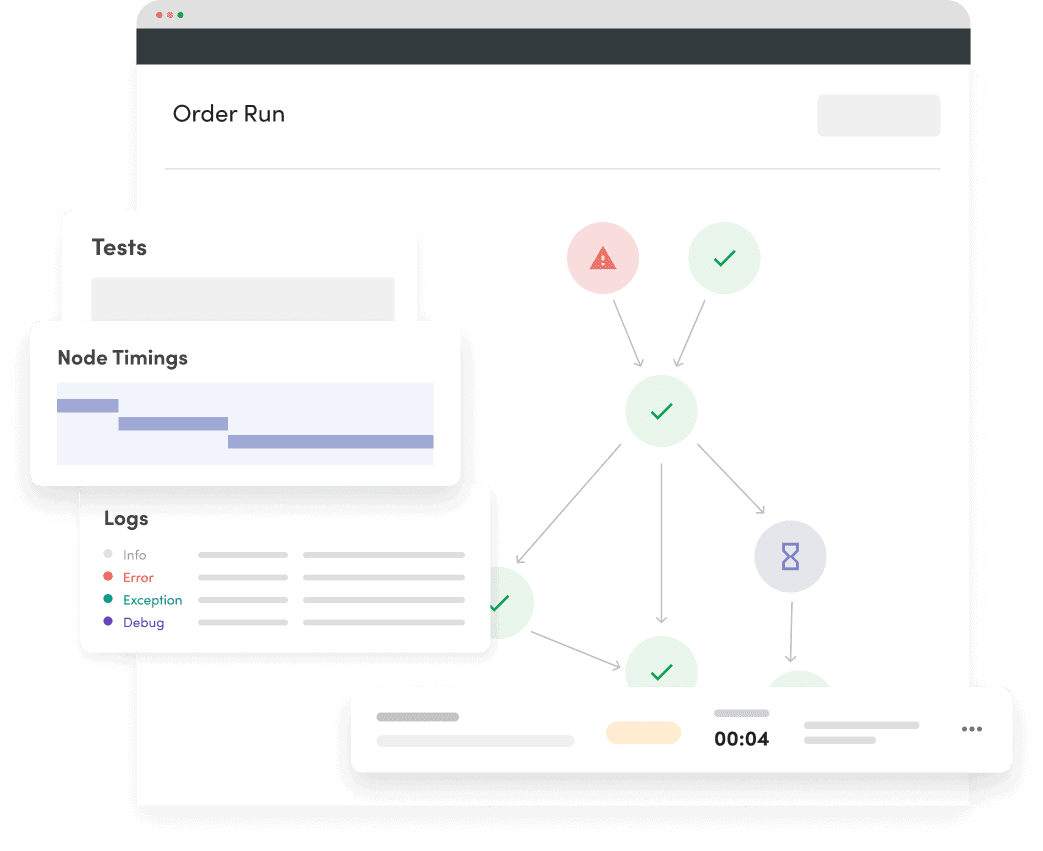
Data lineage shows you which tables feed which dashboards. Process lineage shows you what happened on the way: the job, the run, the test result, how long it took, where it broke. DataOps Observability records every step the data passed through, end to end. When an auditor asks who ran what last Tuesday at 3am, you have the answer in three clicks instead of three days of grep.

Answers
Questions this page answers
- Why do two dashboards show different numbers for the same metric?Two dashboards disagree for five common reasons: different definitions, filters, or refresh times, a fanned-out join, or messy category values.Read the answer →
- What should go in the handover when your only data engineer leaves?A handover checklist for when your only data engineer leaves: credentials, schedules, dependencies, definitions, tests, incident history, and recovery.Read the answer →
See DataKitchen in action
Learn how DataKitchen helps data teams deliver high-quality analytics with less stress and fewer errors.
Frequently Asked Questions
Common questions about DataGovOps
What is DataGovOps?
DataGovOps applies DataOps practice to governance: instead of maintaining CDE lists and PII tags as documents, the definitions live in a system that tests them continuously. The difference is that a stale governance doc looks identical to a current one, while a failing test does not.
Why do governance documents go stale?
Because they are written once and the estate keeps moving. A CDE list in Confluence and PII tags in a spreadsheet are accurate the day they ship and quietly wrong a quarter later. Nothing errors when they drift, so nobody finds out until an audit or an incident.
How do you keep critical data element lists current?
Attach a test to each one. When a CDE has a running test, its definition is exercised on every scan, and a change in the underlying data shows up as a failure rather than as a document nobody re-read. That converts governance from documentation into something with a heartbeat.
What is the difference between governance and data quality?
Governance decides what matters and who owns it. Data quality measures whether those things are correct. Governance without measurement produces policy nobody can verify; measurement without governance produces findings nobody has agreed are important.
How does this work with an existing catalog?
It complements rather than replaces it. A catalog records what exists and who owns it. DataGovOps adds the running tests that prove the governed fields are actually correct, which is the part catalogs do not do and are not designed to do.
What tooling does this need?
Open-source DataOps TestGen for the profiling, test generation, and scoring, which is Apache 2.0 and runs behind your firewall. The governance side is process rather than product: naming the critical elements, assigning owners, and reviewing on a schedule.