Released in TestGen 5.185.1 · Open Data Contract Standard (ODCS) v3.2.0
Open source data contracts, with a test behind every rule.
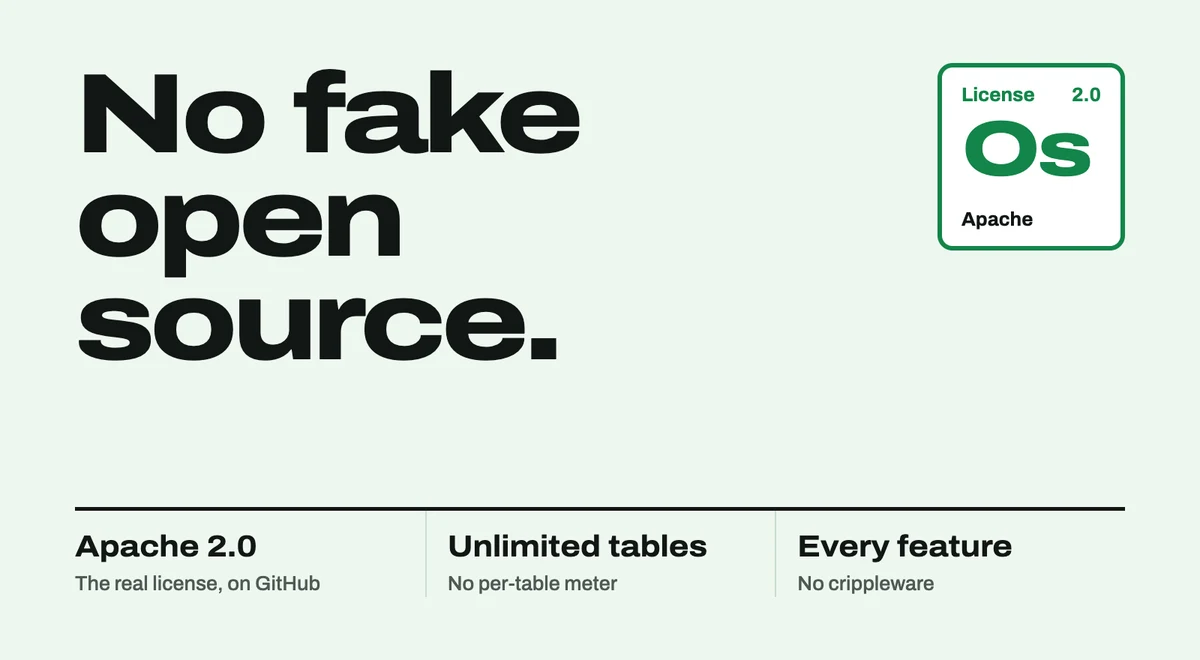
TestGen writes the data contract from one profiling run of your tables, or imports your supplier’s ODCS file. Every quality rule becomes a test that runs on a schedule. Freeze numbered versions, export any version as ODCS, and hand the contract to your supplier. Released November 12, 2026, and free under Apache 2.0. Watch the data contract round trip demo →
Install TestGen
Pick your platform. Free and open source.
# TestGen install for Mac, Linux.
# Download the latest installer.
$ curl -o dk-installer.py \
  'https://raw.githubusercontent.com/DataKitchen/data-observability-installer/main/dk-installer.py'

# Run the install command.
$ python3 dk-installer.py tg install

# Full docs: docs.datakitchen.io/testgen/get-started/install-on-mac-linux/- Double-click
dk-installer.exein your Downloads folder. - If Windows shows a protection warning, choose More info, then Run anyway.
- Pick TestGen, then Docker or pip. The installer seeds demo data, opens the UI, and prints your login.
# Full docs: docs.datakitchen.io/testgen/get-started/install-on-windows/
- 55data profiling column characteristics
- 32data hygiene detectors
- 34test types auto-generated from the profile
- 19business rule and custom SQL test types
Data contracts on the Open Data Contract Standard (ODCS)
A data contract nobody tests is just a document. Treat it like a receipt, not a legal document: lightweight proof that the data you ordered arrived as specified. TestGen runs a test behind every quality rule.
- One view, every contract
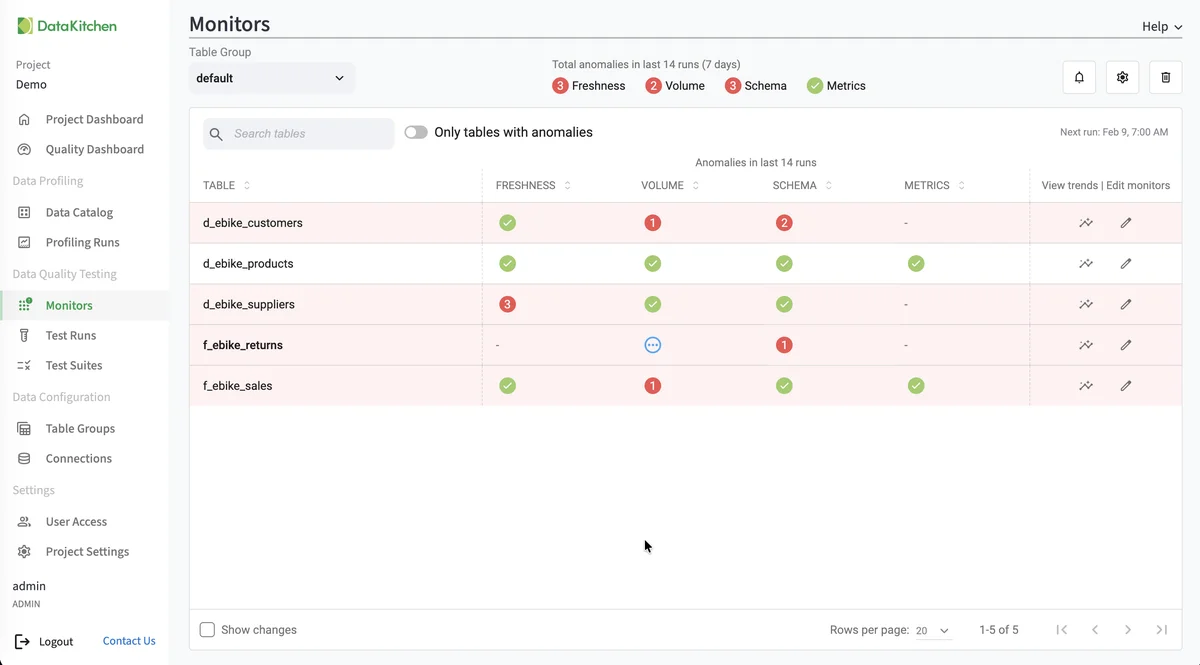
- Test Suites shows each contract with a Contract badge, its active version, and the latest run’s passed and failed tests. No dashboards to build.
- Every quality rule, tested
- The contract page lists its quality rules. When one fails, you see the table, the column, and the threshold. Each declared table also gets a Schema Conformance test. Service levels are documented, not tested.
- Open standard
- ODCS import and export: bring in a supplier’s Open Data Contract Standard (ODCS) file, or export any version as a complete ODCS v3.2.0 document. Compare any two versions to see what changed.
- Generated, not typed
- One data profiling run of 55 column characteristics produces the schema and the tests, not just types and required flags.
- Hand it to your supplier
- TestGen is open source: no account, no seat count. Your supplier installs it, runs the contract before they ship, and you stop playing goalie.
- Where it runs
- Inside your database, as read-only SQL: SQL Server, Azure SQL, Fabric, Snowflake, Databricks, Postgres, and more.
Every quality rule, tested
The terms and conditions of a data contract are data tests. A 40-column table needs about 150 of them. TestGen’s Contract generation set writes the core checks, listed first on each card. You add the rest from TestGen’s other generation sets and monitors.
-
Required fields stay filled
Columns the contract says are never null, never blank and never a placeholder.
-
Values stay in range
Minimums, maximums and the values nobody expected.
-
Formats and patterns hold
IDs, codes, emails and text lengths in the agreed shape.
-
Keys stay unique
Business keys and rows that must not repeat.
-
References resolve
Codes and keys that must exist in the reference data.
-
Delivery is on time and complete
Freshness and volume terms: it arrived, and all of it arrived.
Key capabilities
Everything below is in the open source release, data contracts included. Enterprise adds team access, security, and support.
-
Data Contracts (documentation, opens in a new tab)
Pick tables you've profiled and TestGen writes the contract: an ODCS document plus a test behind every quality rule. Freeze it in numbered versions, compare any two, and import or export ODCS so producers, consumers, and suppliers run the same agreement.
-
Auto-Generated Tests (documentation, opens in a new tab)
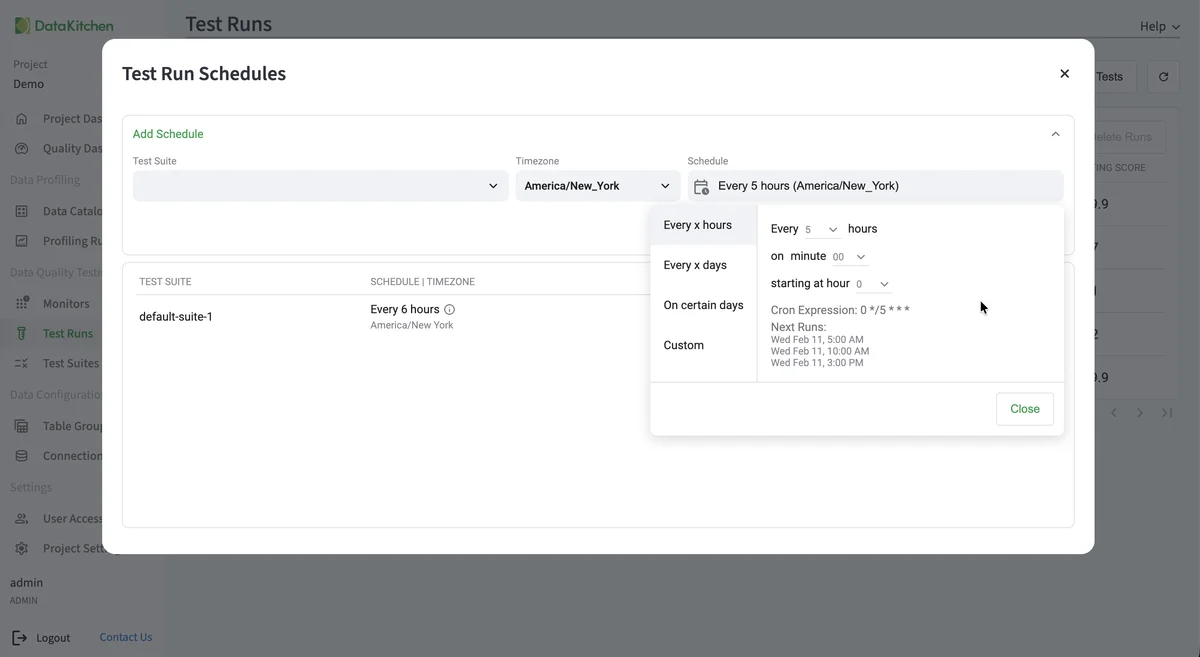
Point TestGen at your data and it generates the tests automatically. Profiling, validation, and execution included. No coding or YAML configuration required.
-
Data Profiling (documentation, opens in a new tab)
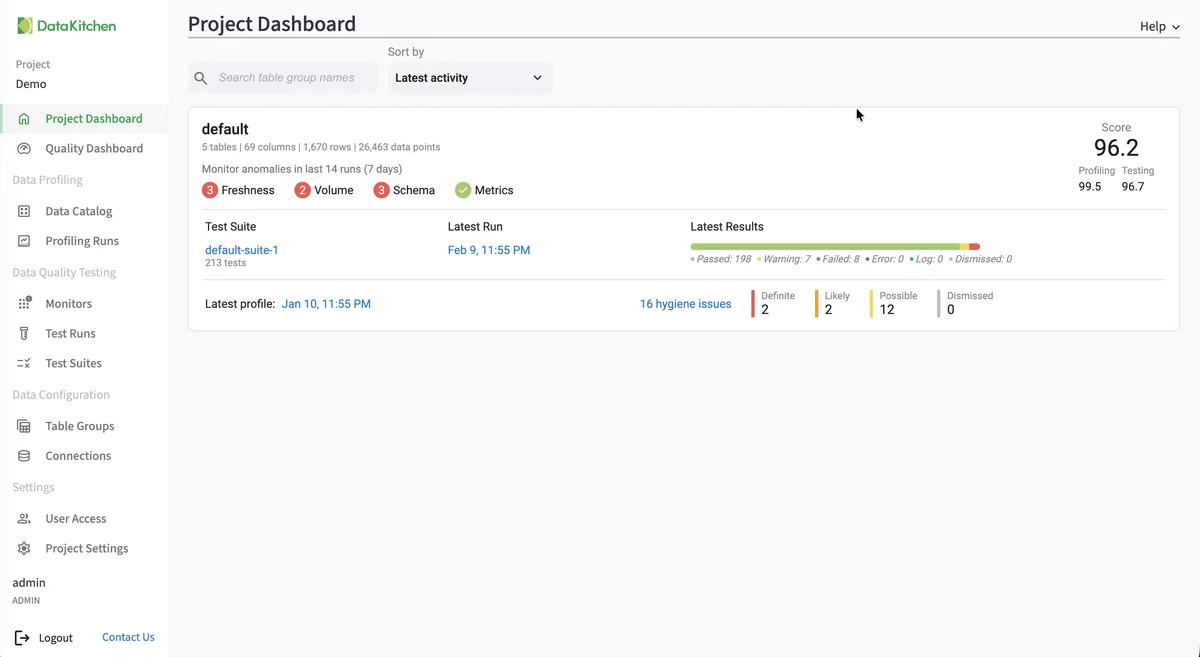
Periodic X-ray of every table and column in your database. 55 column characteristics analyzed, stored, and available for review and downstream rules derivation.
-
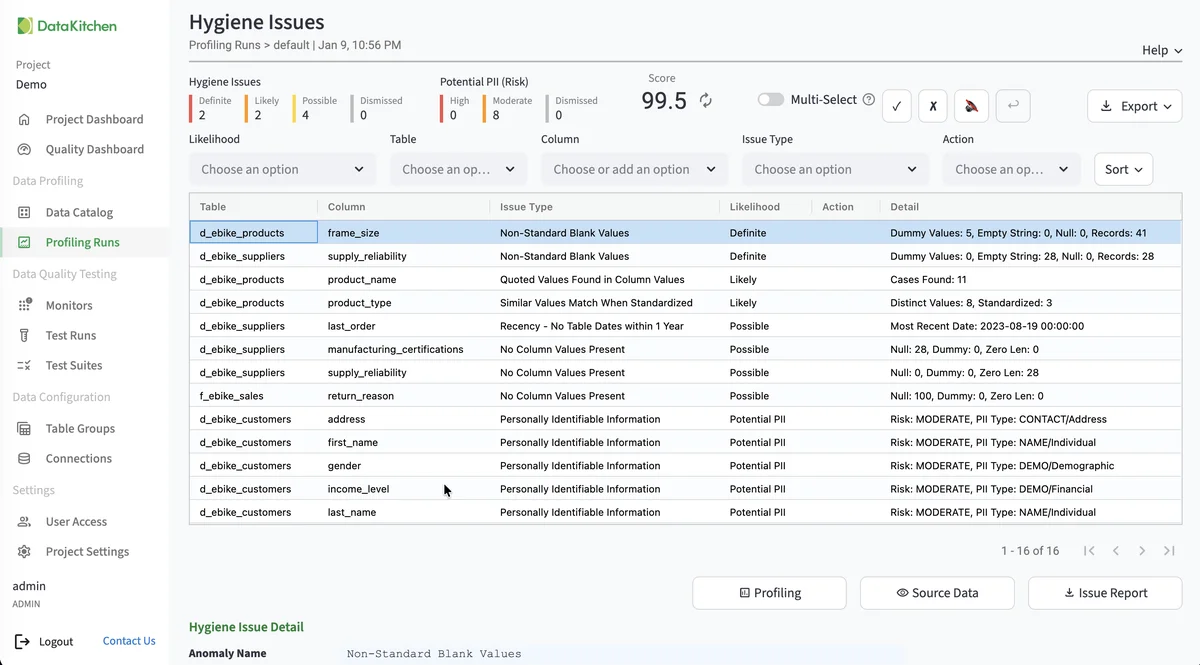
Hygiene Detection (documentation, opens in a new tab)
Automatically confirm how closely data structures and assumptions match actual column contents. Identify problem rows before they reach production.
-
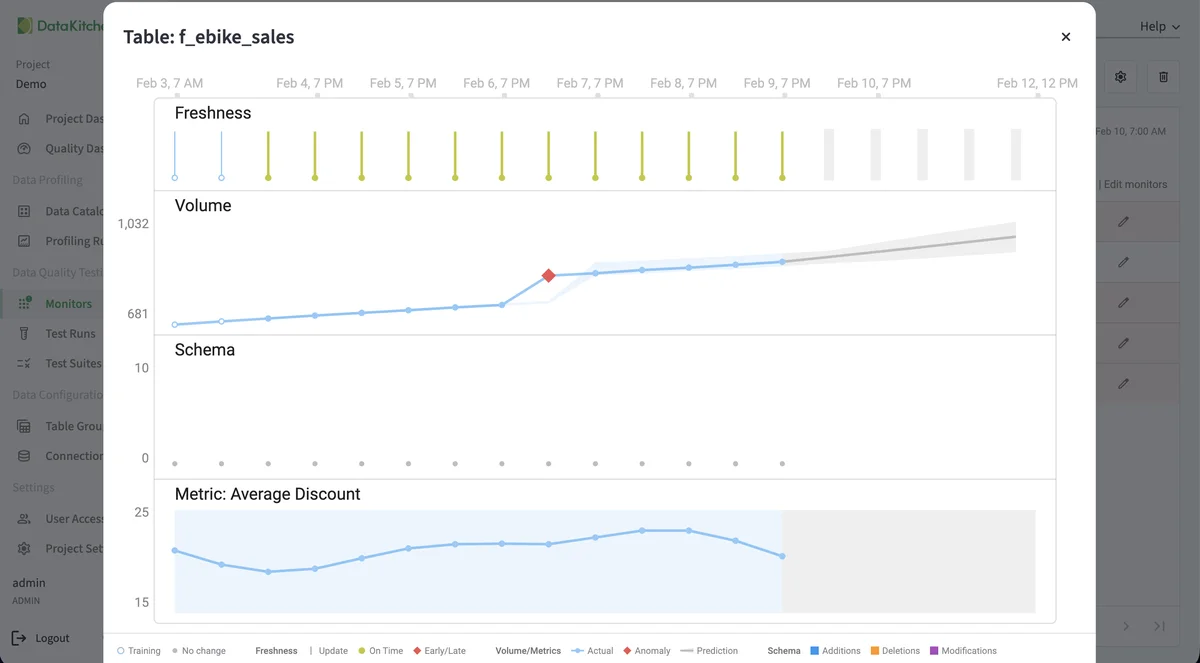
Anomaly Detection (documentation, opens in a new tab)
Four monitor types: freshness, volume, schema, and custom metrics. Predictive models learn what your data usually looks like and flag late arrivals, row count swings, schema drift, and metric anomalies before they reach downstream consumers.
-
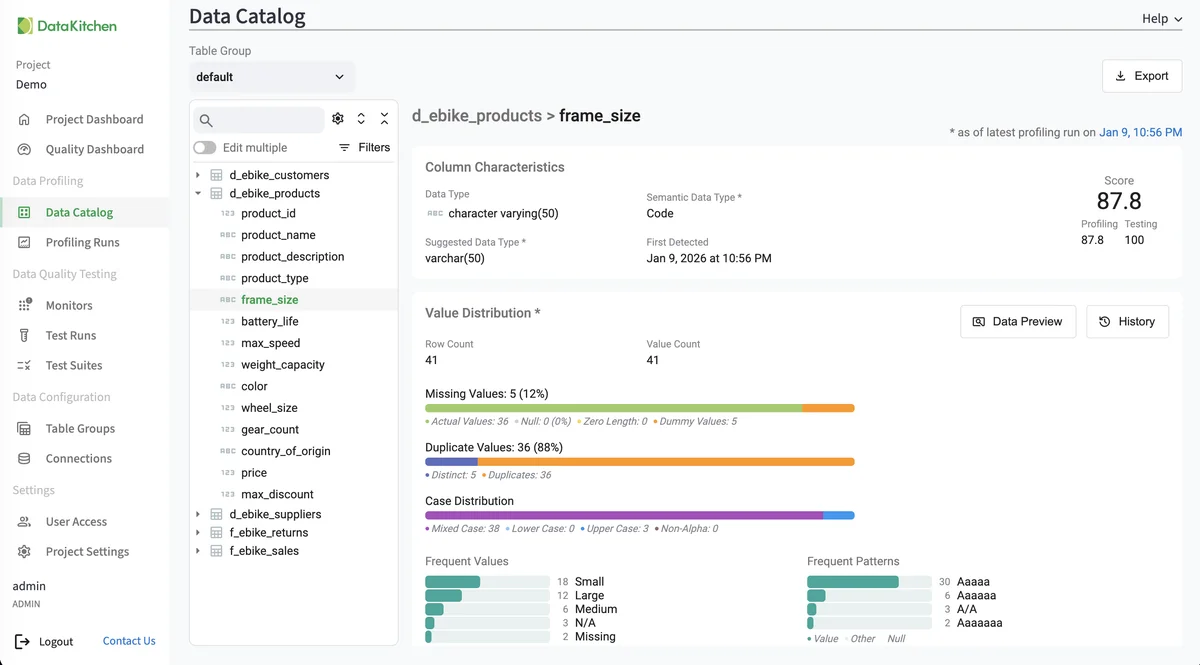
Data Catalog (documentation, opens in a new tab)
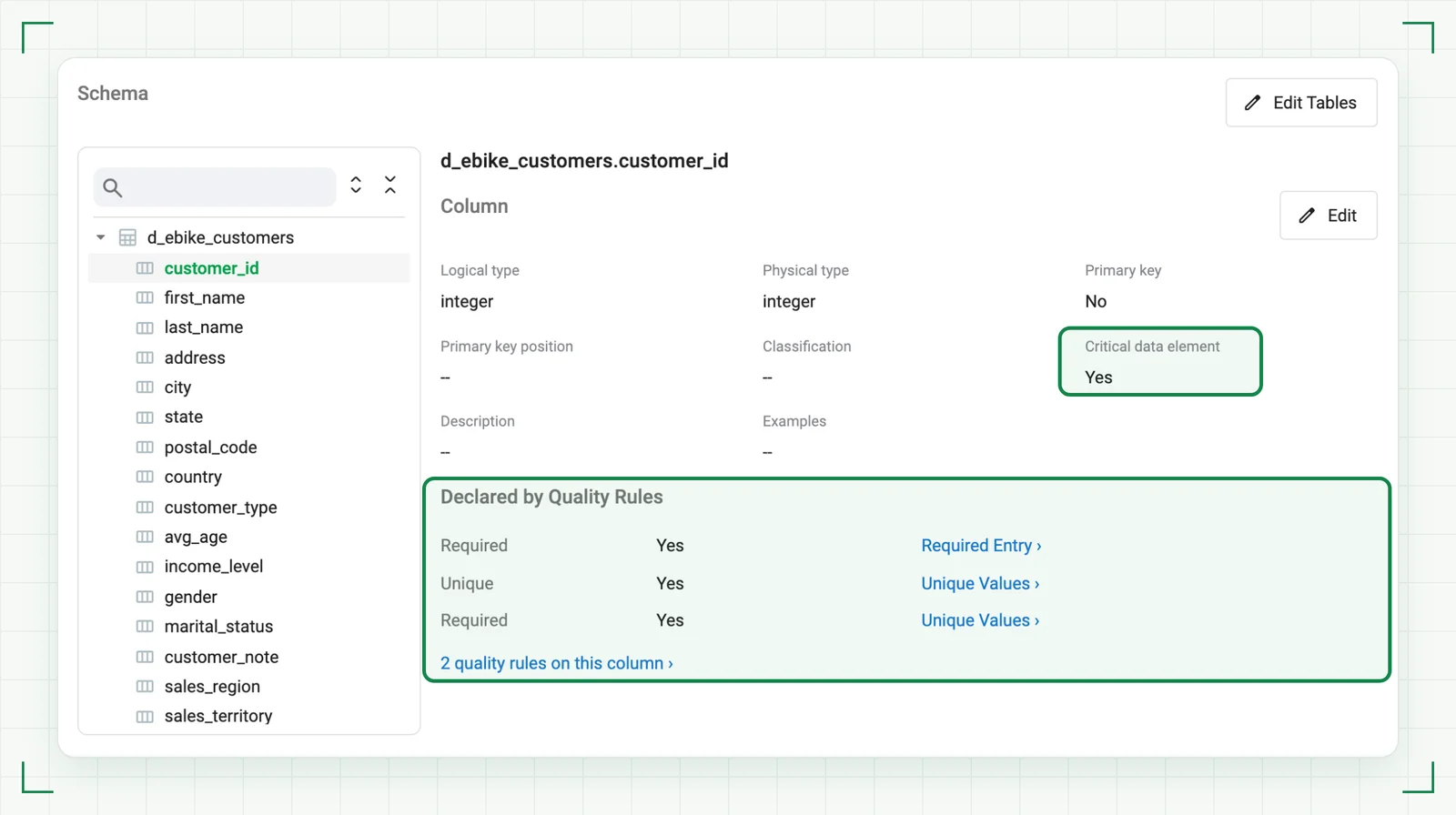
Every table's metadata in one place. See profile results, hygiene issues, test results, PII identification, and Critical Data Element tagging.
-
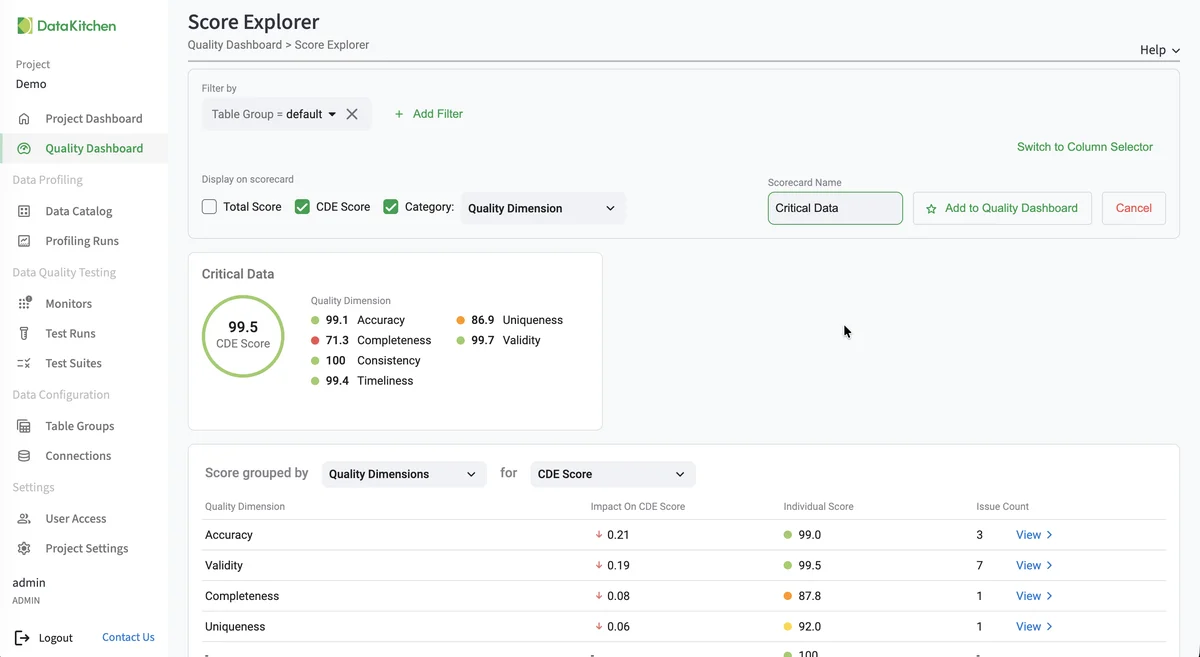
Quality Scoring (documentation, opens in a new tab)
Configurable dashboards and scorecards based on DAMA categories, Critical Data Elements, specific model requirements, or current business goals.
-
MCP Server (the TestGen MCP cheat sheet)
Connect Claude, Claude Code, Cursor, Copilot, or Databricks Genie to TestGen's 119 MCP tools. Ask what failed, see the rows behind it, and approve fixes in plain English. It runs behind your firewall.
-
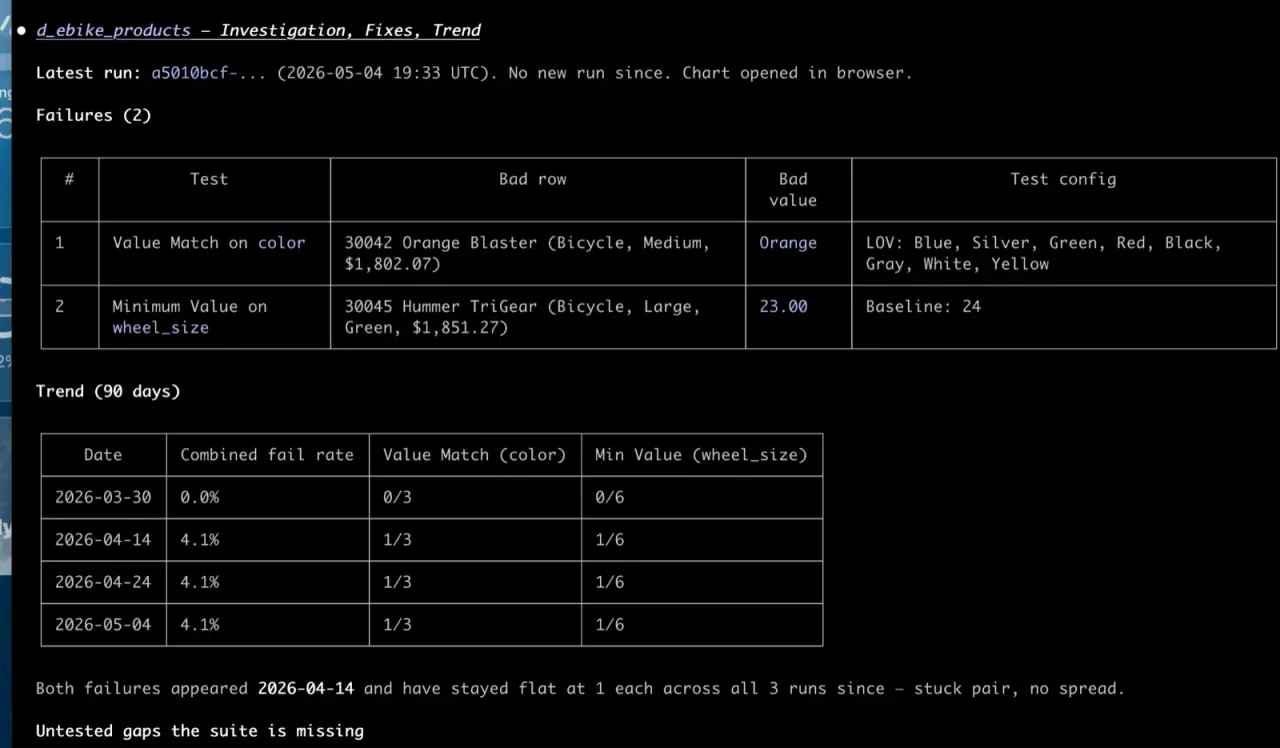
Open Source Core, UI Included
Unlimited table usage. UI included. The core profiling, testing, and monitoring engine is free under Apache 2.0. Enterprise adds team access, security, Commercial Pharma tests, source-data controls for AI, and support.
From DataKitchen on data contracts
-
 Blog
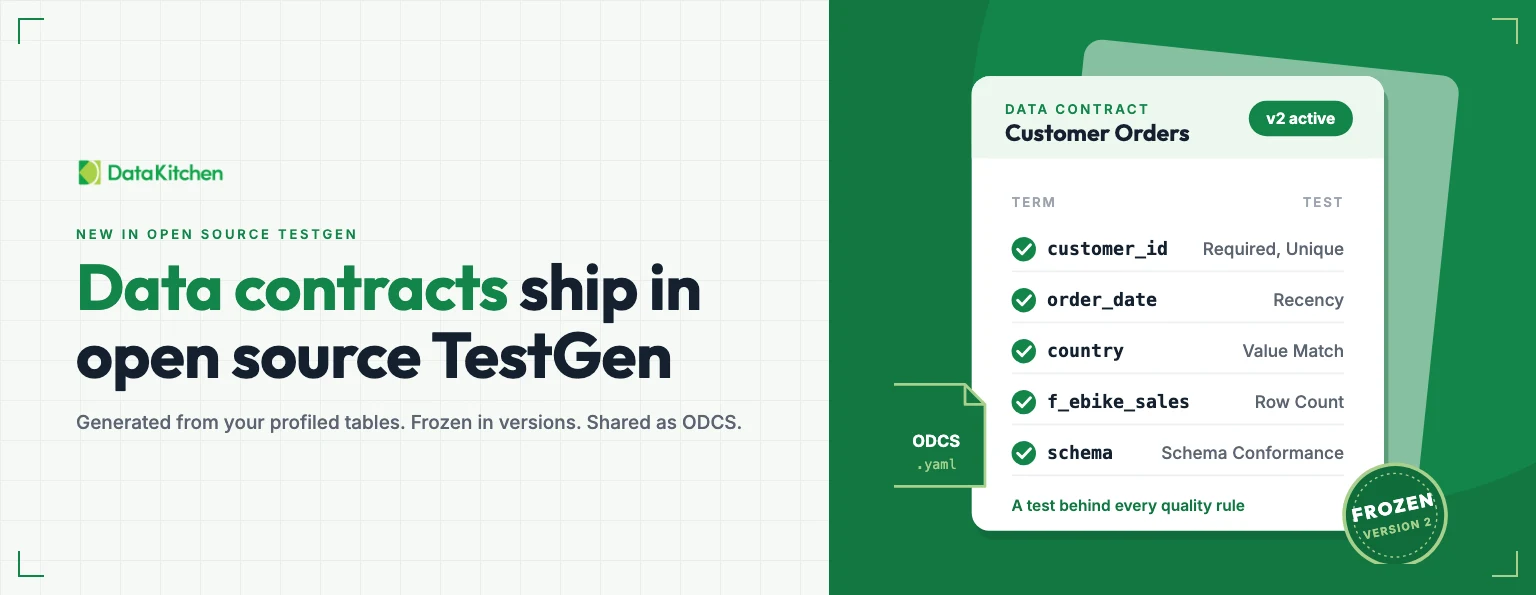
Data Contracts Ship in Open Source TestGen
Data contracts shipped in TestGen 5.185.1. Generate a contract from tables you've profiled or import an ODCS file, freeze it in numbered versions, compare any two,…
-
 Blog
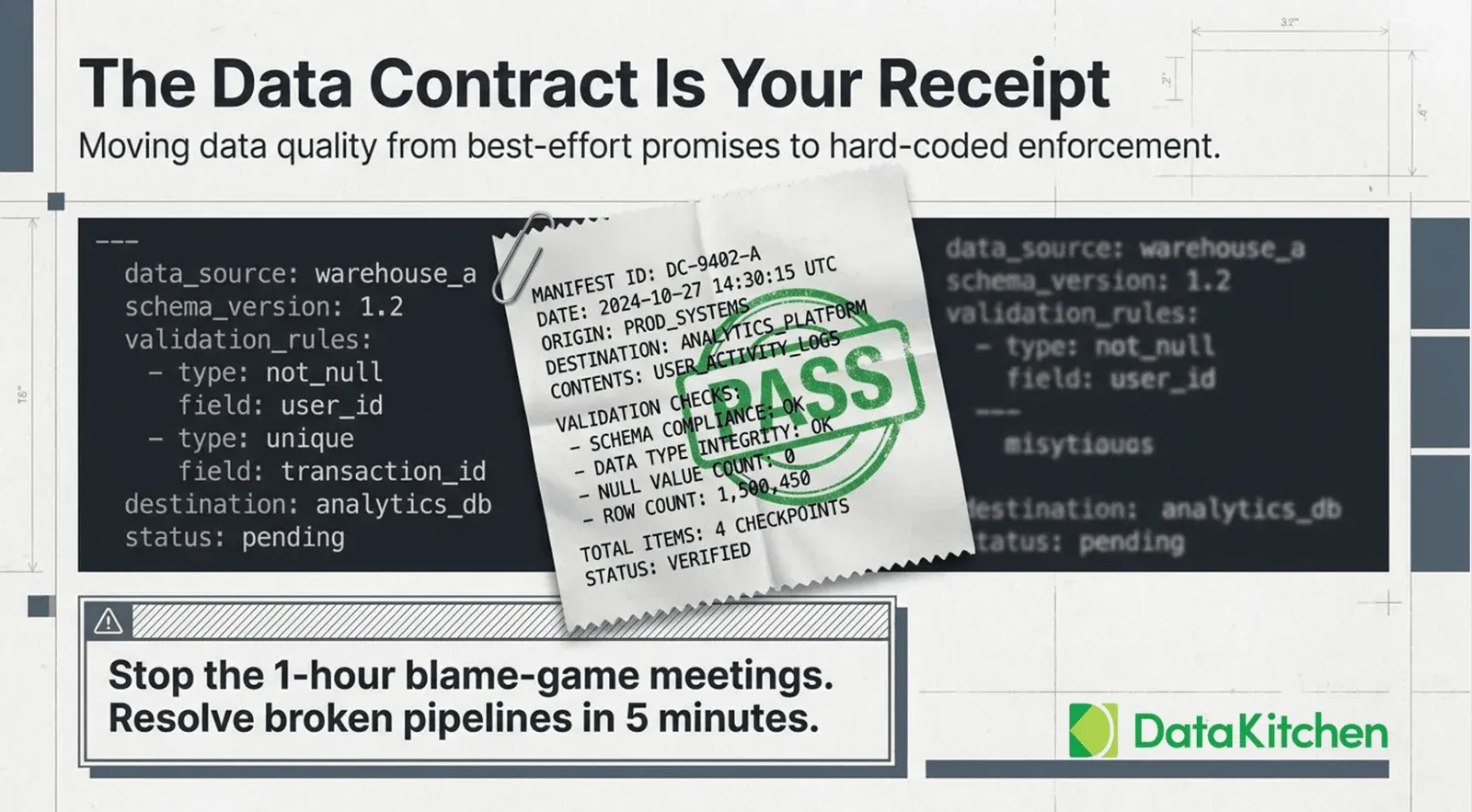
The Data Contract Is Your Receipt
Everyone talks about data contracts. Nobody implements them. Stop treating them like legal documents and start treating them like receipts: lightweight, free proof…
-
 Blog
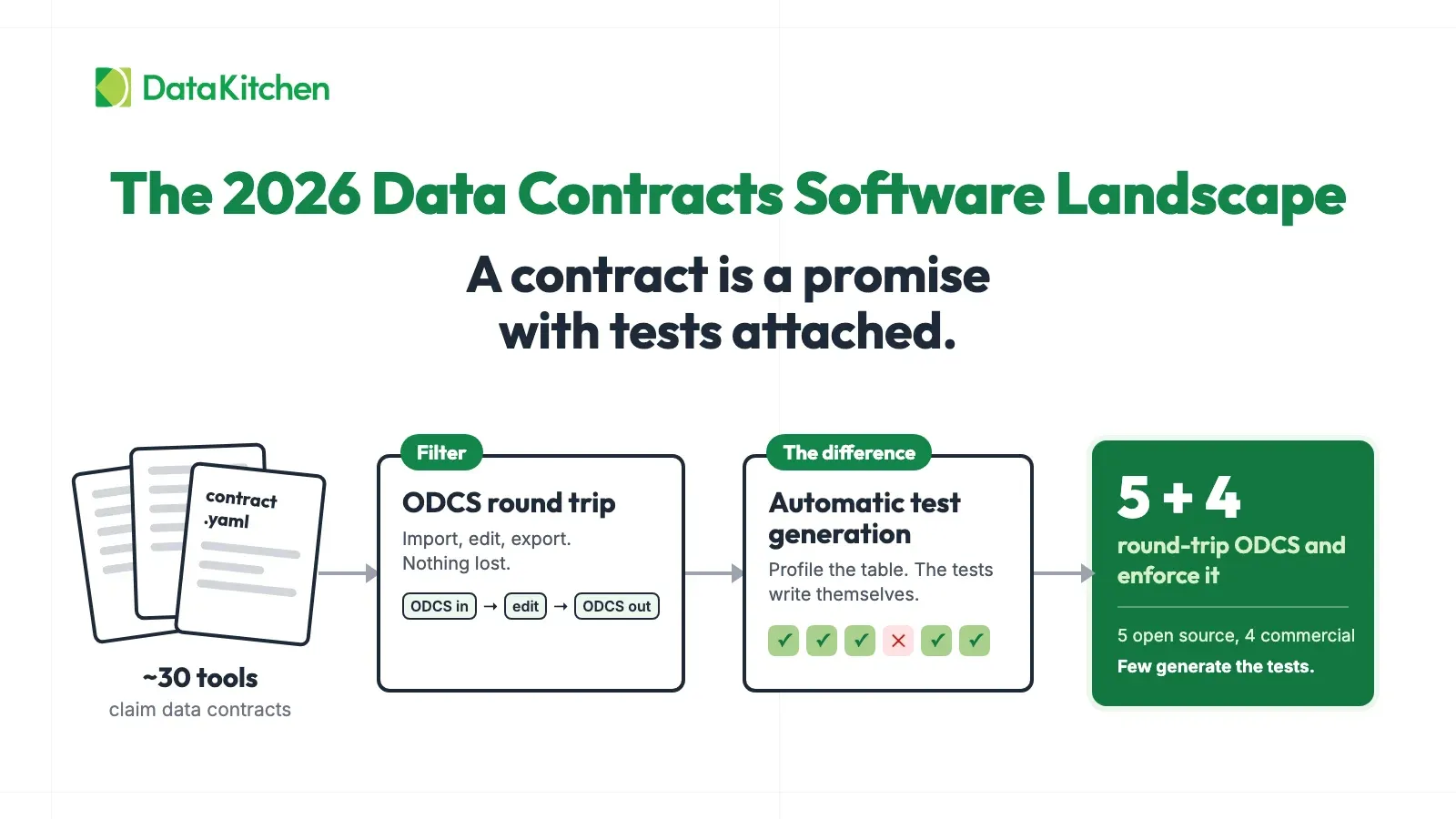
The 2026 Data Contracts Software Landscape: Open Source and Commercial
Five open source tools and four commercial vendors round-trip the Open Data Contract Standard and enforce it with tests. Few turn a table into a full contract…
-
 Blog
The Terms and Conditions of a Data Contract are Data Tests
Data contracts are a new idea for data and analytic team development to ensure that data is transmitted accurately and consistently between different systems or…
Why teams choose TestGen
-
You Don't Have Time to Write Tests. TestGen Does It Automatically.
You're buried in customer requests. You have no time to write tests, let alone innovate. TestGen scans your data and generates the tests and anomaly detectors for you. No coding, no massive YAML configuration.
-
Contract programs fail when the contract lives in a wiki and enforcement lives nowhere.
TestGen profiles every column, generates the tests behind each quality rule, and runs them on a schedule, so the contract is evidence that ran last night.
See how TestGen works →
-
Runs inside your database
Tests run as read-only SQL where the data sits. Nothing is copied out, and nothing is written back.
-
Contracts are in the open source
Contract generation, ODCS import and export, and numbered versions all ship under Apache 2.0.
-
Self-hosted
Your data never leaves your environment.
-
Bootstrapped since 2013
Profitable, independent, and not pivoting next quarter.
Open Source with Reasonable Enterprise Pricing
Open source TestGen is free for one user, one project, and one database connection. Enterprise is a flat $100 per month per user and database connection, with unlimited tables and data volume. No per-table tax. A year of enterprise data quality costs roughly one data engineer's monthly salary.
See pricing- Bristol Myers Squibb
- Eisai
- Catholic Relief Services
- Progeny Health
- X4
- KOA
- CNH
Questions
What is a data contract?
An agreement about what a dataset will contain: its schema, its value constraints, its freshness, and who is accountable when those break. The useful version is enforceable rather than aspirational. Every clause maps to a test that runs, so the contract is a check that either passed or failed last night. See What is a data contract, and how do you enforce one?
Are data contracts available in TestGen today?
Yes. Data contracts shipped in TestGen 5.185.1 on November 12, 2026, in the open source release. Install or upgrade to the latest TestGen to get contract generation, ODCS import and export, and versioning. See Data Contracts Ship in Open Source TestGen.
What is the Open Data Contract Standard (ODCS)?
ODCS is the open YAML format for data contracts, maintained by Bitol under the Linux Foundation AI & Data. Version 3.1.0 shipped in December 2025, and the competing Data Contract Specification deprecated itself in favor of ODCS the same month. TestGen reads and writes ODCS v3.2.0: it imports ODCS files as contracts and exports any version of a contract as a complete ODCS document.
Can TestGen generate a data contract from an existing table?
Yes. TestGen produces the schema and the tests from one data profiling run of 55 column characteristics, rather than stopping at types and required flags. Pick the tables in a profiled table group and TestGen writes the contract document and its tests in one step. See the contracts documentation.
Why not write data contract tests by hand?
Because a real contract on a 40-column table needs about 150 tests: types, nulls, ranges, patterns, uniqueness, referential checks, freshness and volume. Nobody writes or maintains 150 tests by hand, so hand-written contracts decay into a schema check within six months. The 2026 landscape has the details.
How do data contracts help with supplier data?
They replace argument with evidence. Without a contract the conversation is “your data seems off.” With one it becomes “row 47 promised a non-null ship_date and twelve percent of rows are null this week.” Because TestGen is open source, you can hand your supplier the tool and the contract, and they run it before they ship.
How do I start?
Start with one contract on one dataset you already ship, or the supplier who sends you the most bad files. Write down what you implicitly promise, turn each promise into a test, and run it for a month. One working receipt teaches more than a governance program.
Is TestGen free?
The open source edition is free under Apache 2.0, for one user, one project and one connection. Enterprise is $100 per user per month plus $100 per database connection per month, with no per-table fees. See pricing.
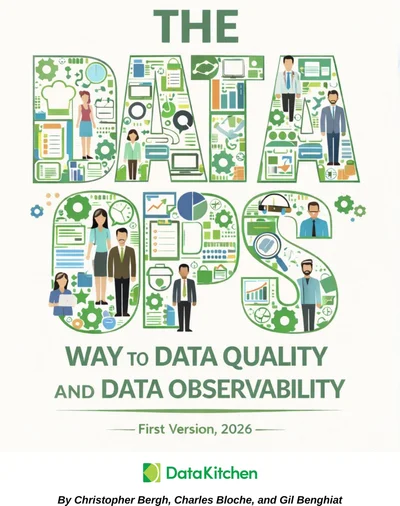
Free book
Not ready to try it out now? Read the free book.
The DataOps Way to Data Quality and Data Observability covers why data quality keeps failing and what to do about it: culture, testing strategy, monitoring, and the seven deadly sins of AI-generated pipelines.
- 620 pages
- 63 chapters
- Updated September 2026
- By Chris Bergh, Chip Bloche, and Gil Benghiat