Lowering Serious Production Errors
Key Benefit
Errors in production can come from many sources – poor data, problems in the production process, being late, or infrastructure problems. Reducing the errors your customers find and those they do not are key success metrics of Data Observability Using DataKitchen DataOps Observability and DataOps TestGen.
DataKitchen Customer Quotes
“After implementing, we reduced errors to just about one per quarter. We kept adding tests over time; it has been several years since we’ve had any major glitches. This has dramatically increased our team’s efficiency and our end stakeholders’ confidence in the data.” — Associate Director, Insights, Top 10 global pharmaceutical company.
“Our vision was to create a flexible, state-of-the-art data infrastructure that would allow our analysts to transform the data rapidly with a very low risk of error. After working with DataKitchen for a while, we noticed almost an absolute absence of data errors we didn ’t catch earlier. That was amazing for the team.” Director, Data Analytics Team
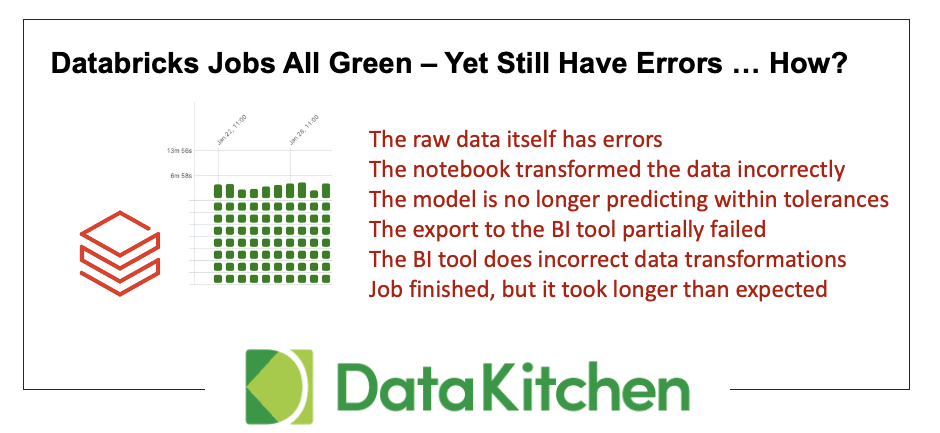
“We had some data issues. Databricks was all green. Thanks to Observability, I could diagnose the problem – definitely helped me a lot during the process.” Industrial Data Team Member
Key Statistics with DataKitchen in Place
70 data sets, billions of rows of data processed monthly, with less than one error per quarter
Related Benefits
- Increased end-user data trust
- Reduced number of team data incidents and corresponding team time savings
- Increase SLA adherence and on-time metrics
- Wrong data or wrong reports/models are very costly to your business. Data errors can cause compliance risks.
- Business users lose trust in the data and have an opportunity cost.
Find and Respond to Problems Faster
Key Benefit
Problems in complex data systems will happen. Can you identify those problems and find the sources quickly before your customers see them? Given today’s complicated, multi-tool, multi-team data environments, this is challenging.
DataKitchen Customer Quotes
“It is a huge productivity win when someone on the team no longer needs to log in and monitor runs constantly. I used to be very, very careful when changing anything data-related, but I think you’re starting to see that it’s not that big a deal anymore because we can now figure out what happened pretty quickly, and we can adjust it.“ Data Engineering lead, Financial Service Company
Key Statistics with DataKitchen in Place
“We effectively integrated a huge number of external data sources of varying quality and then updated data delivery frequency from once per day to once every 30 minutes because of automatically generated data processes and data quality production alerts.” Global Pharma Company
Related Benefits
- Improve time to remediation.
- Lowers ‘data downtime’ when business users are not using the data
- Lowers the amount of team time on re-work and remediation
Improved Team Productivity
Key Benefit
In 2022 and 2023, Gartner stated that a 10x productivity edge exists for DataOps- (including data observability) driven data engineering teams. If data teams are not manually chasing production errors and their root causes, they will have more time to add value to your business.
DataKitchen Customer Quotes
“.. its ability to put a baseline metrics lens over top of the data ecosystem. And by doing that, you can very simply draw attention to areas and provide data, KPIs, and metrics that people will believe. It’s not you making stuff up anymore. It’s definitive, and that changes the game, especially for senior leadership.”
“DataKitchen helped us completely transform our operations by broadening our testing definition. Testing the DataKitchen way was not limited to checking for basic attributes such as columns and rows; we expanded testing to include data accuracy and continuity. Tests assess important questions, such as “Is the data correct?” When business rules are applied, “Does the data make sense?” “Is there something new or unusual,” and does the data align with its history and related data sets?” The DataKitchen platform not only makes this level of testing possible but also practical.”
Related Benefits
- Improved Data Quality Validation Testing
- Example: One data team Increased the number of data quality tests from a dozen to over 10,000 with DataKitchen
- Improved ability to measure team productivity and challenges
- Improved data team happiness
Conclusion
“Key Success Metrics for DataKitchen DataOps Observability” showcases how DataKitchen’s DataOps Observability significantly reduces production errors, ensuring that data teams and their stakeholders can trust their data while dramatically increasing operational efficiency. Through compelling testimonials from industry leaders, including a Top 10 global pharmaceutical company and a prominent data analytics team, the blog illustrates the profound impact of DataKitchen’s data observability on reducing data errors to nearly zero and bolstering team productivity. With less than one error per quarter across 70 datasets processing billions of rows of data, the benefits extend beyond error reduction to include increased SLA adherence, enhanced end-user data trust, and improved team productivity. Gartner’s research underscores a 10x productivity edge for DataOps-driven teams, highlighting the transformational potential of DataKitchen in expanding the testing scope for data accuracy, continuity, and correctness. This paradigm shift in data observability allows teams to shift from manual error chasing to adding significant business value, fostering innovation and satisfaction among data professionals.
To explore how DataKitchen can redefine data observability for your organization and revolutionize your data operations, we invite you to learn more about our software and its transformative capabilities.
FAQ
What are the key points in this blog?
Data observability pays off in measurable outcomes rather than features. DataKitchen customers report production errors falling to about one per quarter, in one case across 70 data sets and billions of rows of data processed monthly. Problems get diagnosed faster, SLA adherence and end-user data trust improve, and test counts grow from a dozen into the thousands. Gartner stated in 2022 and 2023 that DataOps-driven data engineering teams hold a 10x productivity edge.
What are the key success metrics for data observability?
Three outcomes carry the most weight for data observability: fewer serious production errors, faster identification and remediation when problems do happen, and team productivity that is no longer spent chasing root causes. Supporting measures include SLA adherence, end-user data trust, data downtime, and team time lost to re-work and remediation. One customer reports less than one error per quarter across 70 data sets.
How much can data observability reduce production data errors?
One DataKitchen customer reduced errors to about one per quarter and has gone several years without a major glitch, having kept adding tests over that period. A data analytics director reported almost a complete absence of data errors the team had not caught earlier. Both are customer-reported results measured after implementation, across environments processing billions of rows of data monthly.
Why does finding problems faster matter as much as preventing them?
Because problems in complex data systems are inevitable, and the cost of one is set by how long it goes unexplained. One industrial data team member diagnosed a data issue through DataOps Observability while Databricks showed all green. Faster diagnosis improves time to remediation, lowers data downtime when business users cannot use the data, and cuts the team time spent on re-work.
What did Gartner say about DataOps and data engineering productivity?
In 2022 and 2023, Gartner stated that a 10x productivity edge exists for data engineering teams driven by DataOps, which includes data observability. The mechanism is straightforward: a team that is not manually chasing production errors and their root causes has time to add value to the business instead. The gain shows up as reclaimed engineering hours, not as extra tooling.
What kinds of data quality tests do these results depend on?
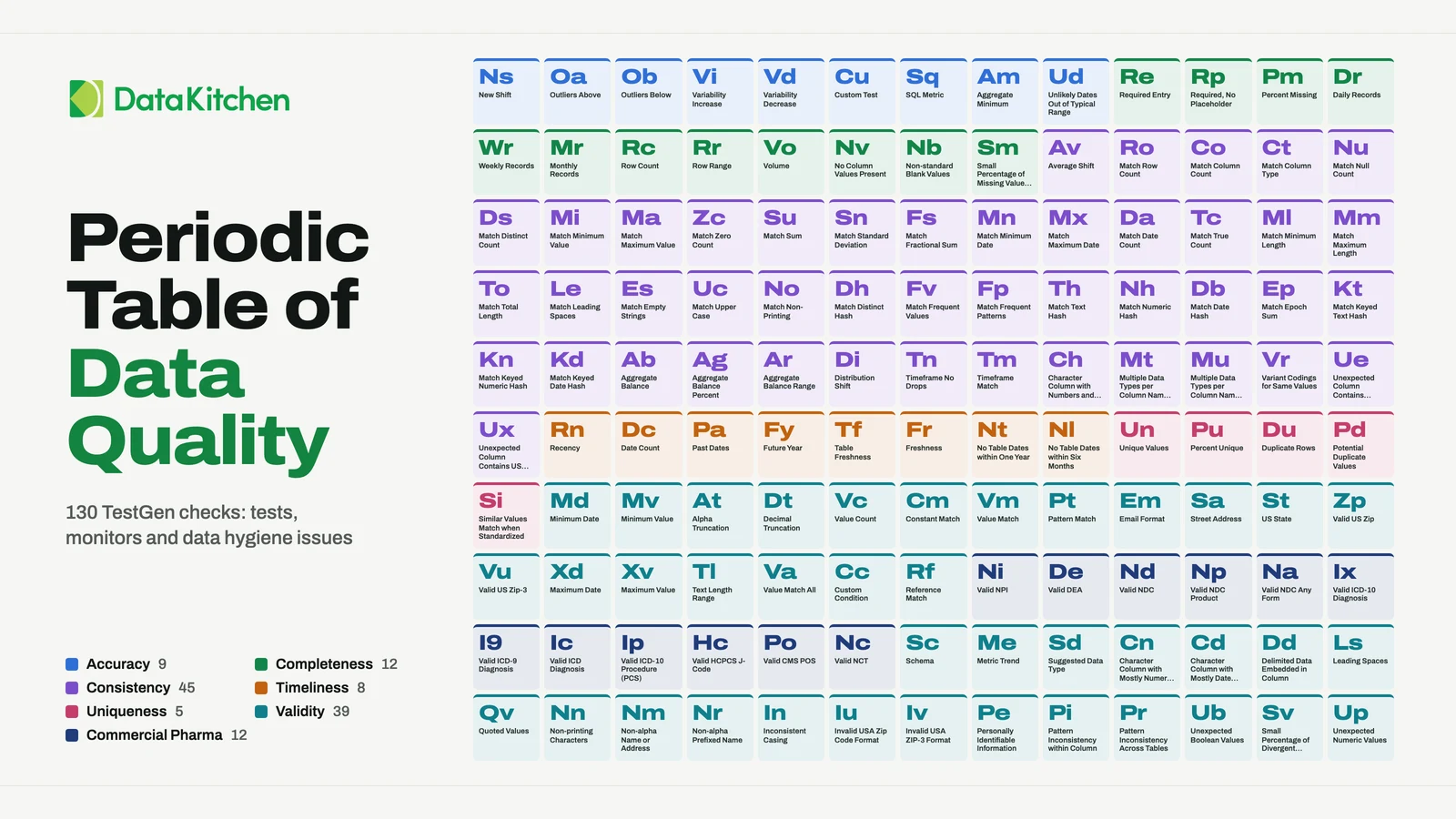
Tests that go beyond basic attributes such as columns and rows. Customers describe expanding coverage to data accuracy and continuity: is the data correct, does it make sense once business rules are applied, is anything new or unusual, does it align with its history and related data sets. One team grew from a dozen data quality tests to over 10,000.