The integrity and functionality of new code, tools, and configurations during the development and deployment stages are crucial. This blog post delves into the third critical use case for Data Observation and Data Quality Validation: development and Deployment. It highlights how DataKitchen’s Data Observation solutions equip organizations to enhance their development practices, reduce deployment risks, and increase overall productivity.
NOTE
The Five Use Cases in Data Observability
Data Evaluation: This involves evaluating and cleansing new datasets before being added to production. This process is critical as it ensures data quality from the onset.
Data Ingestion: Continuous monitoring of data ingestion ensures that updates to existing data sources are consistent and accurate. Examples include regular loading of CRM data and anomaly detection.
Production: During the production cycle, oversee multi-tool and multi-data set processes, such as dashboard production and warehouse building, ensuring that all components function correctly and the correct data is delivered to your customers.
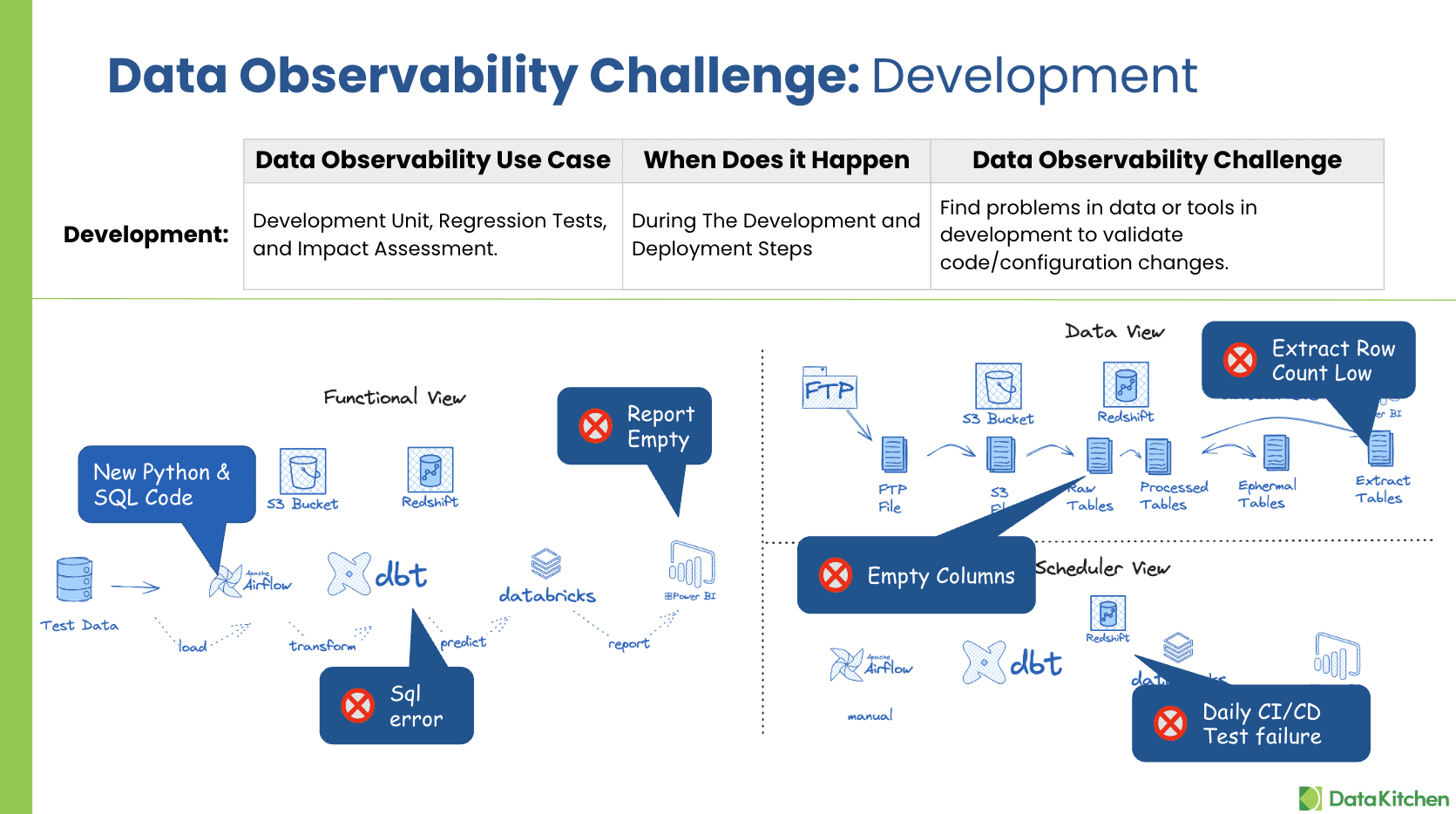
Development: Observability in development includes conducting regression tests and impact assessments when new code, tools, or configurations are introduced, helping maintain system integrity as new code of data sets are introduced into production.
Data Migration: This use case focuses on verifying data accuracy during migration projects, such as cloud transitions, to ensure that migrated data matches the legacy data regarding output and functionality.
The Development and Deployment Challenge
The development phase often involves integrating new SQL scripts, Python modules, Yaml configurations, or datasets into existing systems. Each addition or modification poses potential risks that could propagate errors into production environments. The primary challenge is identifying and resolving these issues early in the development cycle to prevent failed deployments and operational disruptions.
A robust data observability strategy addresses several critical questions to ensure the stability and reliability of development activities:
- Did All My Tests Pass?
- Will I Create A Failed Deploy?
- What Code Is In What Environment?
- How Many Deployments Failed In The Past?
- Is There A Particular Developer That Is Promoting Buggy Code?
- How Many Tests Ran In The Qa Environment? Passed? Failed? Warning?
- How Many Deployments Of Artifacts/Code Did We Do?
- How Many Models Dashboards Were Deployed?
- Historically? How Often Do We Change The Production Schema?
- Did The Deployment Work?
- How Many Deployments Did We Do Last Quarter? How Many Tests Ran Per Day?
- What Is The Average Number Of Tests Per Pipeline?
- For A Particular Project, What Pipelines, Tests, Deploys, And Tickets Are Happening?
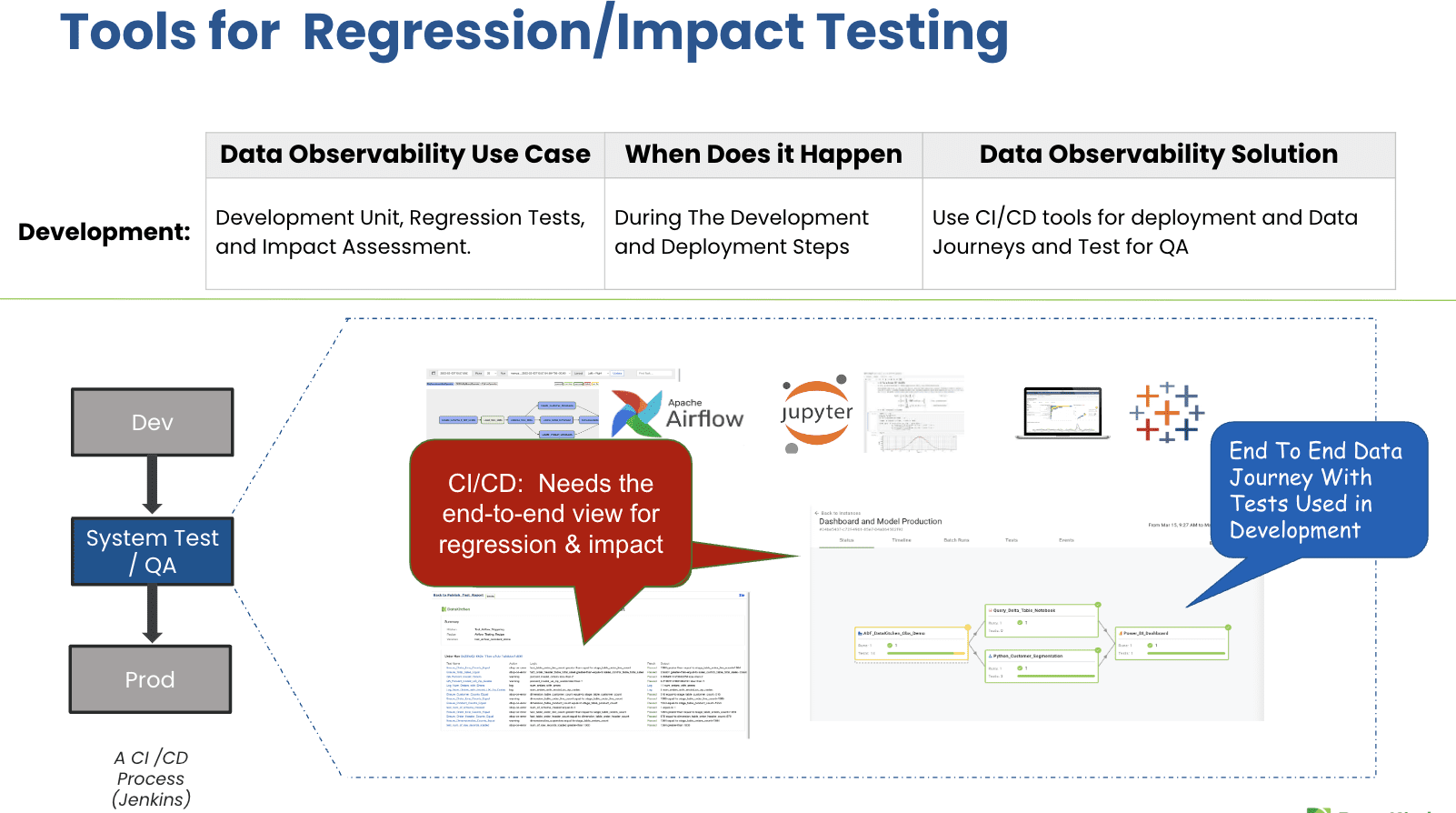
DataKitchen Provides a Solution
DataKitchen’s Open Source Data Observability is a powerful toolset to tackle these challenges:
- Pre-Deployment Testing : The platform enables the execution of functional, unit, and regression tests within the development environment. This approach allows teams to validate changes against test data before they reach production.
- Continuous Integration and Deployment (CI/CD) Suppor t: By automating tests and working integrally with your CI/CD tool like Jenkins, DataKitchen helps maintain code quality and consistency across different environments, reducing the likelihood of deployment failures.
- Real-Time Monitoring and Alert s: The system provides instant feedback on the deployment process, highlighting successes and pinpointing failures, which accelerates troubleshooting and reduces downtime
DataKitchen’s solution offers an end-to-end Data Journey visualization that covers the complex data estate necessary for thorough development testing. This feature ensures developers have a comprehensive view of how new code or data sets integrate with existing systems, enhancing understanding and reducing integration errors.
Benefits of Effective Data Observability in Development
Implementing DataKitchen’s observability tools during the development and deployment phases brings substantial benefits:
- Risk Reduction: Early detection and resolution of issues lower the risk of problematic changes reaching production.
- Increased Developer Productivity : With clear insights into deployment outcomes and faster feedback loops, developers can focus more on innovation and less on fixing bugs.
- Operational Confidence : Knowing that changes are thoroughly tested before deployment provides peace of mind and fosters a culture of reliability and accountability.
Conclusion
For organizations aiming to enhance their development processes and ensure successful deployments, adopting DataKitchen’s Data Observability solutions is an excellent strategy. By integrating comprehensive testing and real-time monitoring into the development lifecycle, companies can prevent costly errors and accelerate their time-to-market for new data sets and features.
Next Steps: Download Open Source Data Observability, and Then Take A Free Data Observability and Data Quality Validation Certification Course