Managing the production phase of data analytics is a daunting challenge. Overseeing multi-tool, multi-dataset, and multi-hop data processes ensures high-quality outputs. This blog explores the third of five critical use cases for Data Observability and Quality Validation—data Production—highlighting how DataKitchen’s Open-Source Data Observability solutions empower organizations to manage this critical stage effectively.
NOTE
The Five Use Cases in Data Observability
Data Evaluation: This involves evaluating and cleansing new datasets before being added to production. This process is critical as it ensures data quality from the onset.
Data Ingestion: Continuous monitoring of data ingestion ensures that updates to existing data sources are consistent and accurate. Examples include regular loading of CRM data and anomaly detection.
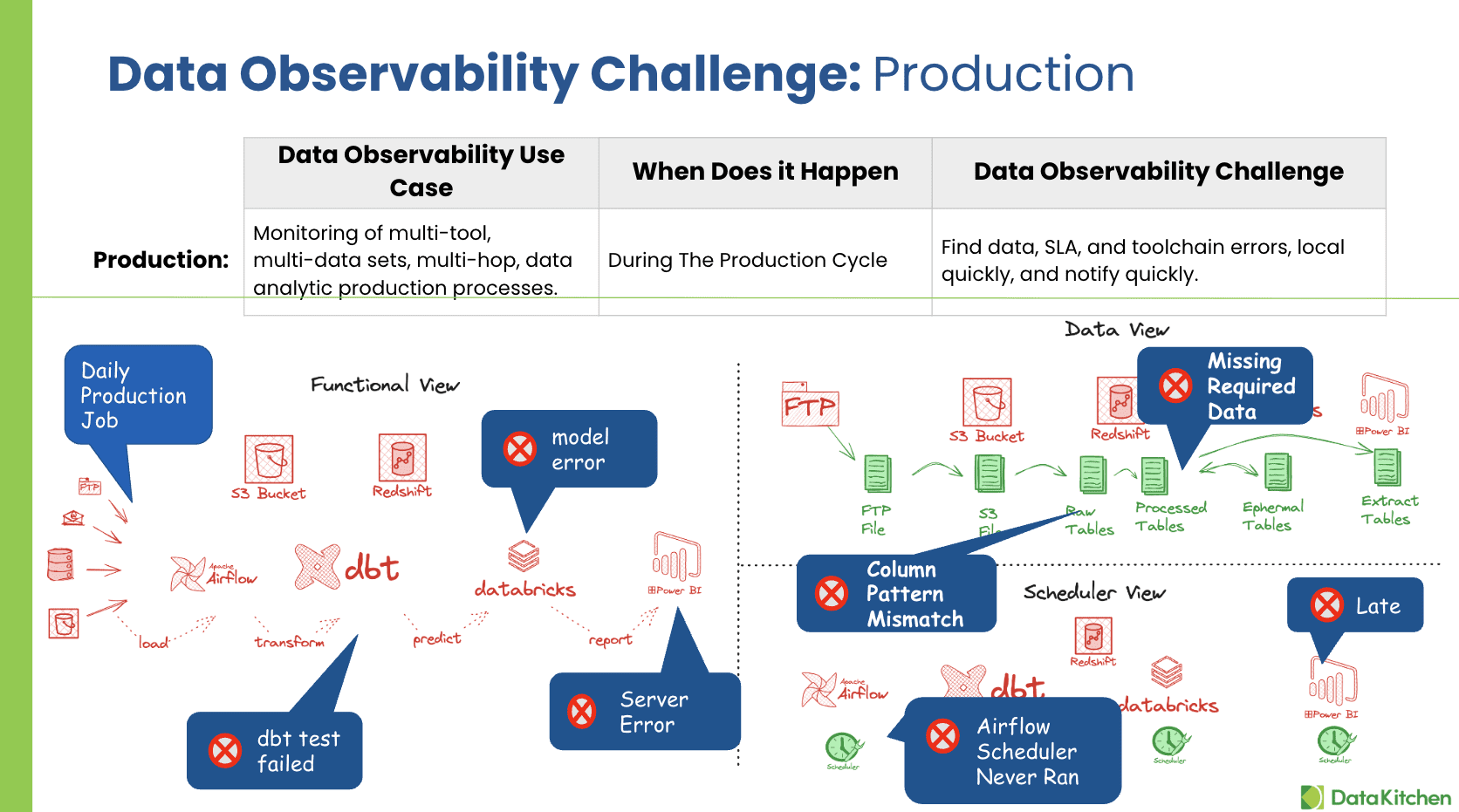
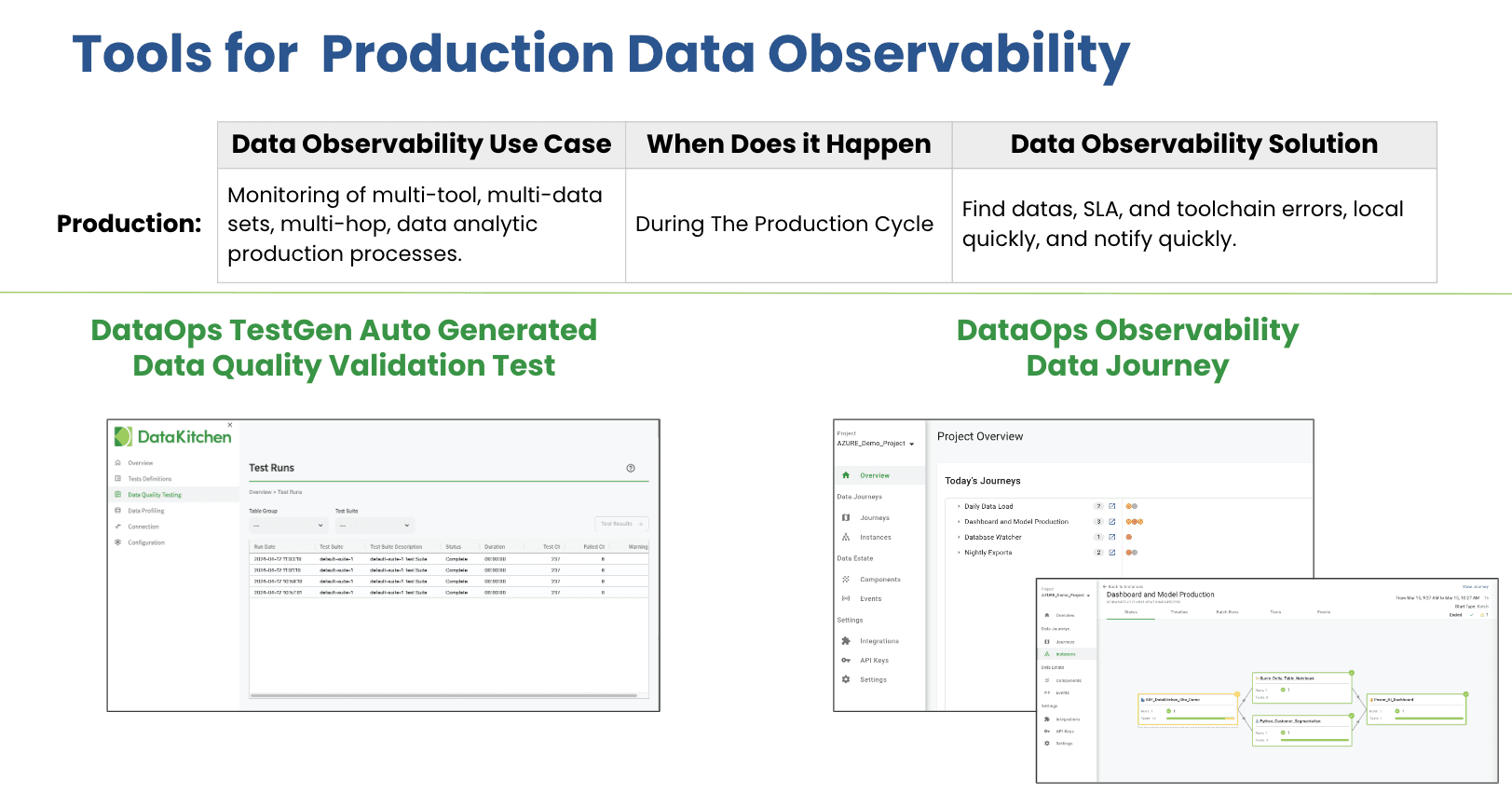
Production: During the production cycle, oversee multi-tool and multi-data set processes, such as dashboard production and warehouse building, ensuring that all components function correctly and the correct data is delivered to your customers.
Development: Observability in development includes conducting regression tests and impact assessments when new code, tools, or configurations are introduced, helping maintain system integrity as new code of data sets are introduced into production.
Data Migration: This use case focuses on verifying data accuracy during migration projects, such as cloud transitions, to ensure that migrated data matches the legacy data regarding output and functionality.
The Challenge of Data Production
Data production encompasses processing and refining raw data into valuable insights, including dashboard production, warehouse constructions, and model refreshes. During these processes, monitoring and validating data at each step of the production process is vital to detect any discrepancies, errors, or inefficiencies that might compromise the final products. The challenges in data production are multi-faceted:
-
Ensure the accuracy and consistency of data across different tools and stages.
-
Meet service level agreements (SLAs) and maintain robust toolchain performance.
-
Quickly locate and address data or process errors before they affect downstream results.
Critical Questions in Data Production
Effective data observability in production requires answers to several critical questions to ensure data integrity and operational efficiency:
-
Are key performance metrics within expected ranges?
-
Is the business logic producing correct outcomes?
-
Are all required data records and values present and accurate?
-
Does the data maintain integrity without conflicting with other datasets?
-
Are production models accurate, and do dashboards display correct data?
-
Have I Checked The Raw Data And The Integrated Data?
-
Did I compare key metrics with real-world information that is known to be correct?
-
Did I Verify That All Required Records And Values Are Available?
-
Did I Ensure That Data Does Not Conflict With Itself?
-
Is My Model Still Accurate?
-
Is My Dashboard Displaying The Correct Data?
-
Is The Delay Because The Job Started Late Or It Took Too Long To Process?
-
Looking Across My Entire Organization, How Many Pipelines Are In Production?
-
Is There A Troublesome Pipeline (Lots Of Errors, Intermittent Errors)?
-
Did Every Job That Was Supposed To Run?
-
How Many Tests Do I Have In Production?
-
What Are My Pass/Fail Metrics Over Time In Production?
-
Is the data in the report that I am looking at “Fresh”?
-
Do I Have A Troublesome Data Supplier?
-
Did I Verify That There Is No Missing Information And That The Data Is 100% Complete?
-
Does The Data Conformity To Predefined Values?
-
Where Did The Problem Happen?
-
Is My Output Data The Right Quality?
-
Did Jobx Run After All The Jobs In Groupy Completed?
-
How Many Jobs Ran Yesterday, How Long Did They Take?
-
How Many Jobs Will Run Today, How Long Will They Take, And When Are They Running?
-
How Many Tests Do I Have In Production?
-
What Are My Pass/Fail Metrics Over Time In Production?
-
Is There A Troublesome Pipeline (Lots Of Errors, Intermittent Errors)?
-
Can I Check The Final Key Metrics Against A Previous Period For Variance?
How DataKitchen Solves Data Production Challenges
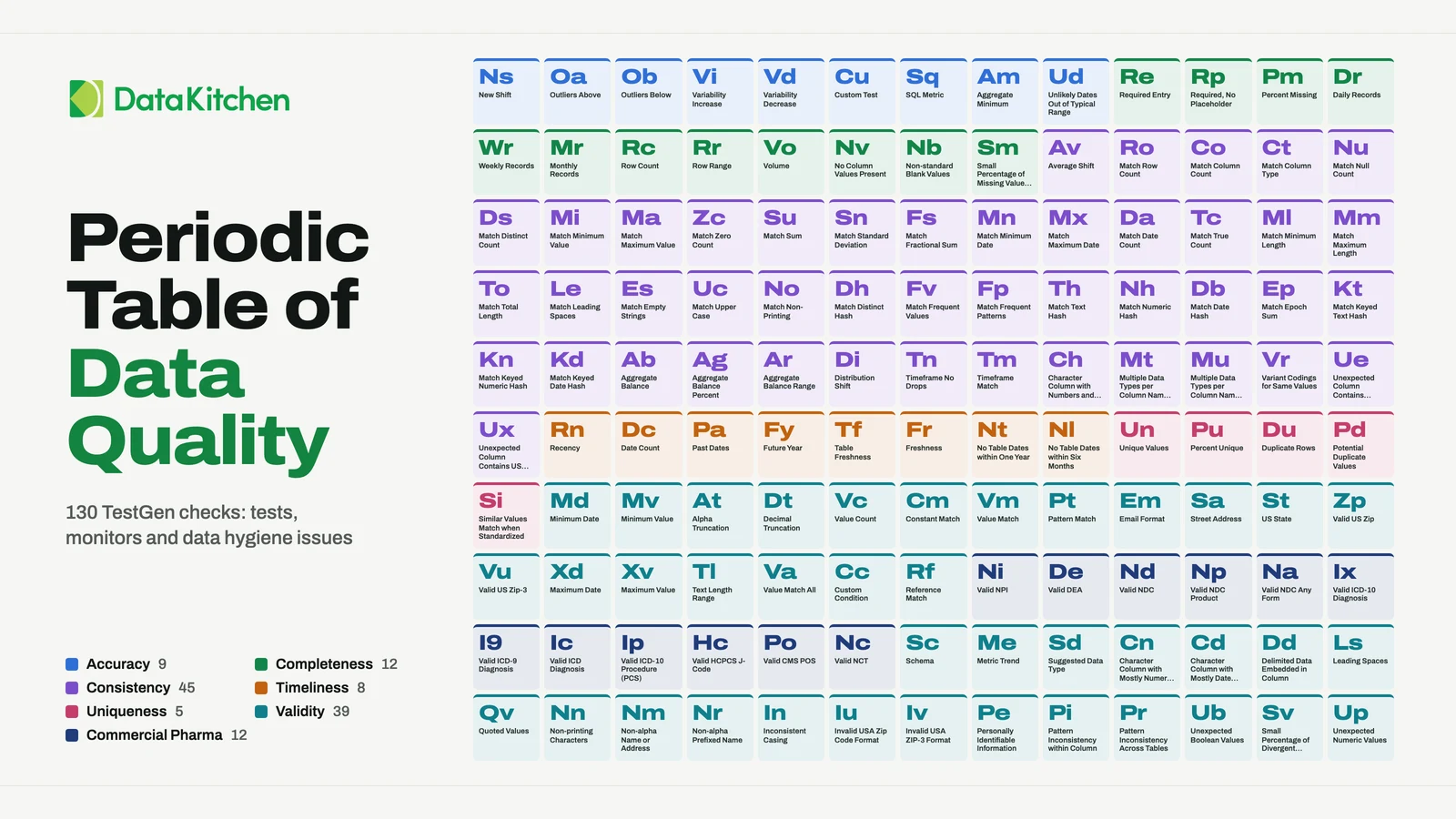
DataKitchen’s DataOps Observability tackles these challenges head-on with its innovative DataOps TestGen software, which automates the generation of 49 distinct data quality validation test types. These tests are designed based on thorough data profiling and can be executed directly within the database environment—ensuring no costly data movement and swift detection of issues. These include:
-
Automated Data Quality Tests: DataOps TestGen automatically creates comprehensive tests for data freshness, schema accuracy, volume, and more, significantly speeding up the validation process.
-
End-to-End Data Journeys: The platform models your entire data analytics process as digital twins, which act as live schematics for monitoring and troubleshooting. This feature allows for rapid identification and rectification of errors across the data pipeline.
-
In-Database Execution: By executing tests within the database, DataKitchen ensures minimal disruption and maximum efficiency, avoiding the performance overhead of data duplication.
Benefits of Effective Data Observability in Production
Implementing DataKitchen’s observability solutions during the data production phase offers numerous benefits:
-
Prevention of Customer-Facing Errors : Quick identification and correction of data issues prevent errors from reaching end-users, enhancing customer trust and satisfaction.
-
Enhanced Team Productivity: Thanks to efficient error detection and automated testing, teams spend less time troubleshooting and more time on strategic activities.
-
End-to-end view: This perspective reduces the ‘morning dread’ of discovering overnight errors, ensuring a smoother operational flow and peace of mind for data teams.
Conclusion
Effective ‘across and down’ observation of the data production process is pivotal for any data-driven organization. DataKitchen’s Open Source Data Observability software provides a robust framework for monitoring, testing, and refining data workflows. By leveraging intelligent, automated tools, businesses can ensure their data processes are error-free, leading to reliable insights and informed decision-making. For organizations looking to improve their data quality and operational efficiency, embracing DataKitchen’s observability solutions is a strategic step toward achieving excellence in DataOps.
Next Steps: Download Open Source Data Observability, and Then Take A Free Data Observability and Data Quality Validation Certification Course
FAQ
What are the key points in this blog?
Data production — dashboard production, warehouse builds, and model refreshes — is the third of five data observability use cases. Observing it means validating data and process at every hop of a multi-tool pipeline, answering both data questions and operational ones: did every job run, was the delay a late start or a slow job, is this report fresh.
What is the data production use case in data observability?
It covers the stage where raw data is processed and refined into finished products: dashboards, warehouse builds, and model refreshes. Observability here means monitoring and validating data at each step of the production process, so discrepancies, errors, and inefficiencies are caught before they reach the dashboards and reports that customers see.
What are the five use cases in data observability?
Data evaluation of new datasets before they enter production, data ingestion monitoring for existing sources, data production across multi-tool pipelines, development work such as regression tests and impact assessment when code or configuration changes, and data migration verification that moved data matches the legacy system.
What questions should data observability answer during production?
Both data questions and operational ones. On the data side: are required records and values present, does the data conflict with itself, is business logic producing correct outcomes, is the model still accurate, is the dashboard showing correct data. On the operations side: did every job that should have run actually run, how long did jobs take, and is this report fresh.
Why run data quality tests inside the database?
Because nothing has to move. Tests generated from profiling results execute directly in the database environment, which avoids the cost and delay of copying data to a separate engine and shortens the time between a problem appearing and someone seeing it. It also avoids the performance overhead of data duplication.
What do teams gain from observability in data production?
Fewer customer-facing errors, because issues are found and corrected before they reach end users. Less time spent troubleshooting, because error detection and testing are automated rather than manual. And an end-to-end view that reduces the morning dread of logging in to discover what broke overnight, and peace of mind for the data team.