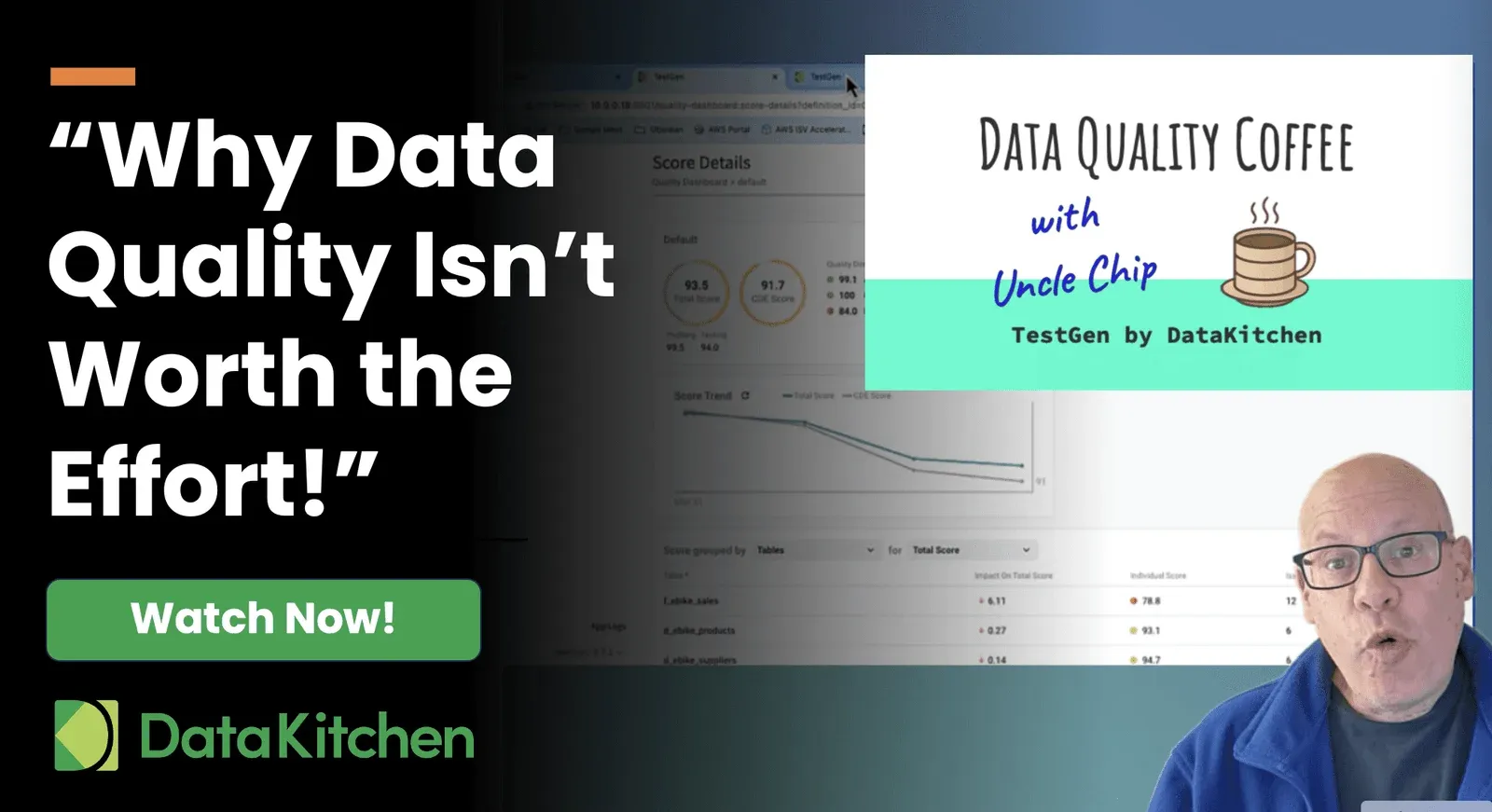
Data quality has become one of the most discussed challenges in modern data teams, yet it remains one of the most thankless and frustrating responsibilities. In the first of the ‘Data Quality Coffee With Uncle Chip’ series, he highlights the persistent tension between the need for clean, reliable data and its overwhelming complexity. For many data teams, maintaining data quality feels like an uphill battle that often goes unrecognized and unrewarded.
The issue’s core is that data quality work is largely invisible. When everything is running smoothly, no one notices the effort behind it. But everyone notices the moment something breaks—when a report is wrong, or a dashboard fails. This creates a dynamic where data teams are expected to prevent problems without being seen, making it hard to advocate for the time and resources required to do the job well.
Uncle Chip explains how data environments are constantly changing. New data sources are introduced, pipelines are updated, and business logic evolves. These changes often happen without proper communication across teams, leaving data engineers and analysts to discover issues only after they’ve caused damage. As a result, data teams are stuck playing defense, constantly reacting to problems rather than proactively preventing them.
Automation and monitoring tools can help but are not a silver bullet. Implementing these solutions still requires significant effort—setting up tests, defining thresholds, and maintaining alerting systems. Even with the best tools in place, a human layer of interpretation is still needed to understand what’s going wrong and how to fix it.
One of the most frustrating realities is that data quality efforts are often de-prioritized because they don’t directly generate revenue. Unlike shipping a new product feature, cleaning up a broken pipeline or fixing a data inconsistency has no immediate, visible impact. This leads to a lack of investment in foundational data health and a reliance on quick fixes that only temporarily patch deeper issues.
Ultimately, Uncle Chip underscores a shared experience across data teams: the feeling that data quality is essential but always treated as secondary. It’s a constant grind that demands vigilance, cross-functional alignment, and an appreciation for work that, when done well, looks like nothing at all. For many teams, it’s not that they don’t care about data quality—it’s just too much work with too little support.
How Does Open Source DataOps Data Quality TestGen Help?
TestGen helps reduce the overwhelming burden of data quality work by automating one of the most tedious and time-consuming parts: writing tests. In the traditional workflow, data engineers and analysts must manually define what “good” data looks like, write SQL or code-based tests to check for issues, and continuously maintain those tests as schemas, pipelines, and business rules change. This manual process is slow, error-prone, and often neglected in favor of more urgent tasks.
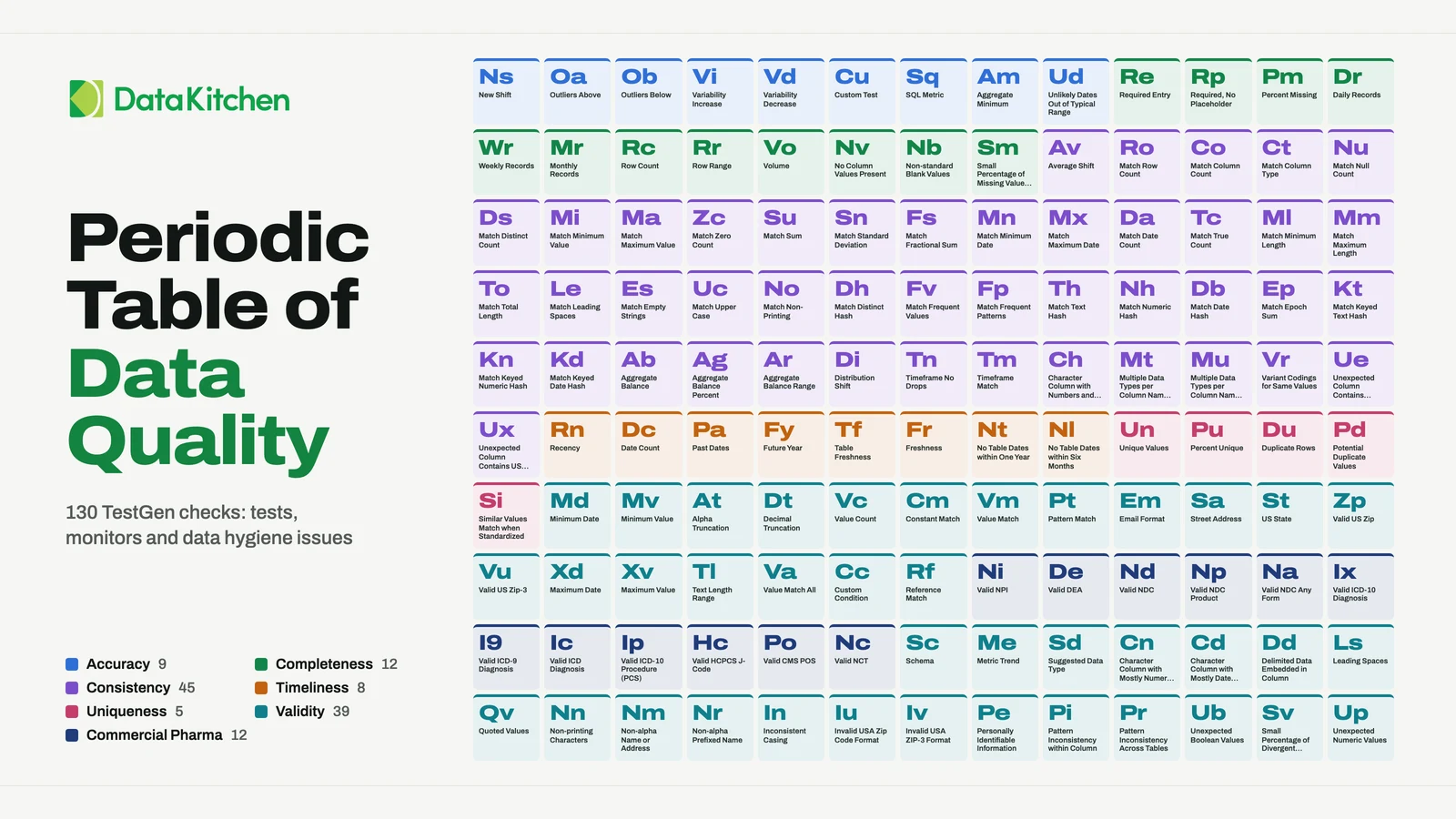
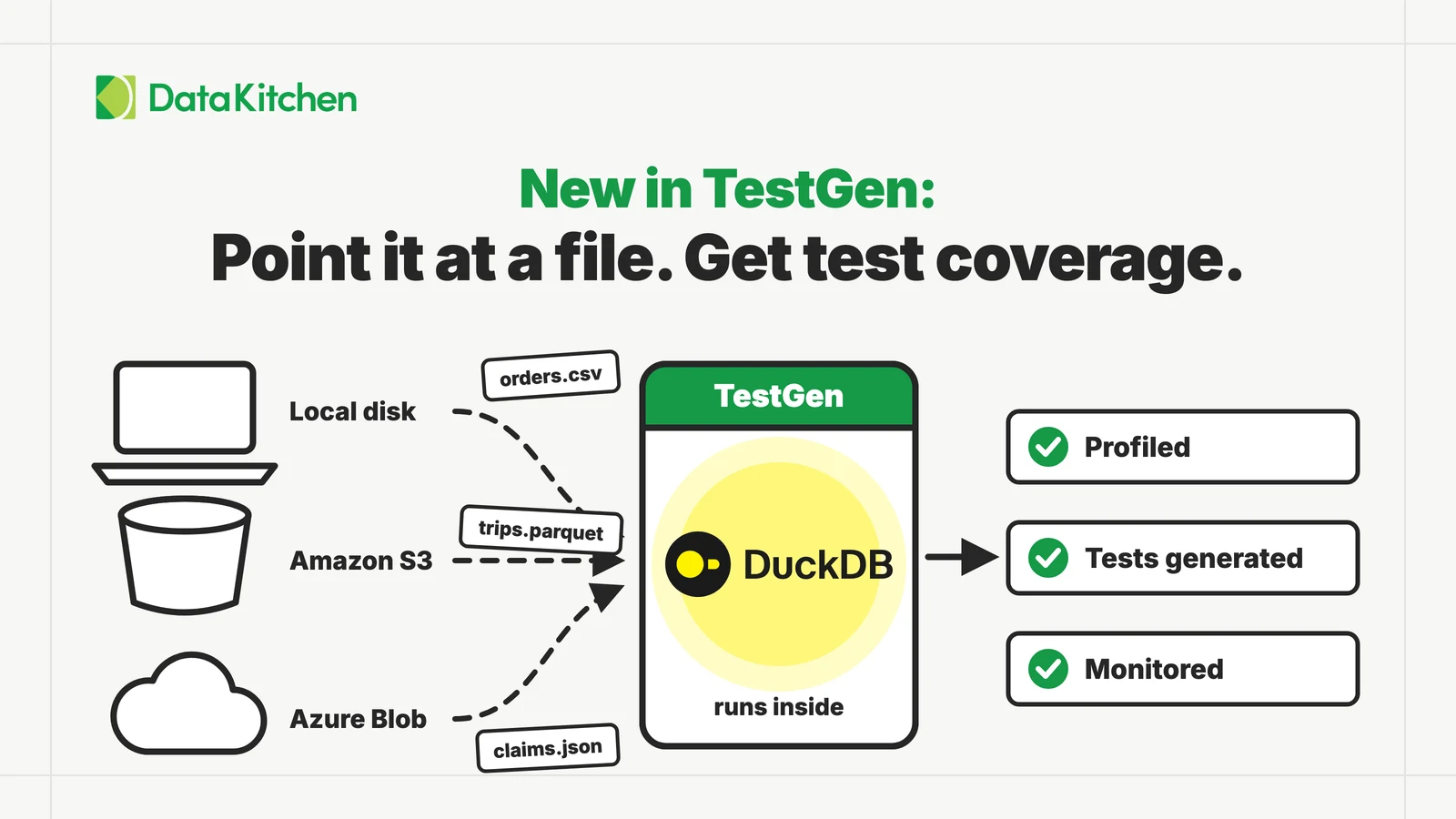
TestGen simplifies this by automatically generating tests based on the structure and behavior of the data itself. Instead of starting from scratch, data teams can use TestGen to instantly produce a baseline set of quality checks—null checks, value ranges, unique constraints, and expected distributions. These tests can be generated from existing tables, models, or past data behavior, giving teams a fast and scalable way to implement monitoring with minimal effort.
The real advantage is that TestGen shifts data quality from a reactive chore to a more proactive and integrated part of the development process. By making it easier to create and maintain tests, teams can catch issues earlier, reduce firefighting, and spend more time delivering insights rather than fixing broken pipelines. It also helps standardize data quality practices across teams, reducing tribal knowledge and improving collaboration.
In short, TestGen doesn’t magically solve data quality—but it lowers the barrier to doing it well. It transforms what used to be an “extra task” into something teams can keep up with, which is precisely what’s needed when data quality feels like just too much work.
Watch The ‘Data Quality Coffee With Uncle Chip’ Series
- Why Data Quality Isn’t Worth The Effort
- Why Data Quality Dimensions Fall Flat
- Data Quality When You Don’t Understand the Data
FAQ
What are the key points in this blog?
Data quality work is thankless because it is invisible when it succeeds and glaring when it fails. Environments change constantly without communication, so teams play defense. Automation helps but still takes effort to set up and maintain. And because the work generates no direct revenue, it is perpetually de-prioritized behind visible feature delivery.
Why does data quality work go unrecognized?
Because success looks like nothing happening. When pipelines run and reports are correct, nobody sees the tests, thresholds, and monitoring that made it so. Failure is the only visible state. That asymmetry makes it genuinely hard to justify time or headcount for work whose best outcome is that no one notices it.
Why do data teams end up reacting instead of preventing?
Because change arrives unannounced. New data sources appear, pipelines are updated, and business logic evolves, often without anyone telling the data team. Engineers and analysts discover the consequences only after something has already broken downstream, which leaves them permanently playing defense rather than getting ahead of the next problem.
Can automation solve data quality on its own?
No. Tools reduce the burden but do not remove it. Someone still has to set up tests, define thresholds, and maintain alerting as schemas change. And when something goes wrong, a human layer of interpretation is needed to work out what broke and how to fix it. Automation lowers the barrier rather than eliminating the work.
How does open-source TestGen reduce the effort?
It automates the most tedious part, which is writing the tests. Rather than hand-defining what good data looks like, TestGen generates a baseline of null checks, value ranges, unique constraints, and expected distributions from the structure and behaviour of the data itself. Coverage becomes a starting position rather than a project.