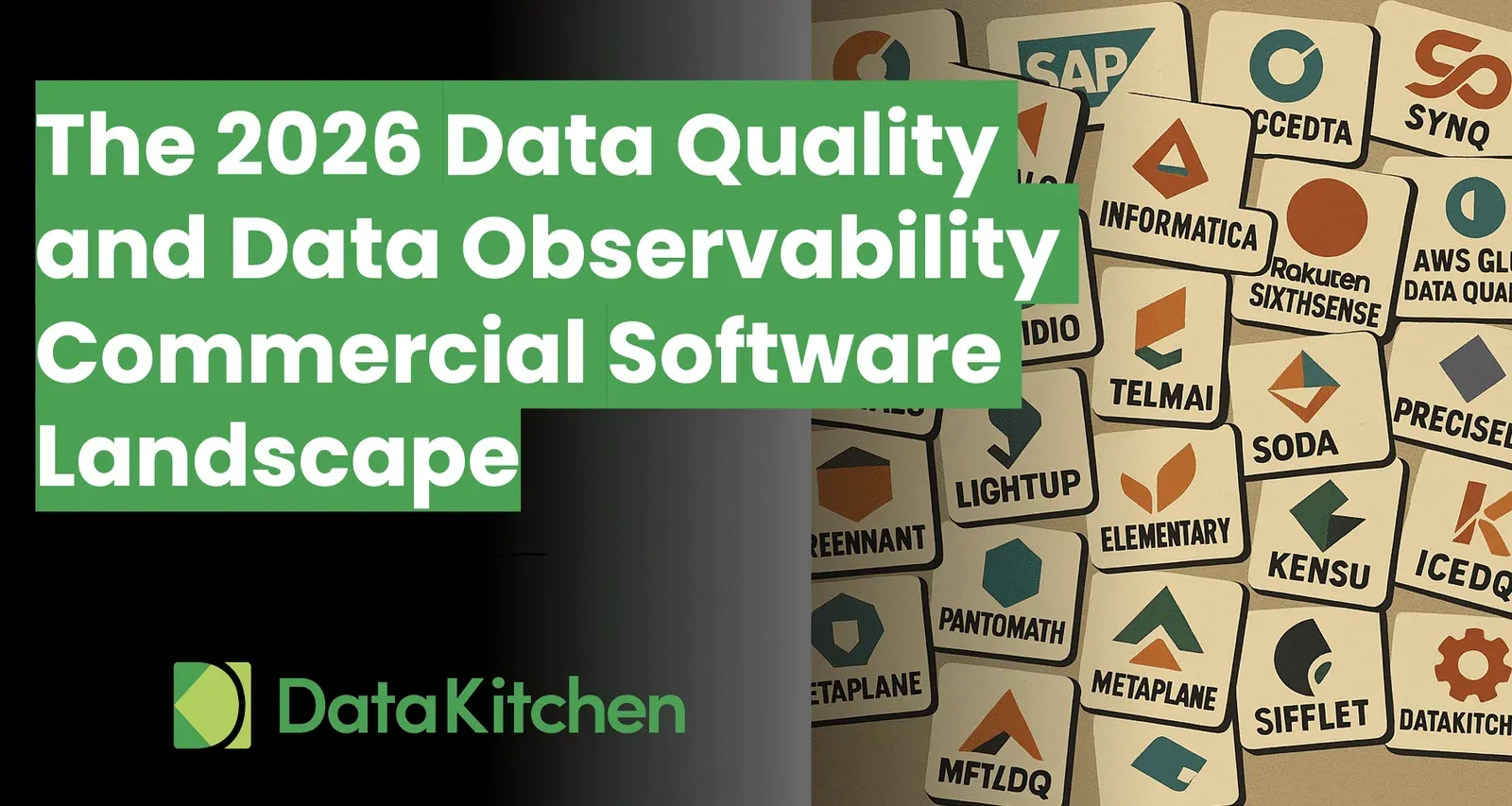
More than 50 vendors sell data quality or data observability software. The market has never been more capable, more crowded, or more confusing. First published December 2025, updated September 2026 for the GX Cloud shutdown.
It is also consolidating. Datadog bought Metaplane. Snowflake bought Select Star. And in 2026 the category had its first outright shutdown. Great Expectations was acquired and its assets went to FICO. GX Cloud, the commercial product, closed on June 1, 2026 with about 30 days’ notice to customers. The message from the big platforms is that data quality is too strategic to leave to a point vendor. The message from GX is what happens to a point vendor that no platform buys.
Between legacy suites bolting on monitoring, venture-backed startups promising AI-powered everything, and open-source projects with real traction, picking a tool feels less like software selection and more like a survival exercise. Whether you’re a data engineer buried in pipeline failures, a governance lead trying to show a return on the program, or a CDO wondering why nobody trusts the dashboards, this is the map. We keep it so you don’t have to.
Modern Data Observability & Data Quality Commercial Software
These focus on automated monitoring, anomalies, lineage, and data reliability for modern stacks.
- Monte Carlo: The best-known data observability platform. Monitors freshness, volume, schema, and quality incidents across warehouses and BI tools with ML-based anomaly detection.
- Bigeye: Column-level metrics and anomaly detection with SLA-style monitoring.
- Anomalo: AI-driven platform that detects data quality issues across structured and unstructured data with little manual rule configuration.
- Metaplane (now part of Datadog): ML-based anomaly detection and lineage for modern warehouses and BI tools, now inside Datadog’s observability suite.
- Validio: ML-based monitoring of data quality and business metrics with segmented anomaly detection.
- Soda (Soda Cloud + Soda Core): An open-source checks framework plus a SaaS control plane for rules, metrics, and monitoring.
- Datafold: Data diffs for CI/CD workflows, plus observability for transformations and pipelines.
- Acceldata: Enterprise data observability that monitors performance, cost, and quality across large data platforms.
- Lightup: SaaS observability with automated anomaly detection for key tables and metrics.
- Synq: Data quality and observability for analytics pipelines: freshness, schema change, anomalies.
- Pantomath: Cloud-native data observability and monitoring for modern data infrastructure.
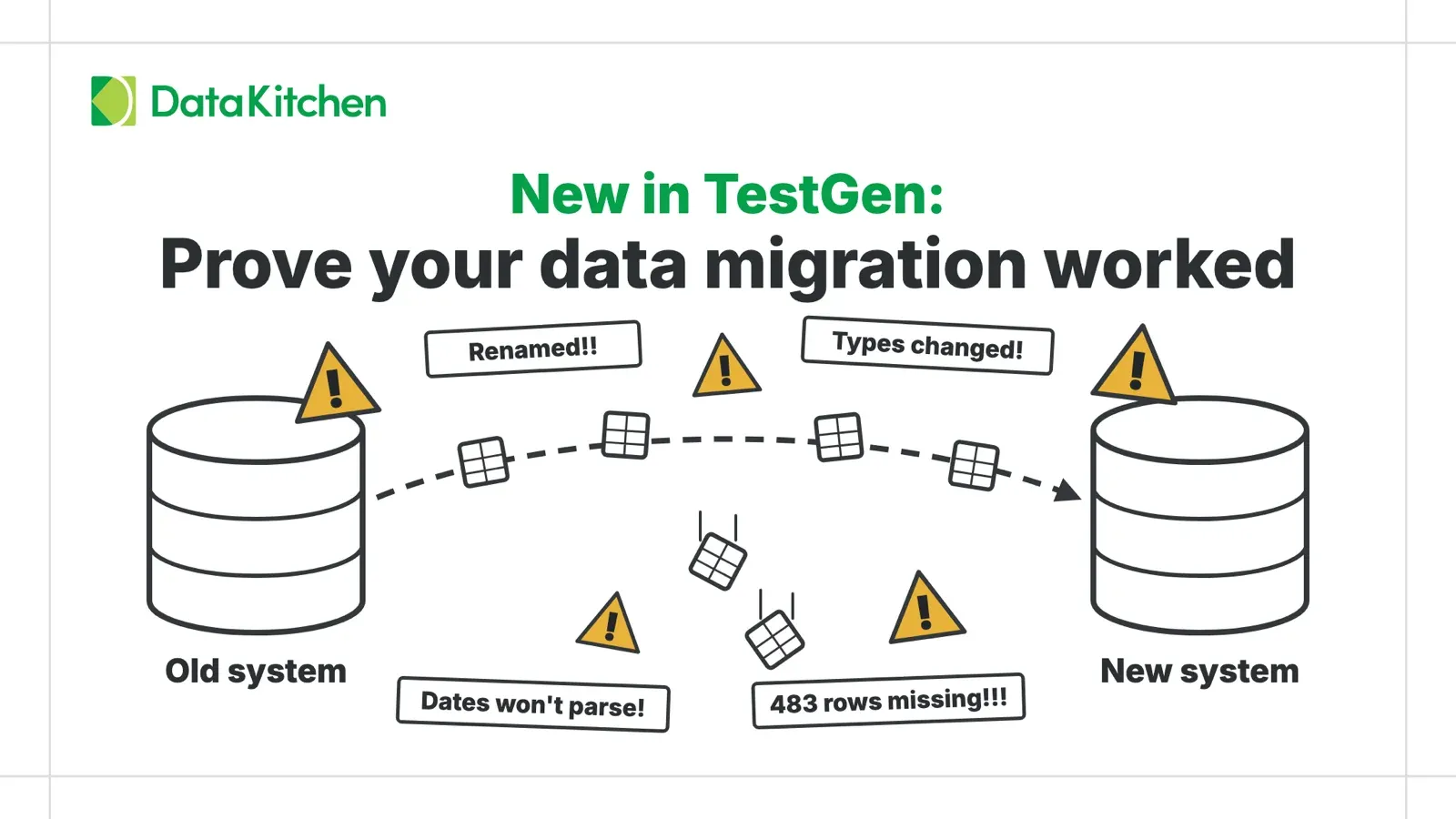
- ICEDQ: Data testing and monitoring platform for ETL validation and migration projects.
- RightData: Self-service data quality platform that lets business users profile, test, and monitor data.
- FirstEigen (DataBuck): Automated data quality validation that uses ML to generate and run rules.
- Databand (IBM): Pipeline monitoring and data quality with end-to-end visibility into data workflows, now part of IBM.
- Kensu: Data observability built for DataOps teams, tracking lineage and quality across pipelines.
- Telmai: AI-based data observability that detects and alerts on quality issues without manual configuration.
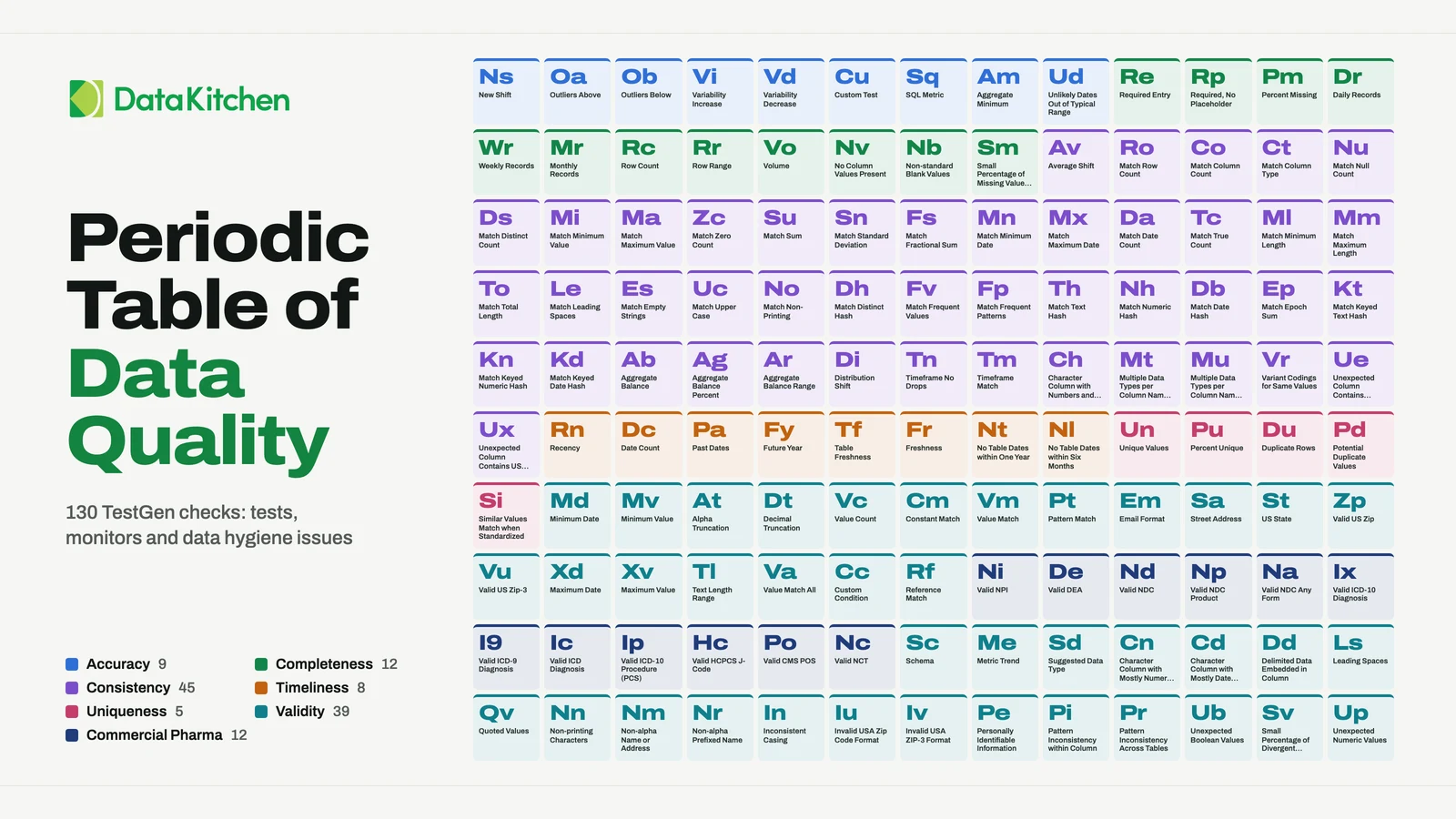
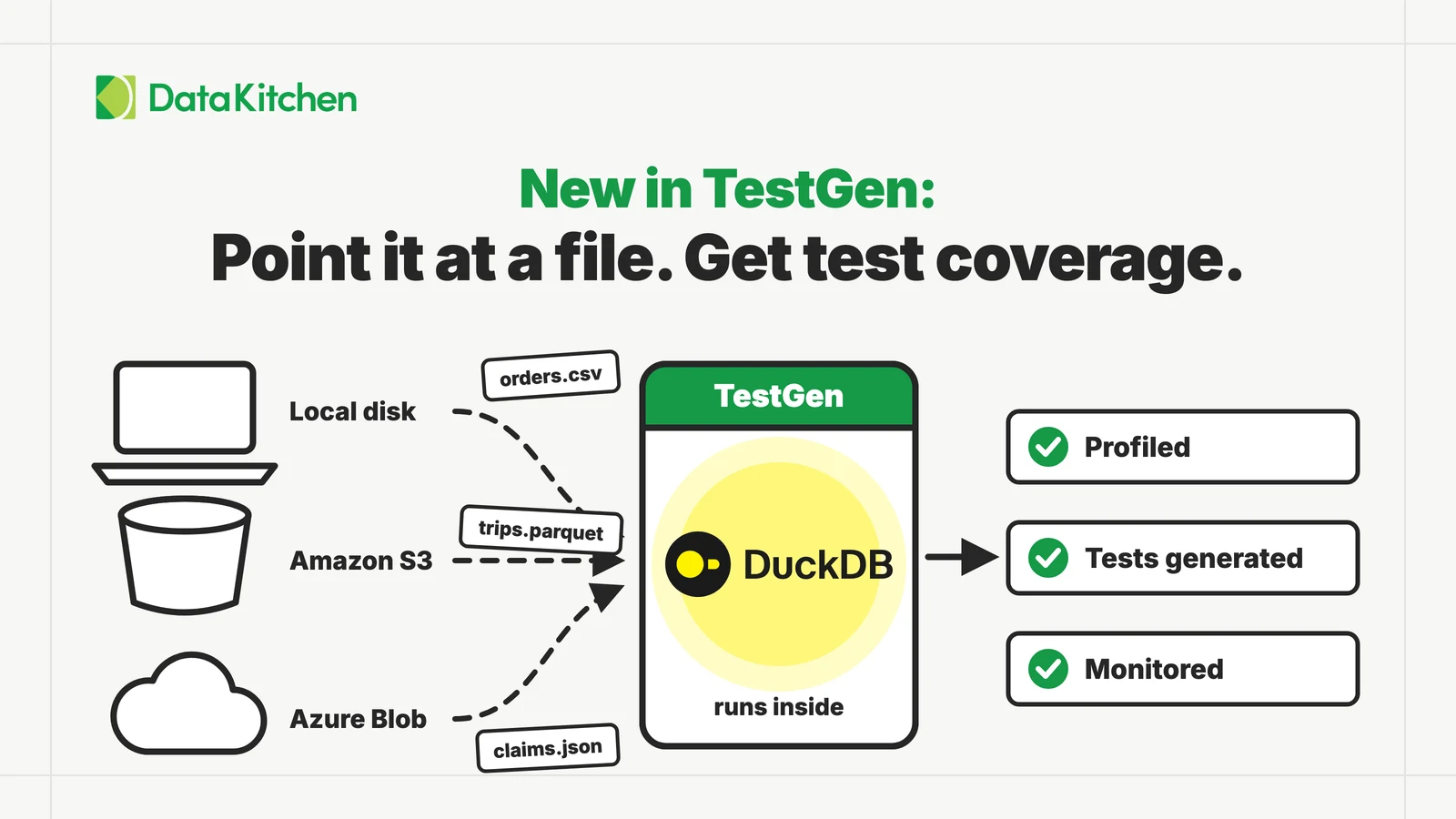
- DataKitchen (Enterprise DataOps Data Quality TestGen + Observability): Open-source and enterprise tools for automated test generation, profiling, anomaly detection, and end-to-end data journey observability.
- DQLabs: Cloud-native data quality and observability with AI-based profiling, anomaly detection, and quality scorecards.
- Rakuten SixthSense: Enterprise data quality and observability with automated monitoring and alerting.
- Sifflet: AI-augmented data observability for technical and business teams: automated monitoring, lineage, alerting.
- Elementary: dbt-native data observability: anomaly detection, quality monitoring, reporting.
- Evidently AI: Open-source ML monitoring for data drift, model performance, and data quality.
- Piperider: Open-source data reliability toolkit that profiles data and tracks change over time.
- Qualytics: Automated data quality and observability with AI-driven anomaly detection and profiling.
- AWS Glue Data Quality (Amazon): Managed DQ service built on Deequ with rule recommendation, scores, and anomaly detection.
- Great Expectations / GX: Open-source expectations framework. Its commercial product, GX Cloud, shut down on June 1, 2026 after the company was acquired; the GX Core project continues under Fivetran stewardship, so there is no longer a commercial GX to buy.
NOTE
GX Cloud customers got about 30 days to migrate. Read When the cloud goes dark: a note to Great Expectations customers for what happened and how to move your tests.
Traditional Commercial / “Augmented” Data Quality Platforms
These are the big enterprise suites you’ll see in Gartner-style evaluations.
- Informatica Data Quality / Cloud Data Quality: Broad DQ plus profiling, cleansing, matching, and monitoring, often bundled with the integration stack.
- SAP Data Services: ETL plus data quality and cleansing, often paired with SAP Information Steward for governance.
- SAP Information Steward: Metadata, profiling, and rule-based DQ on SAP and non-SAP sources.
- Oracle Enterprise Data Quality (EDQ): Profiling, matching, address verification, and monitoring for Oracle and non-Oracle data.
- Ataccama ONE: Data quality, MDM, governance, and catalog in one platform.
- Qlik Talend (Talend Data Fabric / Cloud): Integration plus DQ (profiling, cleansing, matching) across cloud and on-prem.
- IBM InfoSphere QualityStage: Enterprise DQ focused on matching, standardization, survivorship, and MDM scenarios.
- SAS Data Quality: Profiling, cleansing, and matching, tightly integrated with SAS analytics.
- Precisely Data Integrity Suite / Trillium heritage: DQ, enrichment, and address validation with strong location and postal capabilities.
TIP
Looking for open source? The 2026 Open-Source Data Quality and Data Observability Landscape maps the projects, including which ones ship the whole product in open source and which ship a demo.
Catalog / Governance Platforms With Data Quality Features
Some catalog and governance tools have embedded or tightly integrated DQ engines:
- Collibra Data Intelligence Platform + Collibra DQ & Observability: Catalog and governance with embedded DQ and observability.
- Informatica Intelligent Data Management Cloud (IDMC): Cataloging, governance, and DQ in one cloud platform.
- Experian Data Quality Platform: Customer and contact data quality and governance, with profiling, monitoring, and enrichment.
- Atlan: Active metadata platform with quality monitoring.
- Alation: Data catalog with quality indicators.
- data.world: Collaborative data catalog with quality features.
- Stemma (acquired by Teradata): Data discovery and quality.
- Select Star: Automated data discovery with lineage. Now part of Snowflake.
- Castor: Data catalog with automated documentation.
- DataHub (LinkedIn): Open-source metadata platform.
- Acryl Data: The commercial company behind DataHub, offering a managed catalog and observability.
- OpenMetadata: Open-source metadata and data quality platform with data discovery.
- Apache Atlas: Open-source data governance and metadata framework with data quality capabilities.
- Amundsen: Lyft’s open-source data discovery and metadata platform.
- Microsoft Purview: Governance and catalog first, with data quality, classification, and policy features across Azure and hybrid.
Specialist Contact / Reference Data Quality Vendors
Focused on customer and contact data, addresses, and identity, but still very much “data quality software”:
- Experian Data Quality: Address, email, and phone verification, enrichment, matching, profiling, and ongoing monitoring.
- Melissa Data Quality: Address, email, and phone verification, dedupe, profiling, and enrichment; components for SQL Server, ETL tools, and SaaS.
What the GX Cloud Shutdown Means for a Buyer
Every vendor on this page has an owner, and the owner has a plan for the product that is not your plan. For most of the modern list, the owner is a venture fund with an exit clock, usually seven to ten years from the first check. The category has taken on more than a billion dollars of that money, and enterprise list prices still average about $172,000 a year for capabilities that have converged across vendors. Acquisitions, repricing, and sunsets are how that math resolves. GX Cloud is the first shutdown. It will not be the last.
A platform buys a point tool to grow its own bill, not to shrink yours.
So add two questions to the RFP that no feature matrix asks. Who owns this vendor, and what clock are they on? And if the product disappears in 30 days, what do I keep? A tool that runs in your environment, with an open-source edition that is the whole product rather than a trial, leaves you with your tests. A SaaS-only product with a proprietary rule format leaves you with an export.
The AI Has to Be Able to Call the Tool
One more question for the RFP, because it will matter more than most of the checklist: how does my assistant use this? Your team already has Claude, Copilot, or Cursor open all day. A data quality tool those assistants cannot call is a dashboard somebody has to remember to look at. The Model Context Protocol (MCP) is the open standard that fixes this. The bar is not “has an MCP server.” The bar is complete: can the assistant read a profile, generate a test, run it, record the disposition, and set a monitor, or can it only fetch a score? Ask each vendor for the MCP tool count and how many of those tools can write. TestGen’s answer is 96 tools across the whole loop, each running under the connected person’s own role, in the open-source edition.
Where This Leaves You
The market is not going to get simpler. Expect more acquisitions, more feature overlap, and more vendors claiming to do everything. The best tool is not the one with the most features or the best demo. It is the one your team will use on a Tuesday. Get clear on the real problem first: broken pipelines, stakeholders who don’t trust the numbers, a regulator. Evaluate against that pain, not a generic checklist. Decide whether you need enterprise hand-holding or whether your team can run open source. And think hard about what happens when the hot startup gets acquired or pivots, because in 2026 that stopped being hypothetical.
The fanciest observability platform will not save a data architecture that is a mess to begin with. Tools multiply good practice. They do not replace it.
Before you sign a six-figure contract or sit through another demo, install DataOps Data Quality TestGen and DataOps Observability. Both are Apache 2.0, free, and full-featured, with no feature gates and no “contact sales for pricing.” See what automated test generation and end-to-end data journey observability do on your own data. Then decide whether you still need to keep shopping.
FAQ
What are the key points in this blog?
There are more than 50 commercial data quality and data observability vendors, and the post sorts them into four groups: modern observability platforms, traditional augmented data quality platforms, catalog and governance tools with quality features bolted on, and specialist contact or reference data vendors. Knowing which category a vendor sits in tells you more about fit than any feature list will.
How many data quality and data observability vendors are there?
More than 50 commercial vendors sell into this space, which is why evaluations stall. The count is inflated by category overlap: catalog vendors added quality checks, observability vendors added testing, and legacy data quality suites added monitoring. Two products with similar feature lists frequently solve different original problems, and that history predicts where each one is genuinely strong.
What are the categories of data quality software?
Four categories cover the commercial market. Modern data observability platforms monitor pipelines and tables for freshness, volume, and schema change. Traditional augmented data quality platforms focus on rules, cleansing, and matching. Catalog and governance platforms treat quality as one feature among metadata and lineage. Specialist vendors handle contact and reference data, such as address and identity verification.
How do I choose a data quality vendor?
Start from the job you actually need done rather than the feature matrix, because most vendors will claim most features. Ask how tests get created, since hand-authoring is what caps coverage. Ask whether results are stored and trended or only alerted on. Ask what happens on-premises. Then trial the free open-source options first, so you know what you are paying extra for.
What is the difference between data observability and data quality platforms?
Observability platforms watch the pipeline and the table: did it run, did it arrive on time, did row counts move, did the schema change. Data quality platforms examine the values inside the rows against rules. Observability catches a load that silently stopped. Quality testing catches a load that ran perfectly and delivered wrong numbers. Neither substitutes for the other.
Is Great Expectations still a commercial option?
No. GX Cloud, the commercial Great Expectations product, shut down on June 1, 2026 after the company was acquired, and its customers got about 30 days to migrate. FICO holds the assets and is not selling it. The open-source GX Core project continues under Fivetran stewardship, so the framework is still available, but there is no paid Great Expectations product to buy or renew.
Should a data quality vendor have an MCP interface?
Yes, and it should be complete rather than read-only. The Model Context Protocol (MCP) is the open standard that lets Claude, Copilot, Cursor, or an agent you build call a tool directly. A read-only server that returns a score is a demo. Ask each vendor for the tool count and how many tools can write. DataOps TestGen exposes 96 MCP tools across the whole data quality loop in its open-source edition, each running under the connected user’s own role.
Should I use open source or commercial data quality software?
Try open source first, because it costs nothing to find out and it establishes your baseline. DataOps TestGen and DataOps Observability are Apache 2.0 licensed with no feature gates (the open-source editions cover one user and one project), so a trial tells you what your data actually needs. Then evaluate commercial products against that, knowing exactly which gaps you are paying to close.
Comparisons
DataKitchen TestGen vs the field
Head-to-head against every major data quality and observability vendor.
No vendors match. .