Great Expectations got acquired. Their cloud edition shut down a month later.
If you’re a GX Cloud customer reading this, I’m sorry. You did the work. You wrote the expectations files. You wired the runner into your pipeline. You got your team onto the dashboard. And now you have 30 days to find a replacement, migrate your tests, retrain your team, and reroute your alerts. None of that is your fault.
I want to write to you as a founder, not a vendor.
Why does this keep happening?
I started DataKitchen 13 years ago with two co-founders, Gil Benghiat and Eric Estabrooks. We’re bootstrapped. We’re profitable. We’ve never taken venture money. That was a deliberate choice we made in 2013, and we’ve stuck with it through three economic cycles and one pandemic.
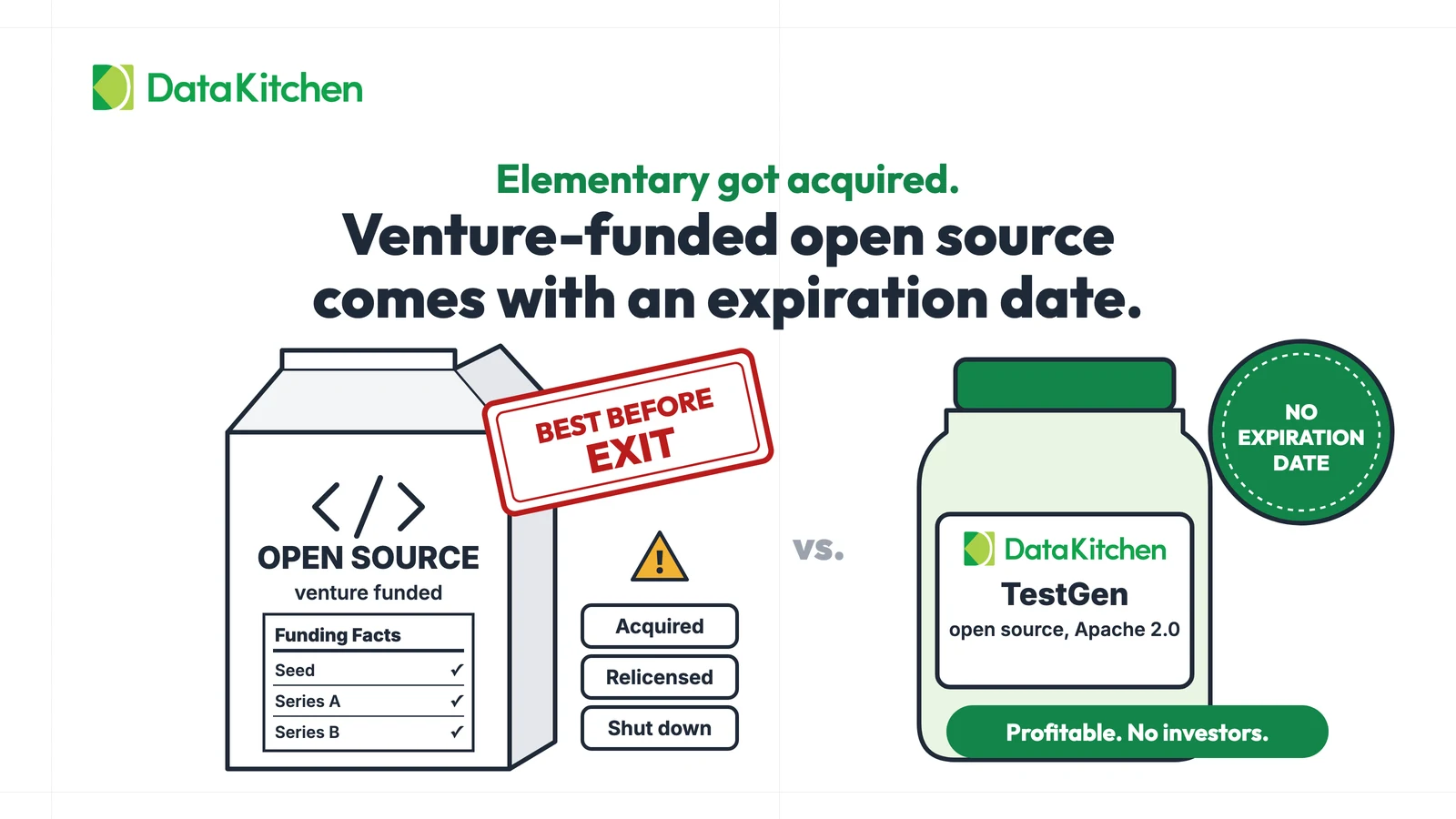
The reason matters here. When you take venture capital, you take on a growth mandate. Investors need a return on their funds. That means an exit, on a clock. The clock is usually seven to ten years from the first check. Every decision the company makes after that runs through that math: pricing, packaging, who gets supported, what the roadmap looks like, whether the product gets shut down or rolled into something bigger after an acquisition.
The data quality and data observability category has taken on more than a billion dollars in venture investment. I wrote about why that’s not going to end well for buyers a while back. Acquisitions, sunsets, and forced repricing are the predictable end state of category overfunding. GX is one example. There will be more.
If you bought a tool from a venture-backed vendor in 2022, you bought a tool plus a clock you couldn’t see. The clock just ran out for GX customers.
Where the category sits today
There are 55 vendors selling some version of data quality or data observability right now. We mapped them in There are a lot of freaking data quality and data observability vendors. The capabilities have converged. Profiling, anomaly detection, freshness, volume, and schema monitors, quality scoring. Every modern tool ships them. The prices have not converged. Enterprise list prices average $172,000 a year for a category where the underlying capability is now commodity software.
You don’t need to spend six figures to replace GX. You shouldn’t.
What we built for exactly this situation
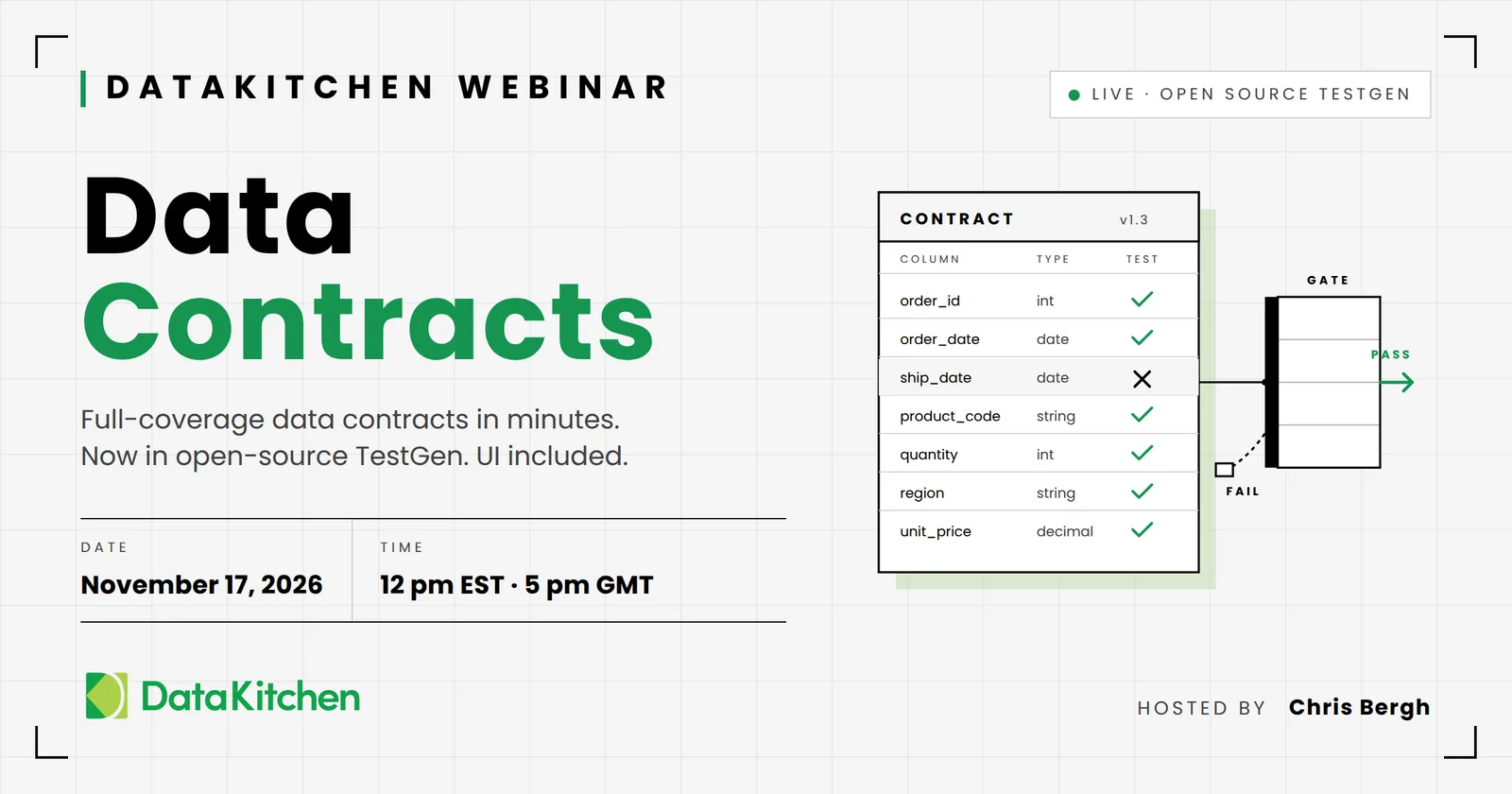
DataOps Data Quality TestGen is our open-source data quality tool. Apache 2.0. On-prem. No cloud. $0 to start. The core profiling, testing, and monitoring engine is free and open source. Enterprise adds team access, security, Commercial Pharma tests, source-data controls for AI, and support.
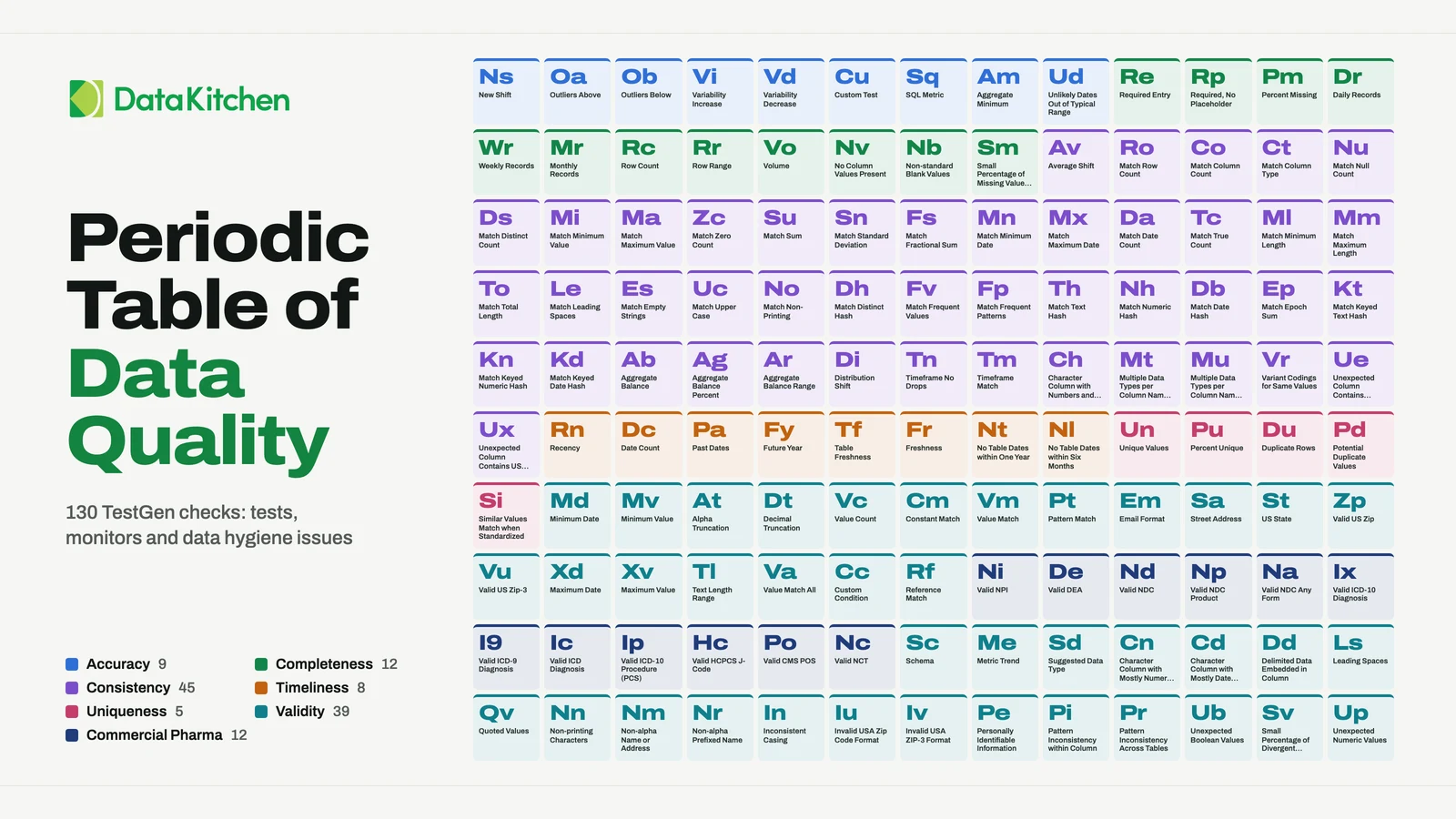
Point it at your database. It profiles every column. It writes 120-plus auto-generated tests covering integrity, hygiene, and quality. It runs the queries inside your database, so your data never leaves the perimeter. It ships with a UI: a profiling view, a test results view, a quality scorecard, a data catalog, and shareable issue reports. You don’t write YAML. You don’t assemble a runner. You don’t build a dashboard.
For GX customers specifically: TestGen does the work GX Cloud used to do for you, on infrastructure you control, with a license that can’t be revoked. Install runs on Mac, Linux, or Windows with Docker. Fifteen minutes from docker compose up to your first quality score.
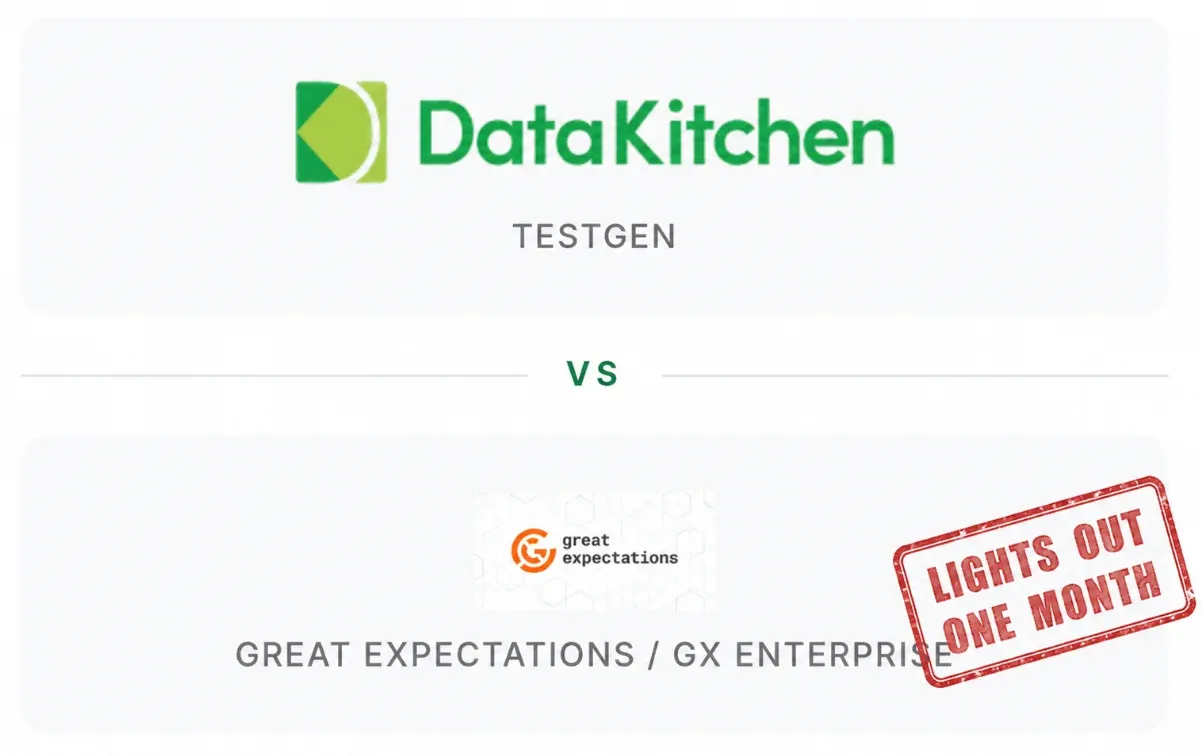
If you want the head-to-head: DataKitchen TestGen vs Great Expectations / GX Cloud.
What you can count on from us
We’ve been profitable for 13 years. We have no investors. There is no growth-mandate clock running on DataKitchen. The same people who wrote TestGen answer support tickets. Bristol Myers Squibb runs TestGen on the commercial datasets behind its lifesaving drugs. Progeny Health runs on it. Pharma and healthcare don’t tolerate flaky tooling or vendors that disappear.
You’re not going to get a shutdown email from us in 30 days. You’re not going to get a 4x renewal quote because a board demanded one. You’re going to get the same product we shipped last year, the year before, and the year before that, with more in it.
If you need a hand
If you’re a GX customer staring at a one-month clock, contact us. I’ll get you on a call with the engineers who built TestGen, walk you through migrating your expectations to TestGen tests, and help you stand the thing up before the lights go out.
We built this company so we’d never have to send the email GX just sent. The least we can do is help the people who have it.
FAQ
What are the key points in this blog?
Great Expectations was acquired and GX Cloud was set to shut down, leaving its customers about 30 days to migrate. The wider cause is category economics: more than a billion dollars of venture investment across 55 data quality and observability vendors, and a growth mandate that ends in acquisitions, sunsets, or repricing. Enterprise list prices average $172,000 a year, but open-source TestGen replaces the capability on your own infrastructure for nothing.
What should I do if my data quality tests run on a service that is shutting down?
Inventory what the service actually did for you: the tests themselves, the schedule, the dashboard, the alert routing. Then replace each piece deliberately rather than porting files. For GX Cloud specifically, DataOps Data Quality TestGen profiles your database and auto-generates tests covering the same ground on infrastructure you control, and install runs about fifteen minutes from docker compose up to a first quality score. The head-to-head comparison lays out where the two differ.
Why do data quality tools get acquired or shut down?
Venture funding comes with a growth mandate and an exit clock, usually seven to ten years from the first check. Pricing, packaging, who gets supported, and what happens to a product after an acquisition all run through that math. When a category absorbs more than a billion dollars of investment, as data quality and data observability has, sunsets and repricing become a predictable end state rather than a surprise.
Does replacing a data quality tool have to cost six figures?
No. Enterprise list prices in this category average $172,000 a year across roughly 55 vendors, but the underlying capability is now commodity software that every modern tool ships: profiling, anomaly detection, freshness, volume and schema monitors, quality scoring. Open-source TestGen is Apache 2.0 and costs nothing to start, and the core profiling, testing, and monitoring engine is in both the open source and enterprise editions.
What does DataOps Data Quality TestGen do?
You point it at a database and it profiles every column, then writes 120-plus auto-generated tests covering integrity, hygiene, and quality. Queries run inside your database, so data never leaves the perimeter. It ships a profiling view, a test results view, a quality scorecard, a data catalog, and shareable issue reports, so there is no YAML to write and no dashboard to assemble.
How can I tell whether a data quality vendor will still be there in three years?
Ask who the company answers to, and check whether the license survives it. A bootstrapped, profitable vendor has no exit clock; an investor-backed one owes a return on a seven-to-ten-year schedule. DataKitchen has been profitable since 2013 with no outside investment. Beyond that, an Apache 2.0 tool you run on your own infrastructure keeps working whatever happens to the company behind it.