In today’s data-driven landscape, Data and Analytics Teams increasingly face a unique set of challenges presented by Demanding Data Consumers who require a personalized level of Data Observability. As opposed to receiving one-size-fits-all status updates, these key stakeholders desire real-time, granular insights into the status of their specific data as it traverses the complicated data production pipeline. This growing need calls for the data team to innovate and implement sophisticated tracking mechanisms to monitor individual data ‘payloads’ throughout various ingestion, transformation, and delivery stages.
While this is a technically demanding task, the advent of ‘Payload’ Data Journeys (DJs) offers a targeted approach to meet the increasingly specific demands of Data Consumers. In this article, we explore the role of Payload DJs in addressing these complexities, illustrated with examples from industries like drug discovery and insurance.
The Challenge: High Stakes in the Age of Personalized Data Observability
The primary challenge stems from the requirement of Data Consumers for personalized monitoring and alerts based on their unique data processing needs. Data Observability platforms often need to deliver this level of customization. Deploying a Data Journey Instance unique to each customer’s payload is vital to fill this gap. Such an instance answers the critical question of ‘Dude, Where is my data?’ while maintaining operational efficiency and ensuring data quality—thus preserving customer satisfaction and the team’s credibility.
The Solution: ‘Payload’ Data Journeys
Traditional Data Observability usually focuses on a ‘process journey,’ tracking the performance and status of data pipelines. However, a Payload DJ offers a paradigm shift by enabling an individual’ datum journey.’ It assigns unique identifiers to each data item—referred to as ‘payloads’—related to each event. This allows the progress of each payload to be tracked as separate instances (known as ‘payload instances’).
By offering real-time tracking mechanisms and sending targeted alerts to specific consumers, a Payload DJ can immediately notify them of any changes, delays, or issues affecting their data. This transparent system effectively answers real-time data location and status questions, thus enhancing customer trust and satisfaction.
Real-World Use Cases
Example 1: A Drug Discovery Scientist Needs To Understand Where Their Molecule ‘s Data Is In The Warehousing Process Company
The IT team and chemists have different observability needs in a Top Ten Drug Discovery Company. While the IT team is interested in monitoring the overall system performance, each chemist is concerned only with tracking the progress of their specific molecule. A Payload DJ allows each chemist to track their molecule, offering insights into its current status and estimated arrival time at its destination.
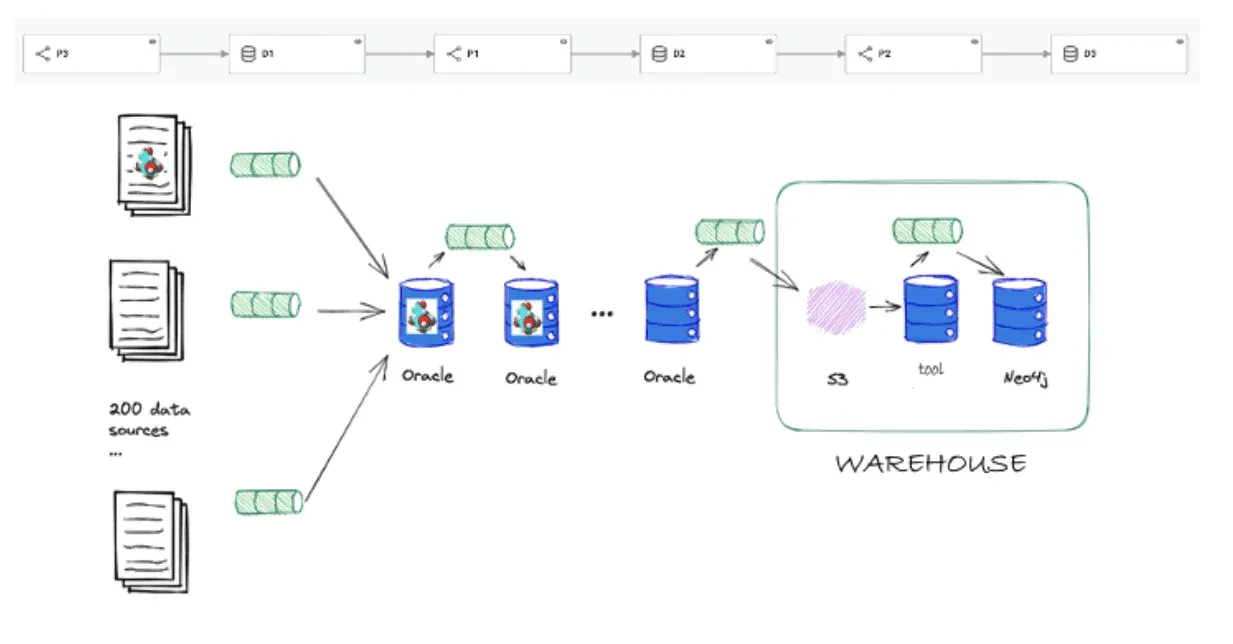
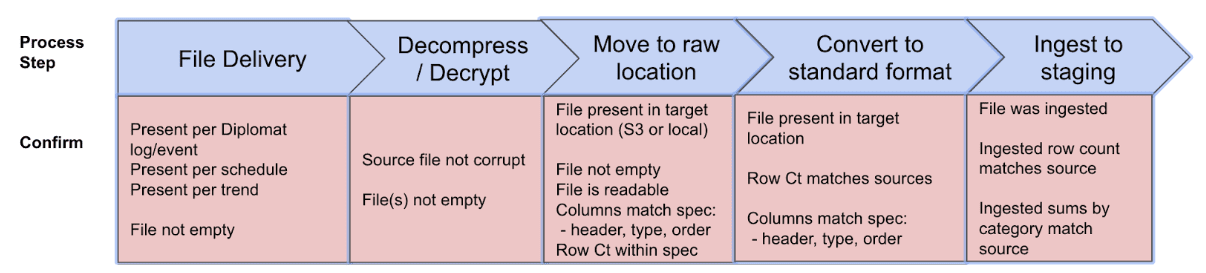
Example 2: The Data Engineering Team Has Many Small, Valuable Files Where They Need Individual Source File Tracking
In a typical data processing workflow, tracking individual files as they progress through various stages—from file delivery to data ingestion—is crucial. Payload DJs facilitate capturing metadata, lineage, and test results at each phase, enhancing tracking efficiency and reducing the risk of data loss.
Example 3: Insurance Card Tracking
In the pharmaceutical industry, disjointed business processes can cause data loss as customer information navigates through different systems. Implementing a Payload DJ enables support teams to track each insurance card individually, thereby identifying bottlenecks and reducing data loss.
Conclusion: The Unquestionable Benefits
For demanding Data Consumers, the Payload DJ serves as a personalized observability tool that offers real-time insights into the status of their specific data payloads. It boosts customer satisfaction by providing a self-service mechanism to verify data status, quality, and integrity independently. Additionally, real-time alerts offer an extra layer of assurance by notifying consumers about critical events in their data journey.
By embracing the Payload DJ model, Data and Analytics Teams can attain a new level of efficiency and customer satisfaction, fulfilling the specialized needs of today’s Demanding Data Consumers. Given modern data systems’ increasing complexity and scale, adopting such advanced and personalized tracking mechanisms is not merely an option but a pressing necessity for Data Engineers.
Investing in Payload Data Journeys is an investment in customer satisfaction, data integrity, and your organization’s future in a world where data is not just an asset but the lifeblood of operational and strategic decision-making.
Please don’t hesitate toreach out if you would like to learn more about our three software products: DataOps Observability, DataOps TestGen, and DataOps Automation.
FAQ
What are the key points in this blog?
Demanding Data Consumers want the status of their own data, not a one-size-fits-all pipeline update. Traditional Data Observability tracks a process journey — how pipelines are performing. A Payload Data Journey tracks a datum journey instead, giving each data item a unique identifier and following it as its own payload instance, so alerts reach only the consumer whose data is affected.
What is a Payload Data Journey?
A Payload Data Journey assigns a unique identifier to each individual data item, or payload, and tracks that item as its own instance through ingestion, transformation, and delivery. Each consumer sees the progress of their payload rather than the aggregate health of the pipeline, and gets alerted about changes, delays, or issues affecting that specific item.
What is a Data Journey?
A Data Journey is the path data takes from source to customer value, plus the expectations that should hold at each step. DataKitchen publishes the idea as 22 principles at datajourneymanifesto.org, which frames the Data Journey as an expectation layer: it observes a production system and alerts in real time, but it does not run the pipeline itself.
How is a Payload Data Journey different from process observability?
Process observability tracks the performance and status of data pipelines: whether jobs ran and how they performed. A Payload Data Journey tracks one data item as it moves across those same pipelines. The distinction matters because a pipeline can look healthy overall while a single consumer’s file, molecule, or insurance card is stuck, late, or lost along the way.
Who needs personalized data observability?
Data consumers whose work depends on one specific data item rather than the whole pipeline. A chemist at a drug discovery company tracks their own molecule while the IT team watches overall system performance. An engineering team tracks individual source files through delivery and ingestion. A support team tracks each insurance card through disjointed business processes to find where information is lost.
What do data consumers get from a Payload Data Journey?
Self-service answers. A consumer can verify the status, quality, and integrity of their own data payload without asking the data team, and real-time alerts tell them about critical events in its journey — a delay, a failed test, a missing file. For the data team, that removes a stream of where-is-my-data interruptions and the credibility cost of not knowing.