Pointing an AI coding agent at your existing data pipelines and hoping for 10x productivity is a great way to get a confident agent that breaks production. The agents are good. The problem is the environment you give them. Without isolated sandboxes, a granular pipeline structure, and a real feedback loop, an autonomous AI session is just a faster way to compound mistakes.
The formula that actually works has four parts. Claude Code is the agent. DataOps gives Claude an isolated environment where it can iterate without touching production. FITT architecture breaks your pipelines into the small, testable units Claude can reason about. Data testing closes the loop so the agent knows when it’s done and when it’s wrong. Take any one piece out and the productivity gains collapse. Put all four together and you can run parallel Claude Code sessions exploring different approaches while production sits untouched.
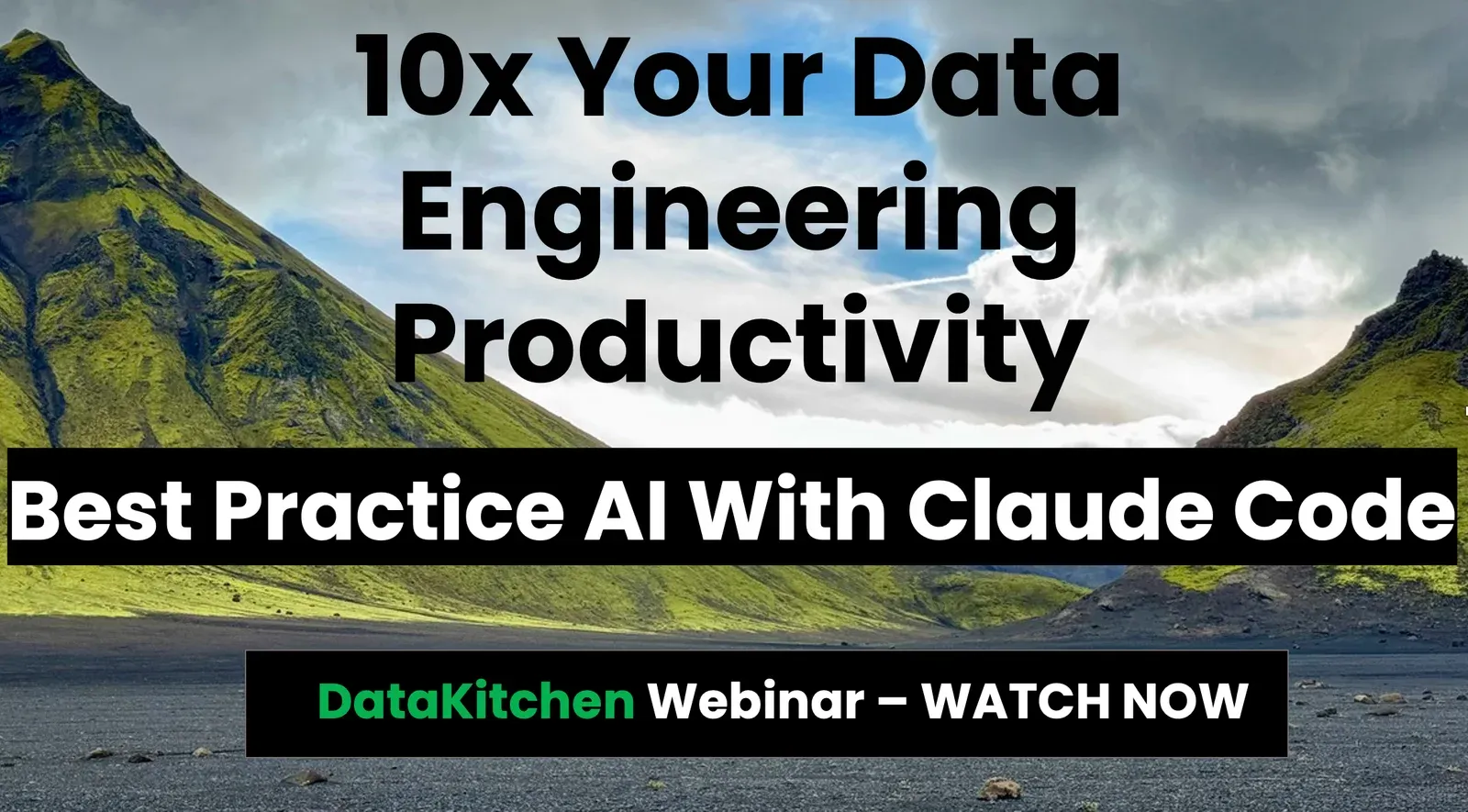
In this on-demand webinar, we walk through the formula on real Snowflake and Databricks projects: how to stand up Claude-safe environments, how FITT gives Claude units it can actually drive, and how data tests give the agent a self-correcting signal. You’ll see what a productive multi-session day looks like and the guardrails that keep production safe.
If you’re trying to move past one-shot prompts into actual autonomous data engineering, this session is the playbook.
Watch the webinar
Fill out the form and the recording, slides, and transcript open on the next page.