Open source data quality for Microsoft
Data quality for your whole Microsoft data stack.
SQL Server, Azure SQL, Synapse, Fabric, and OneLake. TestGen profiles every table, generates thousands of tests, and flags hygiene issues on the first run. Read-only access. Free and open source.
Install TestGen
Pick your platform. Free and open source.
# TestGen install for Mac, Linux.
# Download the latest installer.
$ curl -o dk-installer.py \
  'https://raw.githubusercontent.com/DataKitchen/data-observability-installer/main/dk-installer.py'

# Run the install command.
$ python3 dk-installer.py tg install

# Full docs: docs.datakitchen.io/testgen/get-started/install-on-mac-linux/- Double-click
dk-installer.exein your Downloads folder. - If Windows shows a protection warning, choose More info, then Run anyway.
- Pick TestGen, then Docker or pip. The installer seeds demo data, opens the UI, and prints your login.
# Full docs: docs.datakitchen.io/testgen/get-started/install-on-windows/
- 55data profiling column characteristics
- 32data hygiene detectors
- 34test types auto-generated from the profile
- 19business rule and custom SQL test types
Every Microsoft source TestGen tests
On-prem, in Azure, or in Fabric. TestGen runs read-only queries where the data sits and stores only results. One tool for the database you run today and the one you’re moving to.
- Microsoft SQL Server
- On-prem, in a VM, or in a container. SQL login. Details →
- Azure SQL Database
- SQL login, Managed Identity, or Entra ID service principal. Details →
- Azure Synapse Analytics
- SQL login, Managed Identity, or Entra ID service principal. Details →
- Microsoft Fabric
- Lakehouse and Warehouse data, through the SQL analytics endpoint. Details →
- OneLake
- Every layer of your lakehouse: bronze, silver, and gold. Details →
- Azure Blob Storage
- CSV, Parquet, and JSON files, read in place. Details ↗
What breaks as data moves across the Microsoft stack
From SQL Server to Azure to Fabric, the same few problems follow the data. Each card lists the TestGen checks that find them.
-
SQL Server: legacy types
Dates and numbers stored as text in older schemas.
-
Moving to Azure SQL: lost rows
A migration that changed counts or totals.
-
Synapse: missing feeds
A source file that never arrived.
-
Fabric: reloads
Pipelines that landed the same rows twice.
-
OneLake: drift between layers
Gold totals that no longer match silver.
-
Everywhere: stale tables
A table that quietly stopped updating.
What TestGen does across the Microsoft stack
Everything below is in the open source release, on every Microsoft source listed above. Enterprise adds team access, security, Commercial Pharma tests, and support.
-
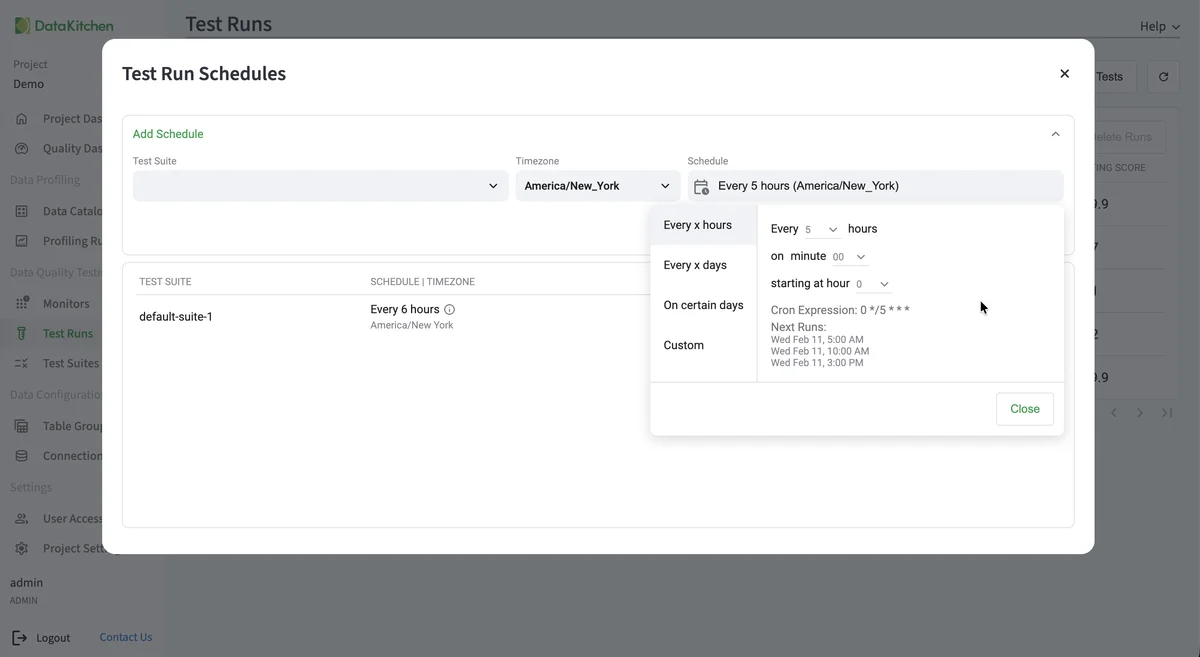
Auto-Generated Tests (documentation, opens in a new tab)
The same generated tests on SQL Server, Azure SQL, Synapse, Fabric and OneLake, so a migration starts and ends with the same checks.
-
Data Profiling (documentation, opens in a new tab)
55 characteristics per column on every Microsoft source, plus CSV, Parquet and JSON files in Azure Blob Storage.
-
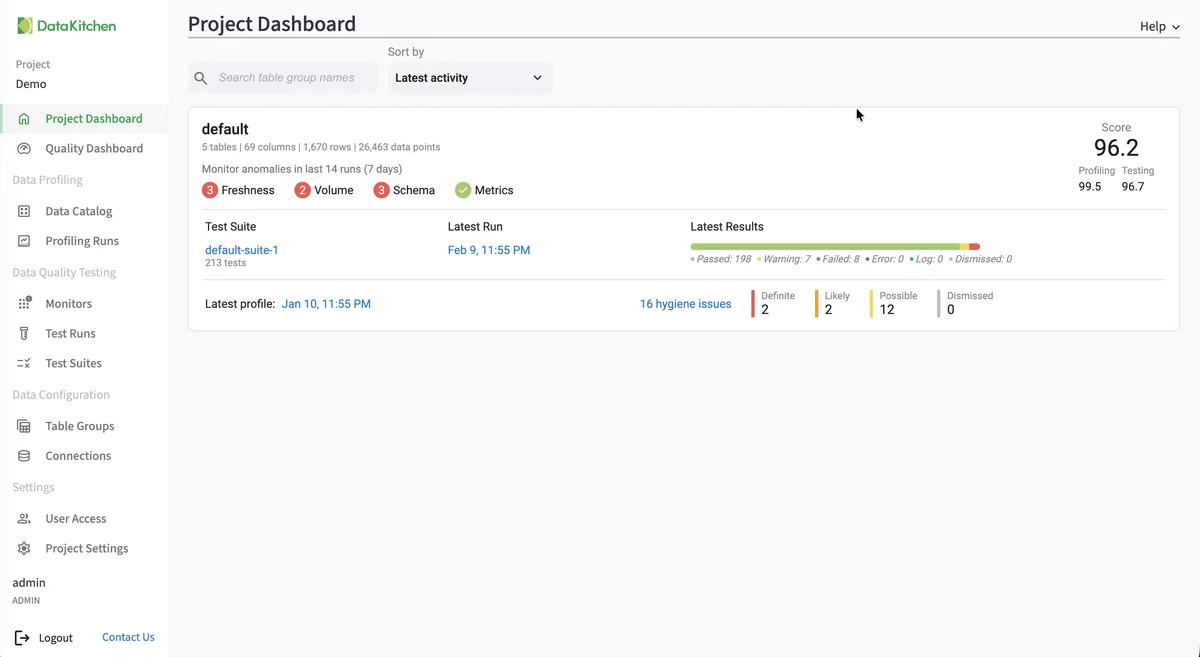
Hygiene Detection (documentation, opens in a new tab)
Finds what moves with the data from one Microsoft platform to the next: text-typed dates, truncation, placeholders and duplicates.
-
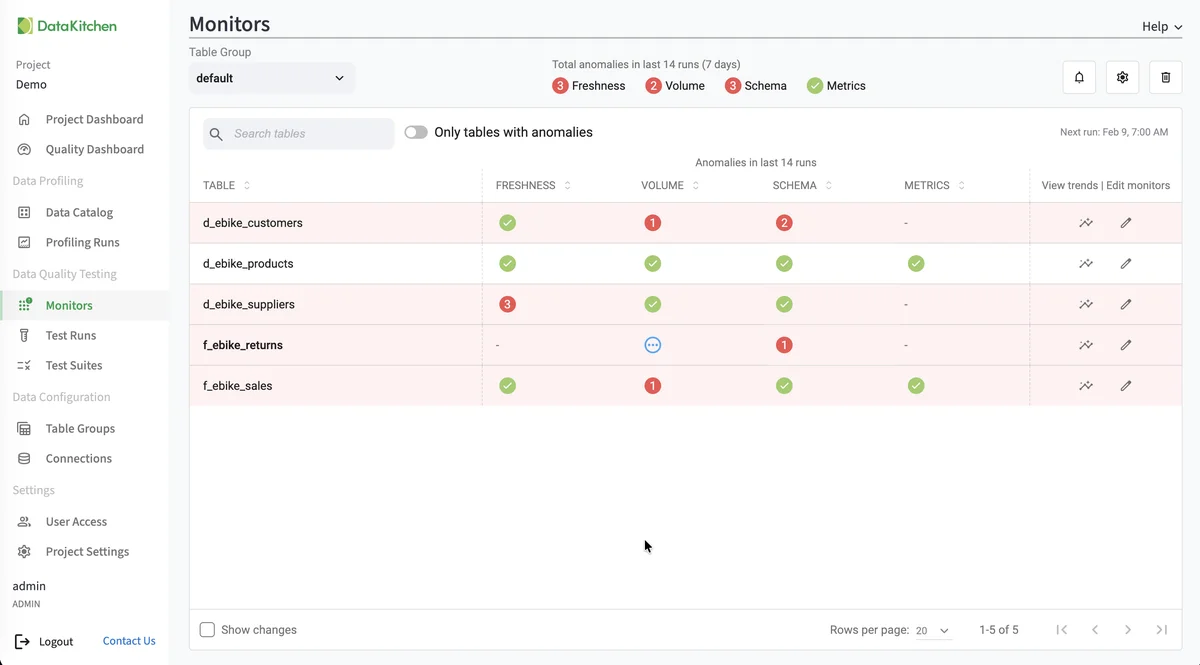
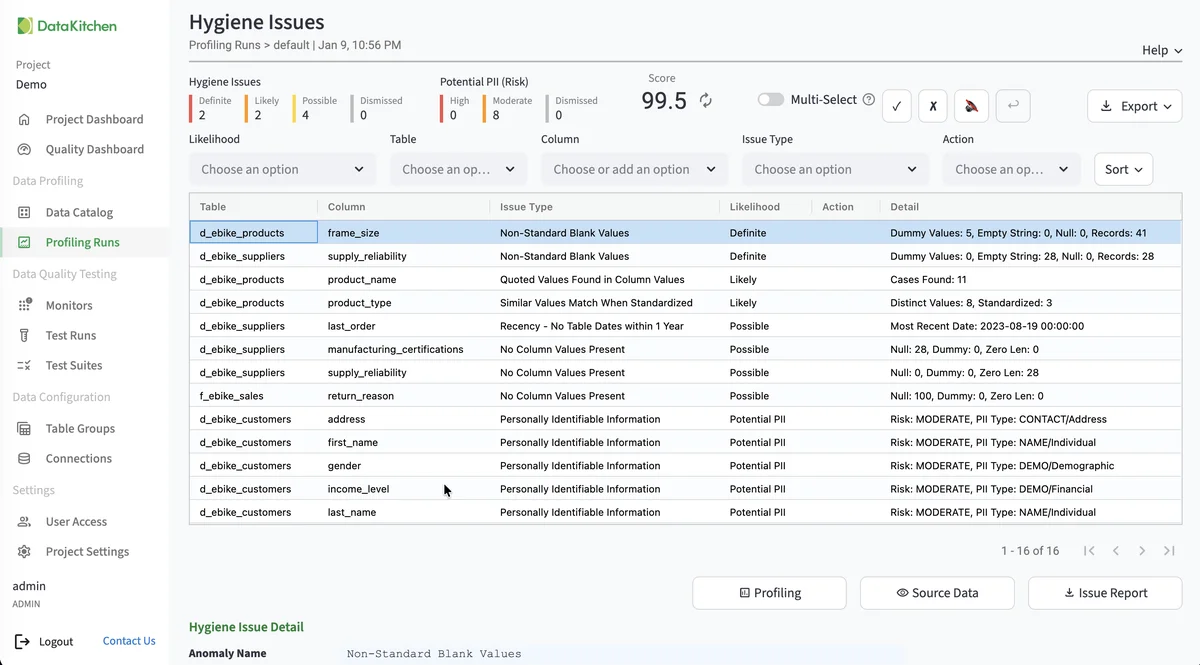
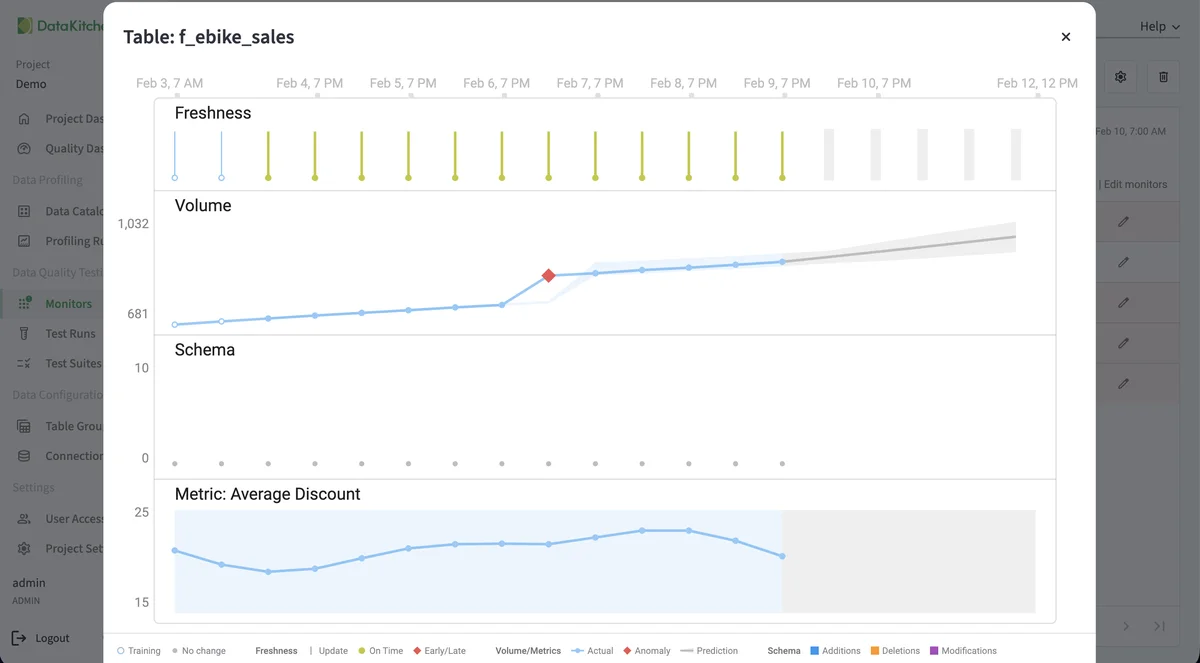
Anomaly Detection (documentation, opens in a new tab)
Freshness, volume, schema and custom-metric monitors on every source, from on-prem SQL Server to a Fabric Lakehouse.
-
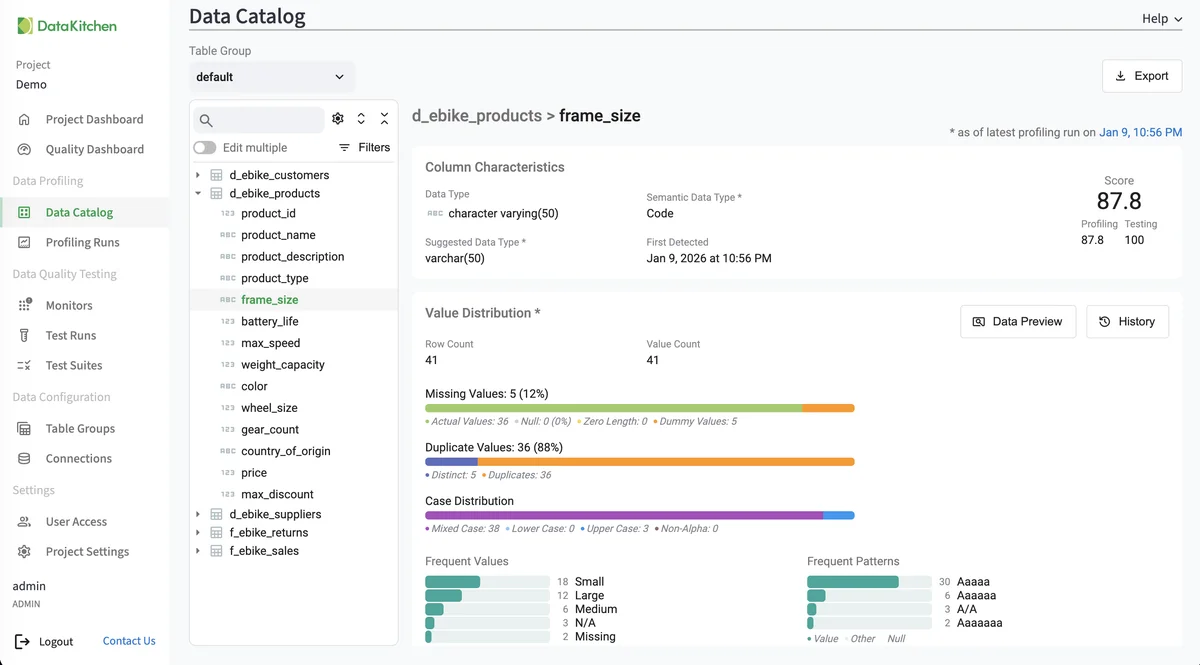
Data Catalog (documentation, opens in a new tab)
Every Microsoft source’s tables in one catalog, with profiles, test results and Critical Data Elements.
-
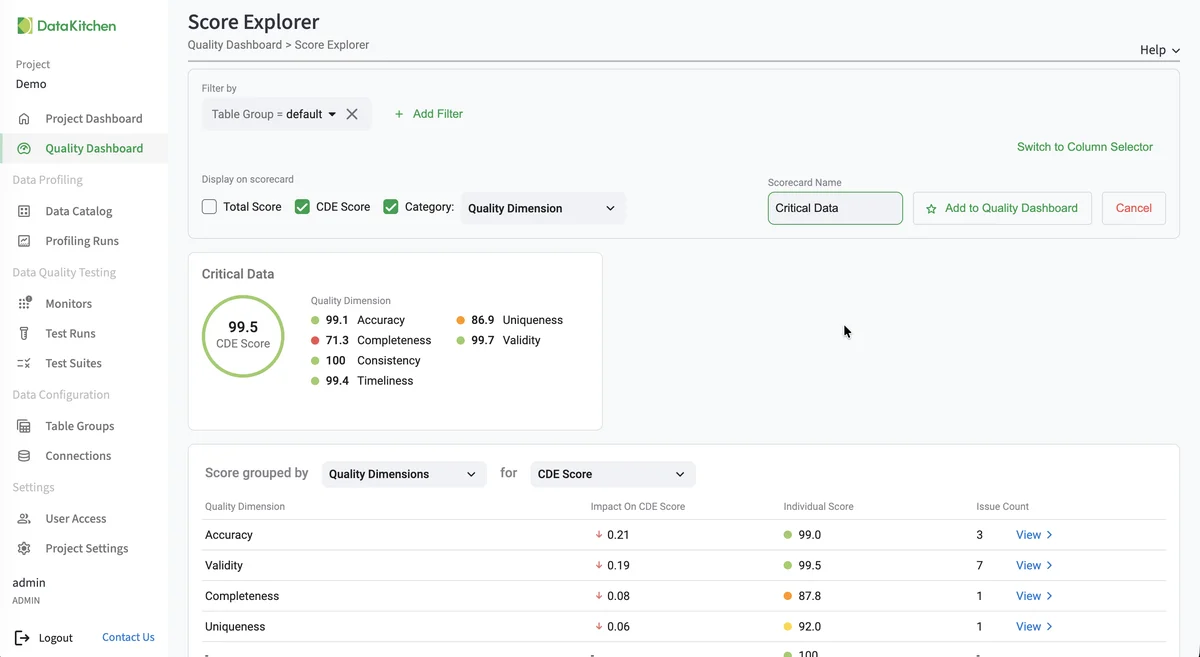
Quality Scoring (documentation, opens in a new tab)
Scorecards by dimension and Critical Data Element across the whole Microsoft stack.
-
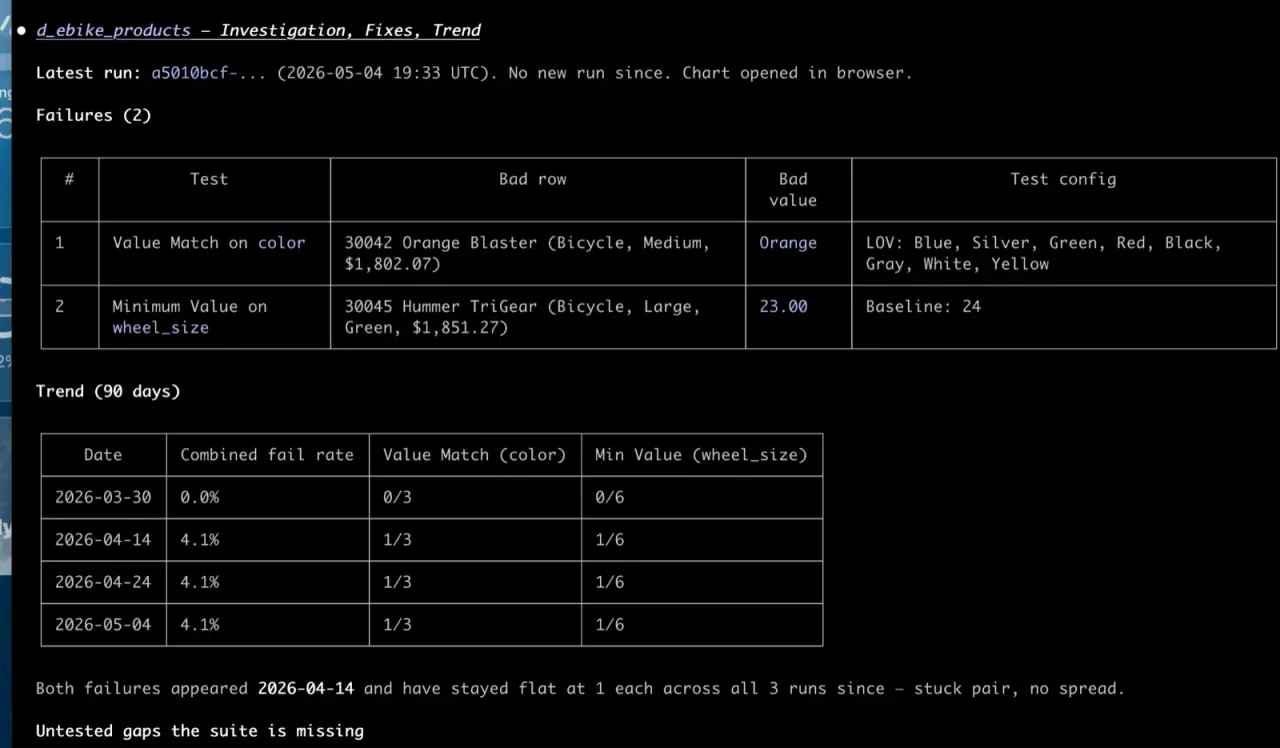
MCP Server (the TestGen MCP cheat sheet)
Ask an AI assistant what failed on any Microsoft source and see the rows behind it, through 112 MCP tools that run behind your firewall.
-
Open Source Core, UI Included
Free under Apache 2.0 for one connection. Enterprise adds as many Microsoft connections as you need at $100 each per month, plus team access, security and support.
From DataKitchen on the Microsoft data stack
-
 Blog
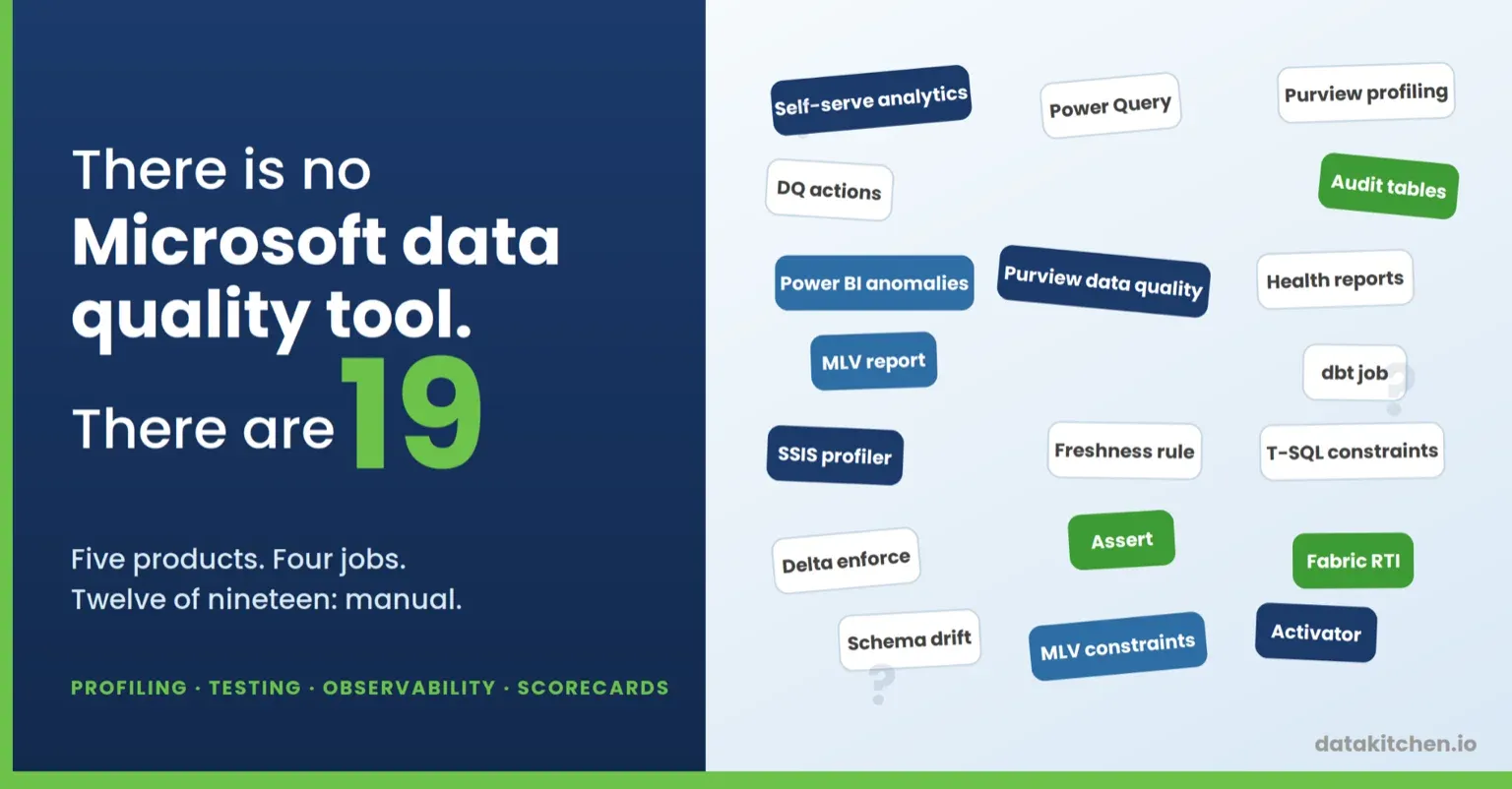
There Is No Microsoft Data Quality Tool in 2026. There Are Nineteen.
You went looking for the Microsoft data quality tool. There isn't one. There are nineteen features across five products, twelve of them manual, and they don't talk to…
- Answer
What is the best data quality tool for SQL Server?
The best SQL Server data quality tool profiles every column, generates tests, monitors freshness and volume, and runs read-only inside your own network.
- Answer
How do you validate a SQL Server to Microsoft Fabric migration?
Profile SQL Server before the move, run comparison tests on the Fabric warehouse or lakehouse after it, and sign off when every failure matches a planned change.
- Answer
Which SQL Server versions does TestGen support?
DataOps TestGen supports SQL Server 2019 and later, with SQL Server 2017 by request, plus Azure SQL Database, Azure Synapse, and Microsoft Fabric.
- Answer
Can you run a data quality tool on Windows next to SQL Server?
DataOps TestGen installs on Windows with dk-installer.exe, in Docker or without it, and tests SQL Server over the network with a read-only SQL login.
-
 Blog
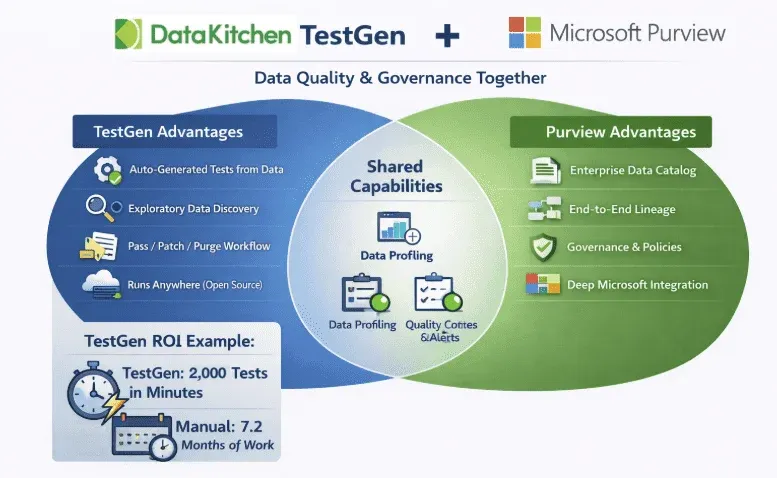
How TestGen Complements Microsoft Purview for Enterprise Data Quality
DataKitchen's TestGen and Microsoft's Purview complement each other: Purview serves as the governance and catalog "source of truth," while TestGen is the deep,…
Why teams choose TestGen
-
You Don't Have Time to Write Tests. TestGen Does It Automatically.
You're buried in customer requests. You have no time to write tests, let alone innovate. TestGen scans your data and generates the tests and anomaly detectors for you. No coding, no massive YAML configuration.
-
Microsoft gives you the platform. The tests are still on you.
TestGen profiles every column on every Microsoft source and writes the tests, so a SQL Server-to-Fabric migration starts and ends with the same checks.
See how TestGen works →
-
Runs inside your Microsoft databases
Tests run as read-only SQL where the data sits. Nothing is copied out, and nothing is written back.
-
Apache 2.0, core engine free
Every detector, every characteristic, and every test type but the 12 Commercial Pharma types. In the open source.
-
Self-hosted
Your data never leaves your environment.
-
Bootstrapped since 2013
Profitable, independent, and not pivoting next quarter.
Open Source with Reasonable Enterprise Pricing
Open source TestGen is free for one user, one project, and one database connection. Enterprise is a flat $100 per month per user and database connection, with unlimited tables and data volume. No per-table tax. A year of enterprise data quality costs roughly one data engineer's monthly salary.
See pricingTestGen versus the competition
Head-to-head comparisons with every major data quality and observability tool. Search for the one you are evaluating.
No vendors match. .
- Bristol Myers Squibb
- Eisai
- Catholic Relief Services
- Progeny Health
- X4
- KOA
- CNH
Questions
Which Microsoft data sources does TestGen support?
Microsoft SQL Server (2019 and later), Azure SQL Database, Azure Synapse Analytics, Microsoft Fabric and OneLake (Lakehouse and Warehouse tables), and CSV, Parquet and JSON files in Azure Blob Storage.
Does my data leave my environment?
No. TestGen is self-hosted and runs its queries inside your database. It keeps only computed results such as statistics, scores and test outcomes.
Does TestGen change anything in my database?
No. TestGen runs read-only SELECT queries to profile data, run tests and collect monitor metrics. It never runs INSERT, UPDATE, DELETE, CREATE, ALTER or DROP, and it stores only computed results (statistics, scores and test outcomes) in its own application database.
Which Microsoft page should I start with?
The one for the database you run today: SQL Server, Azure SQL, Synapse, Fabric or OneLake. The same install covers all of them.
Can one TestGen install test SQL Server and Fabric together?
Yes. Each is its own connection. The open source edition allows one connection; Enterprise allows as many as you pay for, at $100 per connection per month.
Is TestGen free?
The open source edition is free under Apache 2.0, for one user, one project and one connection, with every detector and test type except the Commercial Pharma tests. Enterprise is $100 per user per month plus $100 per database connection per month, with no per-table fees. See pricing.
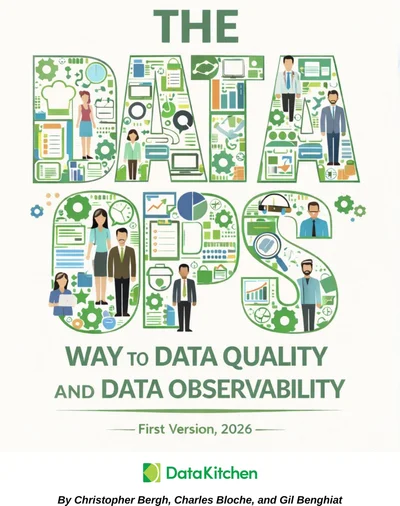
Free book
Not ready to try it out now? Read the free book.
The DataOps Way to Data Quality and Data Observability covers why data quality keeps failing and what to do about it: culture, testing strategy, monitoring, and the seven deadly sins of AI-generated pipelines.
- 620 pages
- 63 chapters
- Updated September 2026
- By Chris Bergh, Chip Bloche, and Gil Benghiat