Eckerson Group published DataOps Deep Dive: Different Approaches to the DataOps Platform in December 2020. Joe Hilleary wrote it. DataKitchen sponsored it, alongside DataOps.live, Zaloni, and Unravel.
The report is on this page, which is why the byline above is his and not ours. DataKitchen’s commentary comes first, so that our opinions and Eckerson’s research never sit in the same paragraph: every section between here and the horizontal rule is DataKitchen’s, and everything from the heading DataOps Deep Dive: Different Approaches to the DataOps Platform down to the end of About the Reprint Sponsor is Eckerson’s text, reproduced as written.
What this page is, and who wrote what
Eckerson Group researched, wrote, and owns DataOps Deep Dive. Joe Hilleary is its author, he was a research analyst at Eckerson Group when he wrote it, and it was published in December 2020. DataKitchen is one of four sponsors of the research, and the reprint’s own second page records what that sponsorship grants.
Eckerson Group’s rights statement, from the report’s About This Report page, verbatim:
To conduct research for this report, Eckerson Group interviewed numerous industry experts and practitioners. The report is sponsored by DataKitchen, DataOps.live, Zaloni, and Unravel who have exclusive permission to syndicate its content.
That permission is why the text is here rather than behind a form. The reprint carries no separate copyright line anywhere in its 17 pages, on the cover or elsewhere, so the paragraph above is its rights notice, and it is reproduced again in place further down.
Three things this page does not do. It does not rewrite Hilleary’s prose into DataKitchen’s voice. It does not present his conclusions as ours. And it does not present our commentary as his: the sections between here and the rule are DataKitchen’s argument about the report, and they are labelled that way.
Four notes on the transcription. The table of contents is dropped, its page numbers having no meaning in HTML. The line “This is an abridged version of the full report” is printed on five of the reprint’s pages and appears once here. The four capability diagrams are reproduced as images and also transcribed into a table, because a coloured wheel is not something a reader or an answer engine can quote. And the report’s own slips are kept as printed, including a missing “is to” in the first sentence about Kitchens and a missing “T” on “he platform” in About the Reprint Sponsor.
Our copy is the abridged reprint, not the whole report
This matters if you are using the report to shop. The reprint runs 17 pages and says on its own second page that it is an abridged version. It carries:
- Eckerson’s definition of DataOps and its four pillars.
- The data pipeline framework, and the framework diagram behind it.
- One paragraph placing each of the four vendors, with each vendor’s capability diagram.
- The full DataKitchen profile: background, customers, product, pricing, recommendation.
- The conclusion, with a recommendation for each of the four vendors.
What it does not carry is the full profile of DataOps.live, Zaloni, or Unravel. Those three sit only in the complete report, and the abridged cut is the DataKitchen-sponsored one, so DataKitchen is the vendor it describes in detail. Eckerson Group publishes the complete report on its own site, where all four profiles sit side by side, and there is a summary of it there too. Hilleary’s other work is on his Eckerson Group profile.
What has changed since 2020
Eckerson reviewed version 1.1.186 of a product called the DataKitchen DataOps Platform. If you go looking for that, you will not find it, and the honest thing to do with a dated analyst report is to say what it can no longer tell you.
- One product became three. DataOps TestGen does data quality validation and profiling. DataOps Observability watches data journeys end to end. DataOps Automation is the orchestration and environment work the 2020 platform led with, and its Kitchens and Recipes are still exactly what the report describes. Eckerson’s continuous testing and monitoring pillars are now separate products because customers wanted them separately.
- Two of the three are open source. TestGen and Observability were released as open source in 2024. An analyst report that prices a two-year enterprise subscription cannot describe a product you can install this afternoon for nothing.
- Every number in the report is a December 2020 number. That includes the pricing paragraph, which records the shape of the deal we sold then. The unmetered per-use-case model is the durable part of it. Our current pricing is published, including the free open-source tiers that did not exist in 2020.
- The category got crowded. Four platforms was a reasonable sample of the market in 2020. Our own 2026 count of the data quality and observability field runs to dozens of vendors, and we maintain head-to-head comparisons rather than ask anyone to take a 2020 landscape on faith.
- The four pillars held. This is the part worth keeping. CI/CD, orchestration, testing, and monitoring is still the checklist we would hand someone evaluating a DataOps tool, and it came from an analyst with no product to sell.
Two of the report’s arguments we have since written at length about ourselves. The gap it names between software testing and data testing is the whole case for writing tests into a data pipeline. And the distinction it draws in the DataKitchen profile, that development holds the data fixed while the code varies and production holds the code fixed while the data varies, is the one we made in DataOps is Not Just DevOps for Data.
NOTE
Eckerson Group has covered DataOps repeatedly, and four of their reports have pages here: the 2019 Trends in DataOps survey, The Ultimate Guide to DataOps, the Best Practices in DataOps report, and this one.
Where the original PDF lives
TIP
The reprint as Eckerson Group laid it out: DataOps Deep Dive: Different Approaches to the DataOps Platform (PDF, 17 pages, December 2020). Eckerson Group’s current research is at eckerson.com.
IMPORTANT
Everything below, from the report’s title through About the Reprint Sponsor, is Eckerson Group’s text. Joe Hilleary wrote it and Eckerson Group owns it. It is reproduced here under the syndication permission the report grants its four sponsors. DataKitchen’s commentary is above. There is one exception inside the report: a single note beside the 2020 price, labelled as ours, because a stale dollar figure is the one thing on this page a reader could mistake for current.
DataOps Deep Dive: Different Approaches to the DataOps Platform
By Joe Hilleary. December 2020. Custom reprint prepared for DataKitchen. Research sponsored by DataKitchen, DataOps.live, Zaloni, and Unravel.
About the Author
Joe Hilleary is a writer and a data enthusiast. He believes that we are living through a pivotal moment in the evolution of data technology and is dedicated to helping organizations find the best ways to leverage their information. With a background in both analytics and the liberal arts, he crafts clear, articulate narratives on technical topics that empower stakeholders to make informed decisions. Hilleary is a Research Analyst at Eckerson Group.
About This Report
To conduct research for this report, Eckerson Group interviewed numerous industry experts and practitioners. The report is sponsored by DataKitchen, DataOps.live, Zaloni, and Unravel who have exclusive permission to syndicate its content.
This is an abridged version of the full report. To read the complete report, click here.
Executive Summary
DataOps is an emerging methodology for building data analytics solutions. Drawing on DevOps and agile approaches to software development, it promises to reduce project times, decrease errors, reduce costs, and improve customer satisfaction. But just as DevOps requires a suite of tools to implement the methodology, so too does DataOps.
This report examines four leading DataOps platforms: DataKitchen, DataOps.live, Zaloni, and Unravel. It describes each product, highlights its key differentiators, and identifies target customers for each. From these profiles, readers will gain a better understanding of the range of DataOps offerings and discover which products are best suited to their needs.
Introduction
What is DataOps?
DataOps is an emerging methodology for developing and deploying data analytics solutions. Adapted from the DevOps and agile techniques for software development, DataOps takes a holistic approach to the people, processes, and technology required to build and automate data pipelines. It has four key pillars: continuous integration and deployment (CI/CD), orchestration, testing, and monitoring. These functions layer on top of the tools that make up data pipelines and help data teams deliver products faster, better, and cheaper.
Continuous Integration/Continuous Development. CI/CD requires a single source of truth for all the data and code that make up a pipeline. DataOps ensures that this source of truth remains untouched throughout the development process so pipelines already in production don’t break. With the source of truth safely housed in a central repository, team-based development becomes possible and developers can innovate without fear, reducing development cycle times.
Orchestration. Modern data pipelines are complex. Data passes through numerous tools and storage locations on its journey from source to target. As a result, a functional DataOps strategy requires an orchestrator. Orchestrators connect to all the tools in the data workflow and automate the end-to-end journey of the data. Automation frees up developers to build new pipelines and enables one engineer to manage hundreds of pipelines in production.
Testing. In the software world, nearly 50% of code and staff are dedicated to testing and quality. In the data world, 20% would be unusually high. DataOps seeks to change that. It encourages data engineers to bake tests into pipelines that check both data quality and pipeline functionality. The tests run during both development and production. Although these tests may seem like extra labor, test-first development saves time because the pipelines deliver higher quality data so engineers don’t have to constantly troubleshoot errors. And when pipelines do break, they are much easier to diagnose.
Monitoring. The final piece of the DataOps puzzle is monitoring the execution of code and data in production environments. Monitoring is critical for managing the underlying infrastructure of servers, CPUs, memory, and storage nodes that process data pipelines. It also aids in determining when and where bottlenecks and breakages occur. Finally, it helps engineers understand and optimize the impact of their pipelines on shared resources. These elements work in concert to improve performance, giving the team the information to optimize their pipeline execution. Monitoring is no easy feat in modern data ecosystems and, like orchestration, requires specialized tools that connect with and see across all of the component technologies. Once monitoring is in place, however, the increase in pipeline efficiency reduces overhead costs.
The Data Pipeline Framework
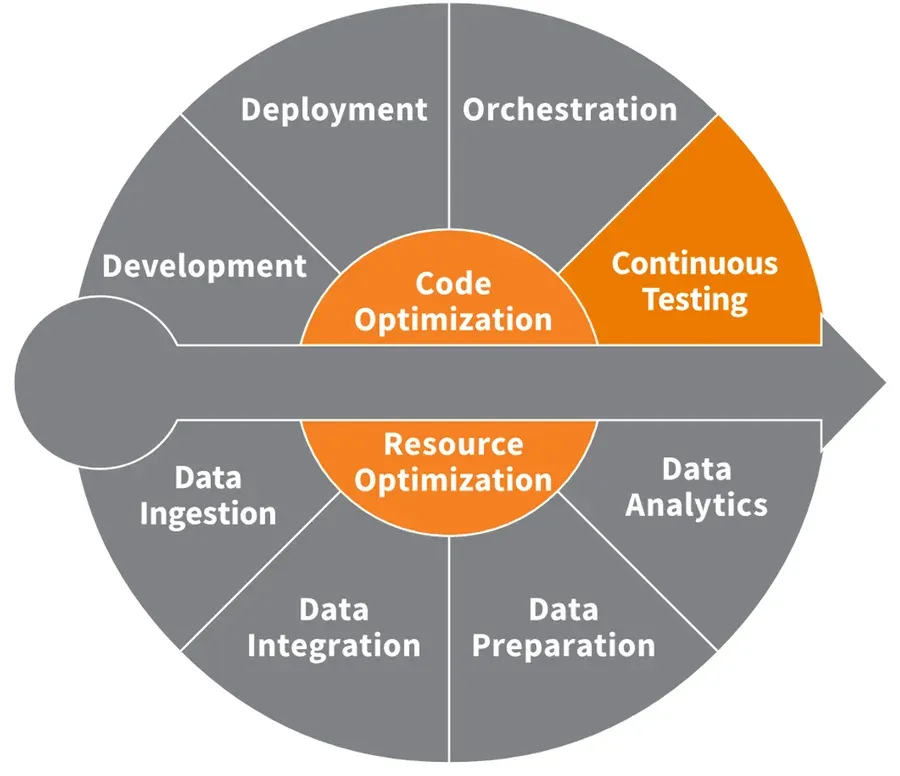
Eckerson Group uses the following framework to visualize the data pipeline within the DataOps paradigm. (See figure 1.)
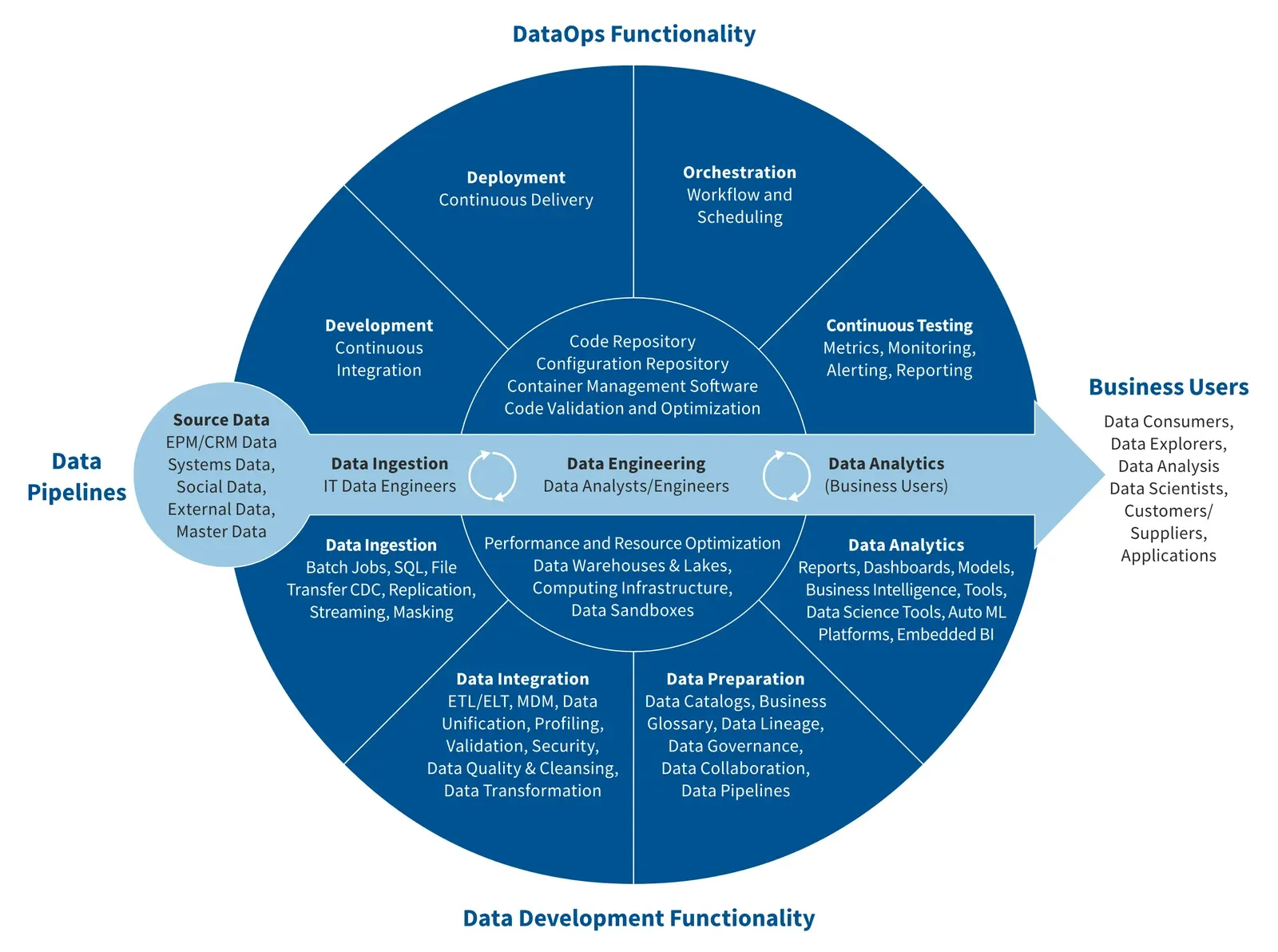
Figure 1. Data Pipeline Framework. Source: Joe Hilleary, DataOps Deep Dive, Eckerson Group, December 2020.
The pipeline itself runs from data sources to targets, passing through ingestion, engineering, and analysis on the way. The bottom half of the circle consists of the technologies used to build the data pipeline—including replication, ETL, data catalogs, data quality, lineage tracking, data science, and business intelligence (BI) tools. The top half represents the DataOps components used to manage and optimize the development and execution of data pipelines. Together they create a visual framework for modern data pipeline development.
Four Products, Four Approaches
This report profiles four DataOps products that take divergent approaches to implementing DataOps principles and practices. Our goal is to help you better understand the range of DataOps capabilities available in the market today and identify products or categories of solutions best suited to your organization’s needs.
The products come from four vendors: DataKitchen, DataOps.live, Zaloni, and Unravel. Each created a DataOps platform that facilitates key aspects of the DataOps methodology, but each takes a different approach, solves slightly different problems, and is geared to a slightly different target customer. Some provide both data development and DataOps functionality, while others offer purely the DataOps side. Most support all four pillars of DataOps (CI/CD, orchestrating, testing, and monitoring), but some specialize, focusing on a single pillar. Each vendor also possesses unique characteristics that further differentiate it from other tools in the same category of DataOps platforms.
Framework Key: fully supported, partially supported, not supported.
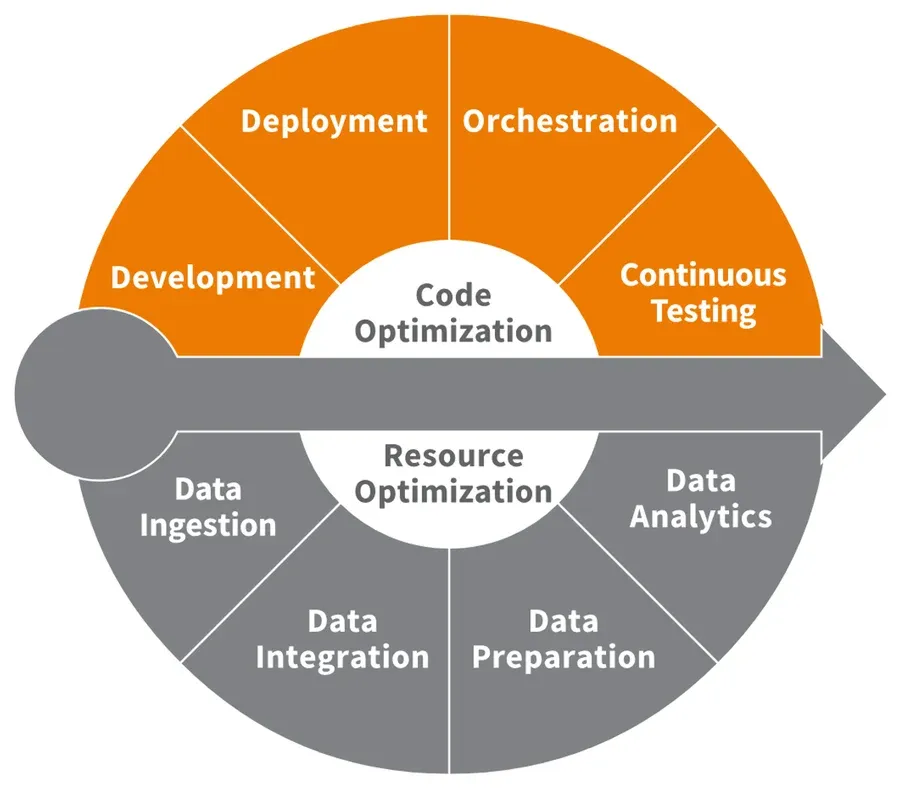
DataKitchen. For instance, the DataKitchen DataOps Platform focuses solely on the four key DataOps functionalities of orchestration, testing, CI/CD, and monitoring. It does not provide the components for a data pipeline. Instead, it layers DataOps functionality on top of existing data ecosystems. It serves as an overlay environment to existing data pipeline development tools—orchestrating jobs, managing development, building and running tests, and monitoring execution. Its target users have complex environments, are passionate about test-driven development, and want to continue using their current tools.
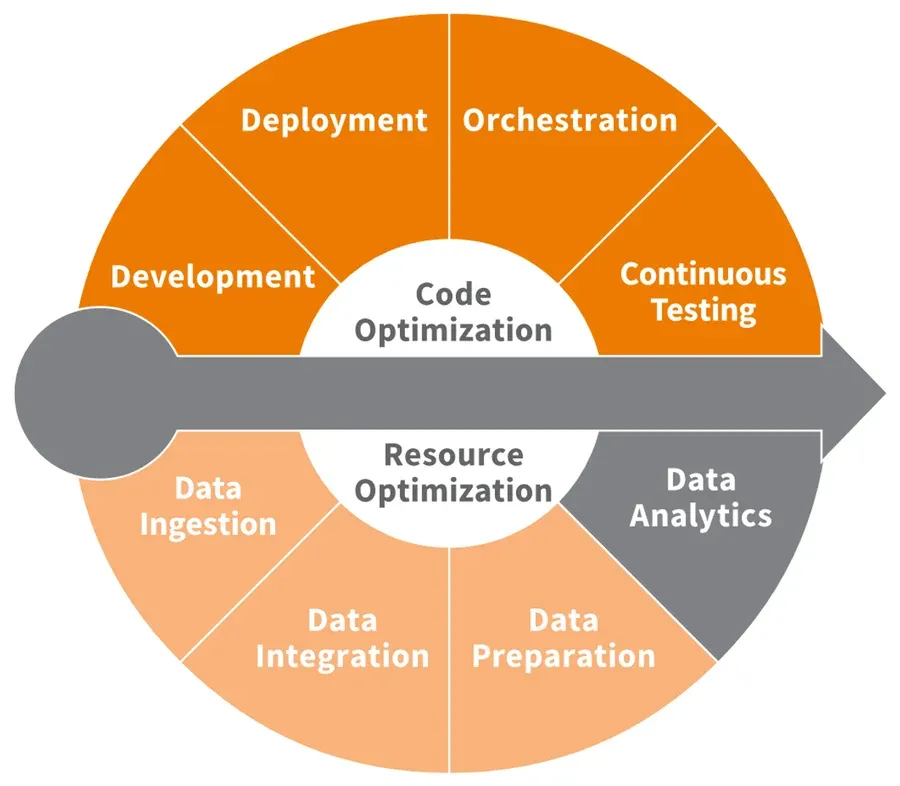
DataOps.live. DataOps.live represents more of a hybrid approach to the DataOps platform. It leads with DataOps orchestration functionality, but also provides select elements of the actual pipeline for ETL/ELT, modeling, and governance. DataOps.live has a novel approach to enabling CI/CD for data that allows for branching databases, and its in-house tools help users quickly move pipelines into production, but its current release is dependent on customers using Snowflake. It is well suited to users who want both orchestration and pipeline tools out of the box, and it delivers additional benefits for those who use machine-generated data thanks to proprietary compression technology.
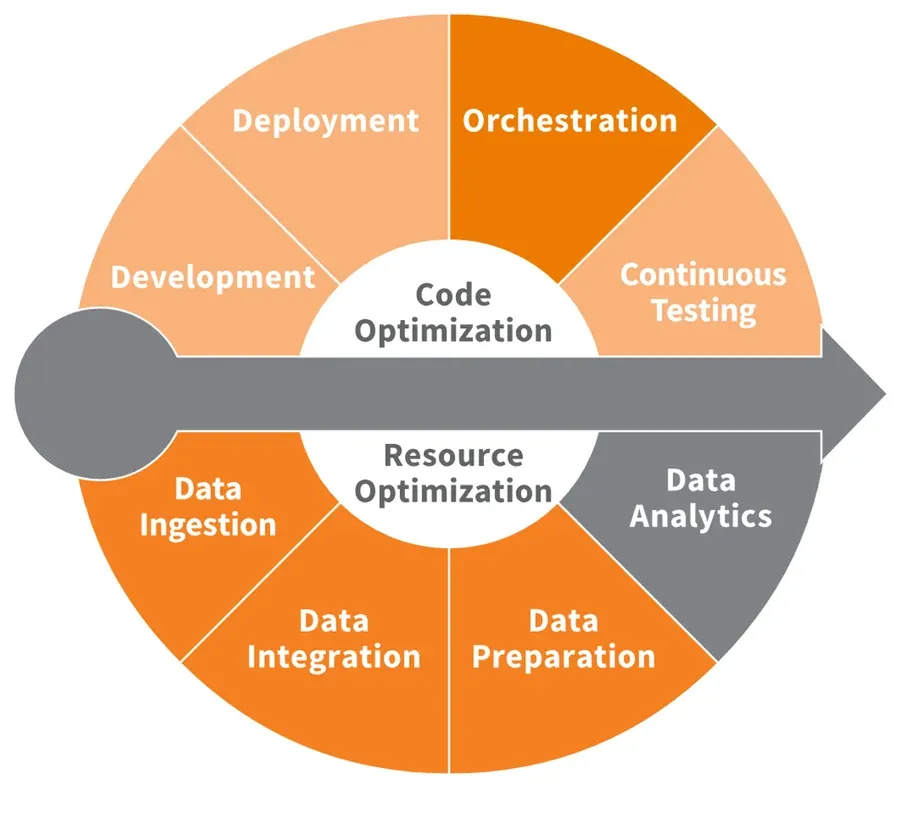
Zaloni. Zaloni’s Arena is an all-in-one enterprise development and execution environment with built-in DataOps features. While it can orchestrate other tools and provides the other necessary elements for DataOps, it focuses on delivering every component piece needed for the pipeline within a single platform. Arena provides a complete pipeline environment up to the point of analytics and is especially well adapted for companies with strict compliance and governance requirements.
Unravel. Unravel provides AI-driven monitoring and management to improve the performance, scalability, and reliability of data pipelines. It tunes and validates code and offers insights that improve testing, deployment, and resource optimization. Unravel is a great match for companies who are missing the observability, or monitoring, component of DataOps and want to focus on improving pipeline performance and the compute and memory efficiency of their data-driven applications across a complex data ecosystem.
While many other DataOps platforms exist, these four represent the major categories. The profiles below will delve further and provide details about the organization’s background and target customers, the product’s architecture, and the platform’s primary functionalities. Armed with a solid understanding of these offerings, you will be in a better position to vet any other DataOps products that interest you.
The four framework diagrams, as a table
The four diagrams above are Eckerson Group’s, and this table carries the same values as text so they can be read and quoted. Every cell is the state Eckerson filled that segment with, not a DataKitchen judgement.
| Framework segment | DataKitchen | DataOps.live | Zaloni | Unravel |
|---|---|---|---|---|
| Development (continuous integration) | Fully supported | Fully supported | Partially supported | Not supported |
| Deployment (continuous delivery) | Fully supported | Fully supported | Partially supported | Not supported |
| Orchestration (workflow and scheduling) | Fully supported | Fully supported | Fully supported | Not supported |
| Continuous testing (metrics, monitoring, alerting, reporting) | Fully supported | Fully supported | Partially supported | Fully supported |
| Code optimization | Not indicated | Not indicated | Not indicated | Fully supported |
| Resource optimization | Not indicated | Not indicated | Not indicated | Fully supported |
| Data ingestion | Not supported | Partially supported | Fully supported | Not supported |
| Data integration | Not supported | Partially supported | Fully supported | Not supported |
| Data preparation | Not supported | Partially supported | Fully supported | Not supported |
| Data analytics | Not supported | Not supported | Not supported | Not supported |
The report’s key defines three states: fully supported, partially supported, not supported. In three of the four diagrams the two hub segments, code optimization and resource optimization, are left uncoloured rather than given one of the three, so those six cells read as not indicated rather than as a guess.
DataKitchen
- Founded: 2013
- Product: DataOps Platform 1.1.186
- Initial Product Launch: 2016
- CEO: Christopher Bergh
Executive Summary
The DataKitchen DataOps Platform is a highly-extensible tool that helps organizations implement a DataOps strategy by providing a graphical interface for developing, updating, managing, monitoring, and testing data workflows. It orchestrates all the software products and scripts in end-to-end data environments and allows data engineers to schedule and embed tests at each step of the workflow, ensuring functionality and data quality both during development and production. It is a good match for larger companies that want to keep their existing suites of tools, but need a better way to manage the development process to increase speed of delivery and decrease error rates. The company is particularly service-oriented and distinguishes itself by helping data teams holistically transform their development and operations procedures through hands-on consulting.
Background
Company
CEO Christopher Bergh and co-founders Gil Benghiat and Eric Estabrooks spent careers leading software development teams before meeting at LeapFrogRx, a data analytics firm that served the healthcare industry. There, they were continuously frustrated by the existing methodology for developing data solutions. They identified three key issues—source data was often low-quality, business users were intolerant of errors or delays, and the data science team didn’t have the flexibility to innovate.
In response, they reimagined what data development could look like. Adopting techniques from the DevOps and agile methodologies, they honed a new development paradigm, which they called DataOps, borrowing a newly emerging industry term; wrote a manifesto; and started DataKitchen to evangelize their new approach.
In 2016, after several years as a professional services group, the company launched its flagship product: the DataKitchen DataOps Platform. The platform helps companies better develop and manage data pipelines and solutions. For DataKitchen, DataOps is more than a product—it’s a philosophy for transforming the data product development process.
DataKitchen currently has 41 employees, is profitable, and is growing rapidly. Its partners include tech companies such as IBM, Tamr, and Kinaesis, along with systems integrators including Capgemini, Wipro, and Cognizant.
Customers
DataKitchen’s target customer is a large company that wants to move from a waterfall-based development methodology to an iterative one. Many of DataKitchen’s current clients are pharmaceutical companies, including BMS and AstraZeneca, but it also has customers in other industries, like Catholic Relief Services.
According to Bergh, DataKitchen’s customers all exhibited the following characteristics:
- Slow delivery rates for building or changing data analytics solutions;
- High error rates; and
- A desire to transform team-based development processes.
The primary users fall into three categories. The first is the DataOps engineer. Like a DevOps engineer on a software development team, the DataOps engineer is a technical user who is focused on the process of building, changing, and managing workflows rather than writing code for the product itself. The platform helps them set up environments, manage integrations, and build workflows. The second user is a node writer, such as a data scientist or data engineer, who generates the code that runs within tools orchestrated by the platform. The platform gives these users a clear picture of how their part fits into the whole, facilitating better collaboration. The final core persona is the team manager who uses the reporting features of the platform to monitor their team’s development efficiency.
DataKitchen is a good match for companies that need a better way to manage workflow development and deployment but want to keep the tools they have. The platform generates many useful dashboards that measure the productivity of development teams and processes to help managers gauge the impact of adopting the DataOps methodology.
DataKitchen has worked hard to define the term DataOps and evangelize the practice. It has made a name for itself through its blog and other publications, which provide in-depth explanations of the DataOps philosophy and practices. These resources are an excellent starting point for anyone considering a DataOps transformation.
DataKitchen believes that software is just one of many critical success factors. It provides education and consulting services to help customers get started with DataOps and address the people, process, and operational issues required to succeed. This holistic approach to DataOps distinguishes DataKitchen from its competitors.
Product
The DataKitchen DataOps Platform provides functionality that spans the entire DataOps lifecycle:
- Deployment. Users can create new data workflows and migrate code across development, testing, and production environments.
- Execution. The platform executes these data workflows by orchestrating all software in an organization’s data analytics environment whether on premises or in the cloud.
- Management. The platform monitors the execution of data workflows, runs tests, and reports on the results.
Deployment
The first step for new users create workspaces called “Kitchens” for production, development, and any other environments These Kitchens isolate the environments, helping engineers avoid disrupting production while building new solutions. Once a new data solution is ready, users can automatically and continuously deploy it into production or another environment.
Within a Kitchen, the platform’s graphical interface allows users to construct visual workflows, which DataKitchen calls “Recipes.” These development or production workflows consist of nodes which represent code that acts on data inside the tools the data team already uses. For example, a node might execute data transformations or calls for a machine learning (ML) model. (See figure 2.)
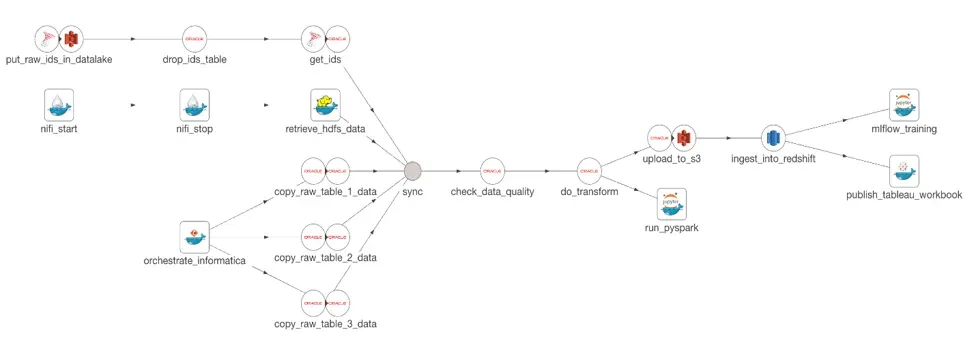
Figure 2. Sample DataKitchen “Recipe”. Source: Joe Hilleary, DataOps Deep Dive, Eckerson Group, December 2020.
The nodes can interface with anything from BI tools, ETL tools, or databases, to additional orchestrators. Data scientists can also upload their models from Jupyter notebooks or other development environments directly into nodes and the platform will store the code. Engineers can save commonly reused parts of the workflows as “Ingredients”— reusable bits of code that would otherwise be copy-and-pasted over and over again. Teams can easily share these Ingredients, saving data solution developers valuable time and increasing collaboration.
Once the user is satisfied with the workflow’s structure, they can write tests and embed them at each stage in the workflow. Tests are critical for DataKitchen, which believes at least 20% of a data team’s effort should be devoted to testing. These tests vary by domain and can involve everything from evaluating models to checking data quality. During development, the data is fixed and the code varies, while during production the code is fixed and the data varies, but in both instances, tests are vital for catching errors. As a result, the data team can deal with any errors in the data, the timing of the workflow, or the artifacts created from data such as models and dashboards before the solution reaches the end user.
Execution
With its orchestration capabilities, DataKitchen never touches the actual data. Instead, it directs the tools that do, allowing users to manage every step of the process from source to customer in one place. When a data workflow runs, DataKitchen uses an agent to push code, configurations, and tasks to the appropriate tools at the appropriate times and receive run information in return. These agents sit in Kubernetes clusters in the cloud or on premises, enabling the platform to work across hybrid environments. This feature is a boon to organizations that manage production, testing, and development in different environments or have teams operating on different clouds.
The platform sits in DataKitchen’s own cloud and acts as a hub for all the agents, with which it communicates constantly. Despite this continual back-and-forth, the data itself never enters DataKitchen’s cloud and remains in the user’s environment at all times. The workflows, along with any uploaded code, are stored in Git, the results in MongoDB, and any keys or passwords are stored in a secrets vault, all of which again can be on premises or in the customer’s cloud environment. (See figure 3.)
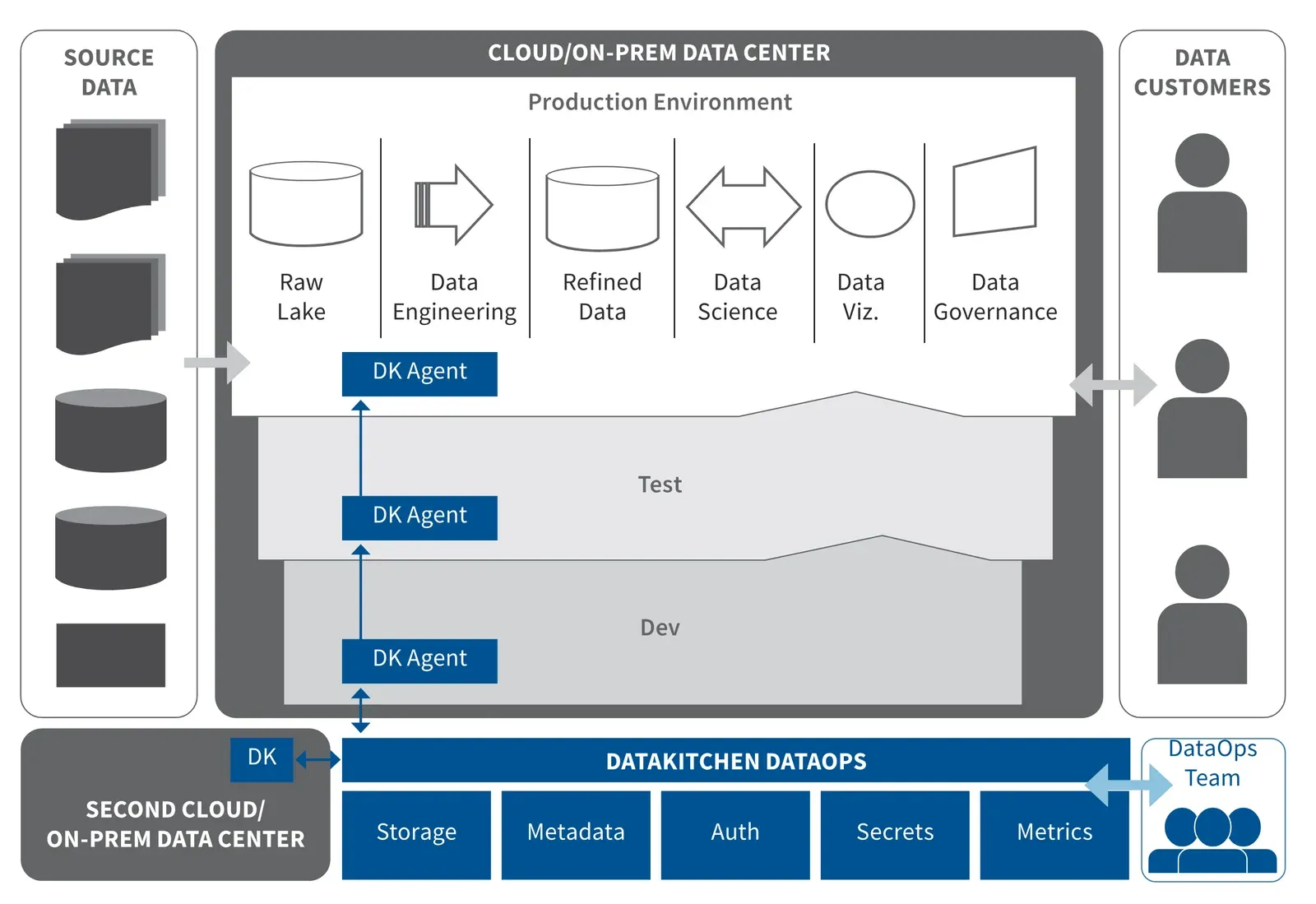
Figure 3. DataKitchen Architecture. Source: Joe Hilleary, DataOps Deep Dive, Eckerson Group, December 2020.
Management
When a user runs the workflow, the DataKitchen DataOps Platform extracts test and log data via APIs. This information allows it to keep track of data quality and workflow functionality despite its lack of direct contact with the data. Any tests the user has written into the workflow trigger automatically, and the results are reported back to a dashboard. The visibility of these metrics makes it easier to track how changes in the development process actually affect the quality of the data solution. After all, you can’t manage what you can’t measure.
Pricing
The default DataKitchen package is a two-year subscription. Customers are charged an average of $150,000 per year per “use-case,” which is a project, team, or application (depending on the company’s structure). Within a given use-case, there are no additional limits on usage—in contrast to other products that charge by user, cores, machines, or data volume.
NOTE
DataKitchen’s note, not Eckerson’s: the figure in the paragraph above is a December 2020 number and is not our current pricing. The unmetered per-use-case shape is the durable part. Current pricing is published, including the free open-source tiers that did not exist in 2020.
Recommendation
DataKitchen sells more than software. It offers a methodology designed to help data teams transform the way they build data workflows. Its target customers are companies that are tired of band-aid solutions and are ready to fundamentally change their operating principles.
DataKitchen is ideal for customers that:
- Have a complicated data analytics environment.
- Would like to keep using their existing tools.
- Struggle with poor data quality and slow data delivery times.
- Want additional consulting services to help implement a holistic DataOps strategy.
Conclusion
DataOps is a new practice that is gaining adoption as organizations recognize the importance of transitioning from artisanal- to industrial-scale processes for developing and running data pipelines. DataOps enables organizations to evolve from slow, one-off development efforts to a team-based development approach that can build, change, and manage thousands of pipelines with high speed and accuracy.
We’re still in the early years of DataOps, but the shape of DataOps platforms is moving out of the shadows into the clear light of day. This report outlines four approaches to DataOps using leading DataOps vendors as examples. The first exclusively provides the four DataOps pillars of orchestration, testing, CI/CD, and monitoring. This category of products focuses on wide extensibility and layers DataOps functions onto complex data ecosystems. The second group is a hybrid class of platforms. These tools lead with DataOps but also provide select elements of the actual data pipeline. The third is the all-in-one enterprise development and execution environment with built-in DataOps features. This type of product natively provides all the pieces of a data pipeline within a single platform and then layers some DataOps functionality on top. The final classification showcased in this report is the niche player which specializes in a select element of the DataOps methodology and provides best-in-breed functionality for that component.
Recommendations
- DataKitchen is an excellent option if you have a complicated data ecosystem and just want to layer DataOps functions on top of your existing development toolset. It’s also a good fit for companies that are passionate about a test-driven development strategy.
- DataOps.live is a great choice for companies that need orchestration of complex data pipelines around Snowflake, especially if they rely on a lot of IoT data. Its hybrid approach means you can use native development and testing tools for some data pipeline processes, and orchestrate any 3rd party tools as required.
- Zaloni is ideal for companies that want to consolidate their data landscapes by using an all-in-one enterprise development and execution environment with built-in DataOps functionality. Its security and governance features are also beneficial for organizations with lots of regulatory and governance requirements.
- Unravel, as a specialist tool focusing on monitoring, is an excellent choice for organizations that want to add the monitoring capability component to their DataOps strategy but have complex, high-volume data environments—be they on-premise, hybrid, or in to the cloud. It provides insights from across the full stack of modern data applications and is especially helpful during cloud migrations.
About Eckerson Group
Wayne Eckerson, a globally-known author, speaker, and advisor, formed Eckerson Group to help organizations get more value from data and analytics. His goal is to provide organizations with expert guidance during every step of their data journey.
Today, Eckerson Group helps organizations in three ways:
- Our thought leaders publish practical, compelling content that keeps you abreast of the latest trends, techniques, and tools in the field.
- Our consultants listen carefully to craft tailored solutions that translate your business requirements into compelling strategies and solutions.
- Our advisors provide one-on-one coaching and mentoring to data leaders and help software vendors develop go-to-market strategies.
Eckerson Group is a global thought leader that helps organizations get more value from their data. Our research and consulting experts think critically, write clearly, and present persuasively about data and analytics. They specialize in data strategy, data architecture, data management, data governance, data science, and data analytics. Organizations rely on them to demystify data and analytics and develop business-driven strategies that harness the power of data.
Our clients say we are hard-working, insightful, and humble. It all stems from our love of data and our desire to help you get more value from your data. We see ourselves as a family of continuous learners, interpreting the world of data and analytics for you.
Get more value from your data. Put an expert on your side. Learn what Eckerson Group can do for you!
About the Reprint Sponsor
DataKitchen’s mission is to make DataOps happen in the world.
DataKitchen’s DataOps Platform simplifies complex toolchains, environments, and teams, so your entire data analytics organization can quickly innovate, seamlessly collaborate, and instantly deliver the kind of error-free, on-demand insight that leads to one successful business decision after another. he platform automates the key functions of a DataOps program—orchestration, testing, monitoring, environment creation and management, and deployment of new analytics. Process metrics provide unprecedented visibility into the state of your data operations.
Yet, a DataOps transformation involves more than just tools and technology. DataKitchen’s DataOps Transformation Advisory Service helps organizations plan and execute the other critical elements of a DataOps program - people and process—that ensure DataOps success.
With DataKitchen by your side, you and your team can stop worrying about everything that went wrong and start winning respect and appreciation for everything that goes right.
FAQ
What are the key points in this blog?
This page carries the text of Eckerson Group’s December 2020 report DataOps Deep Dive: Different Approaches to the DataOps Platform, written by analyst Joe Hilleary and sponsored by DataKitchen, DataOps.live, Zaloni, and Unravel. It defines a DataOps platform by four pillars, CI/CD, orchestration, testing, and monitoring, and separates four products by how much of the data pipeline each supplies itself. DataKitchen’s commentary sits above it, separately headed.
Who wrote the Eckerson Group DataOps Deep Dive report?
Joe Hilleary, then a research analyst at Eckerson Group, wrote it, and Eckerson Group published it in December 2020. Eckerson Group is the research and consulting firm founded by Wayne Eckerson. Four vendors sponsored the research and, in the report’s own words, have exclusive permission to syndicate its content: DataKitchen, DataOps.live, Zaloni, and Unravel.
Why is Eckerson Group’s report published on a DataKitchen page?
Because the report grants it. Page two states that DataKitchen, DataOps.live, Zaloni, and Unravel have exclusive permission to syndicate its content, and DataKitchen is one of the four. Eckerson Group wrote the report and owns it, its rights statement is reproduced with the text, and none of its prose has been rewritten.
Is this the complete DataOps Deep Dive report?
No. The copy DataKitchen distributes is the abridged custom reprint, 17 pages. It carries Eckerson’s DataOps definition, the pipeline framework, one paragraph placing each of the four vendors, the full DataKitchen profile, and the conclusion. The full profiles of DataOps.live, Zaloni, and Unravel are only in the complete report, which Eckerson Group publishes itself.
What are the four pillars of a DataOps platform?
Eckerson Group’s 2020 definition names continuous integration and deployment, orchestration, testing, and monitoring. CI/CD keeps a single source of truth for the data and code in a pipeline so pipelines already in production do not break during development. Orchestration connects every tool in the workflow and automates the end-to-end journey. Testing checks data quality and pipeline functionality. Monitoring watches execution in production.
Is the 2020 DataOps Deep Dive report still accurate about DataKitchen?
Its judgement holds and its product details do not. Eckerson reviewed version 1.1.186 of a single DataKitchen DataOps Platform. That is now three products: DataOps TestGen, DataOps Observability, and DataOps Automation, with TestGen and Observability released as open source in 2024. Every number in the report is a December 2020 number, current pricing included.