You run commercial analytics at a pharma company. Somewhere in your budget is a line for 20, 40, maybe 80 offshore developers. They write the ETL. They fix the ETL when the Veeva feed changes. They work a ticket queue that never gets shorter. You pay by the hour, and the hours never go down.
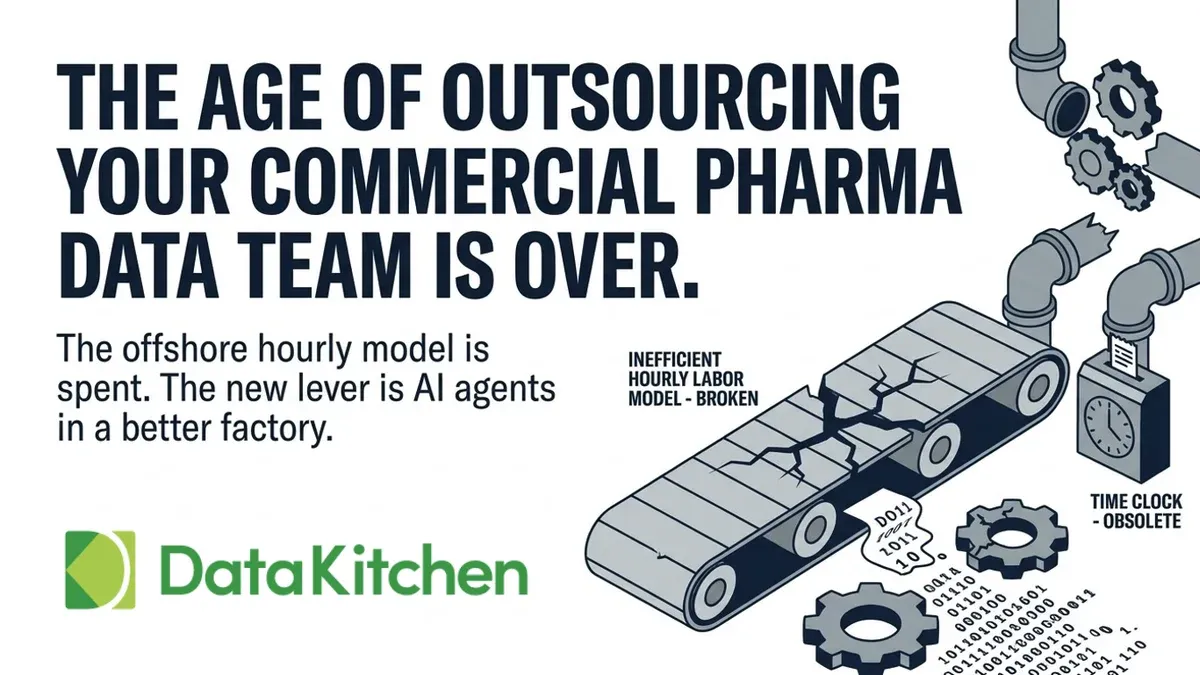
For ten years, the only lever you had on that line was the hourly rate. Cheaper workers on the same assembly line. That lever is spent.
Commercial pharma data engineering has had three ages: insource, outsource, and now agents. The first two argued about who wrote the code and what an hour of them cost. The third one changes the math. When the worker costs almost nothing, the only lever left is the factory the worker stands on. AI lets you do more. DataOps automation makes it cost less. Together they cut commercial data engineering labor by 70% or more, and the work comes out with fewer errors than the offshore team ever produced.
Agents in an automated factory
The first age was insource. In 2006, you built in-house. A team in Princeton or Cambridge wrote SQL by hand, loaded the IQVIA files on a schedule, and hoped the numbers matched what the field saw. Expensive and slow, but yours.
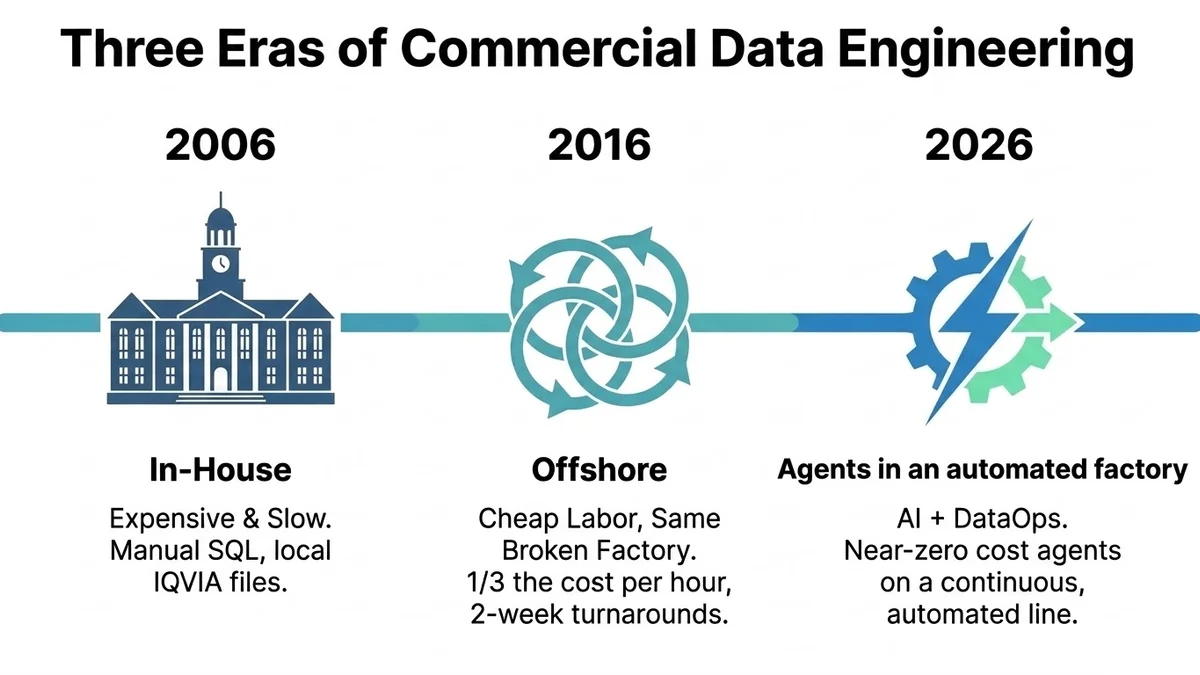
The second age was outsource. In 2016 you sent that work offshore. The math was simple. A developer in Hyderabad cost a third of a developer in New Jersey, so you bought hours in bulk. You also bought time zones, handoffs, requirements documents nobody read, and a two-week turnaround on a one-line change. The factory didn’t change. You just paid less per hour to run it.
The third age is agents, and it is the one that changes the math. In 2026, the focus finally lands on the factory. AI agents took the cost of the workers, the people writing the code, to near zero. But a worker who costs almost nothing is only as productive as the line they stand on. Put an agent on the 2016 assembly line, and you get cheap code stuck behind the same manual deploys, the same ticket queue, the same 7am forensics, and a human reviewer who is now the slowest station on the floor. Put that agent on an automated line, where DataOps runs the code, tests it at every step, and catches it when it breaks, and the two multiply. Near-zero-cost workers on a line that never stops for a handoff. That is where the productivity comes from, and it’s a very different headcount. The first two ages moved the price of an hour. This one removes the hours.
Cheaper workers vs. a better factory
Think about where the money actually goes. Coding is a small slice. The bulk is the manual work around the code. Gathering requirements. Translating them into a spec. Waiting for review. Pushing to production by hand. Finding out at 7am that the weekly claims file had 40% fewer rows. Tracking down who changed what, fixing it, re-running it, and explaining it to the brand lead.
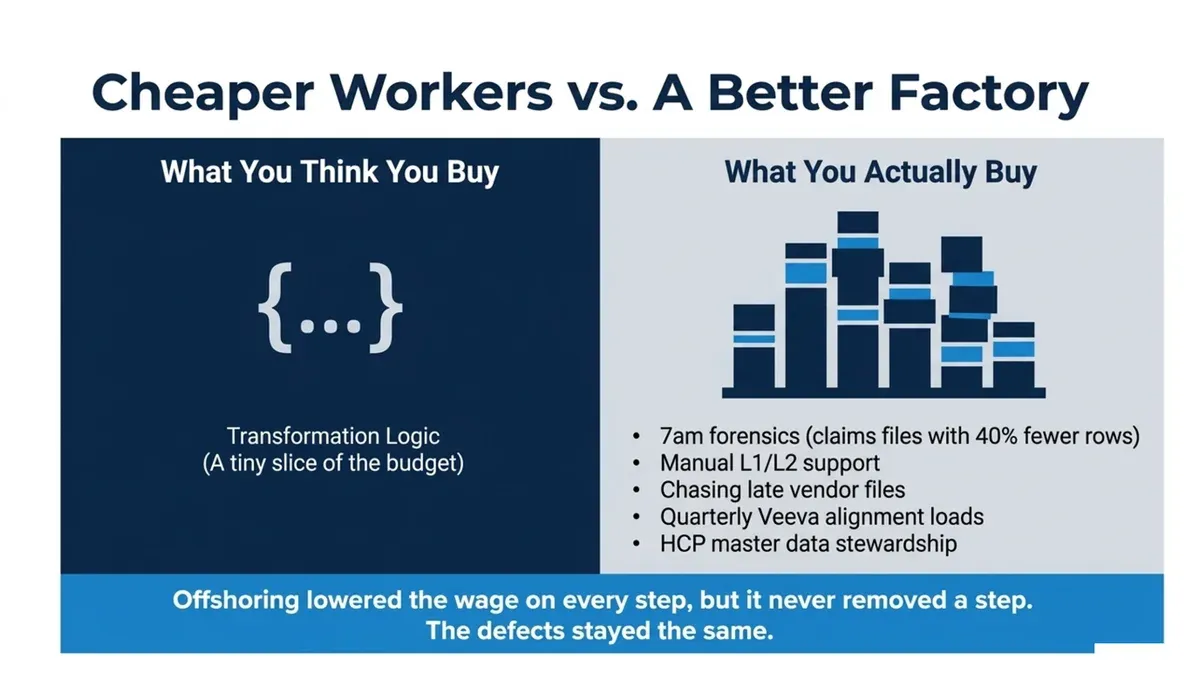
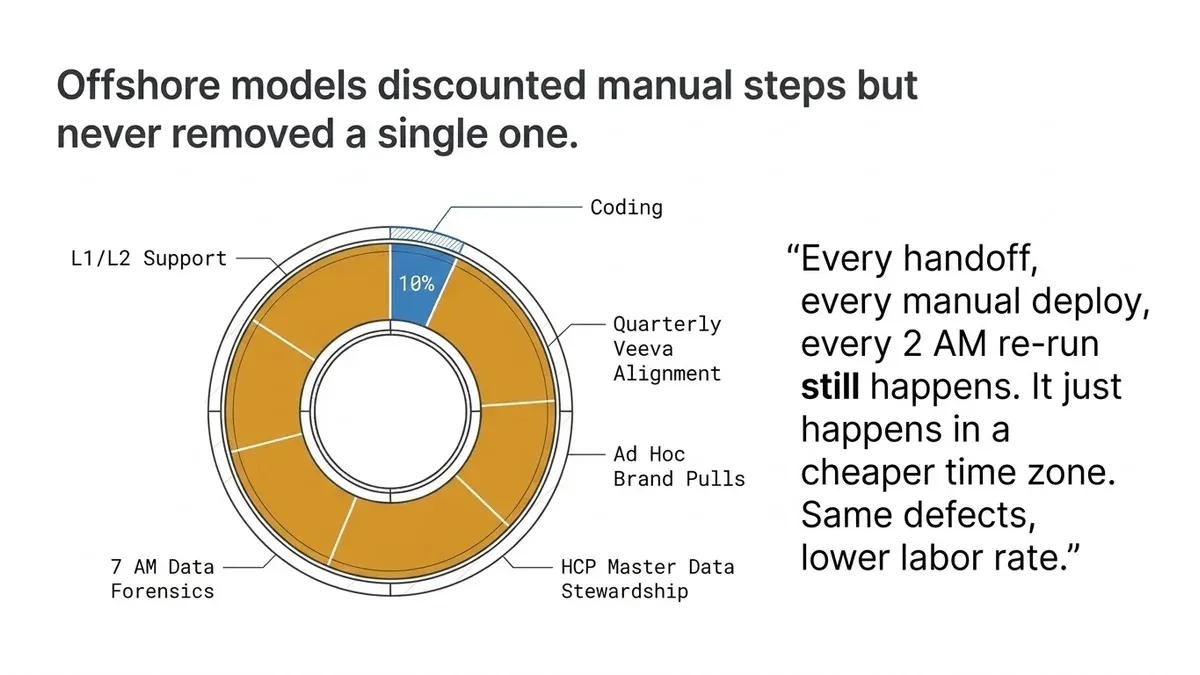
Look at what your offshore hours actually buy, and half of it isn’t code at all. L1 and L2 support. Chasing the vendor about a late file. The quarterly Veeva alignment load. Ad hoc pulls for the brand team the night before a business review. HCP master data stewardship. Offshoring attacked all of that by lowering wages at every step. It never removed a step. Every handoff, every manual deploy, every 2am re-run still happened. It just happened in a cheaper time zone. That’s why quality never improved. Same assembly line, same defects, lower labor rate. The savings were an illusion. You paid less per hour to do the same number of hours.
AI takes the coding cost to near zero
A data engineer with a good coding agent can produce a week’s worth of transformation logic in an afternoon. You already know this.
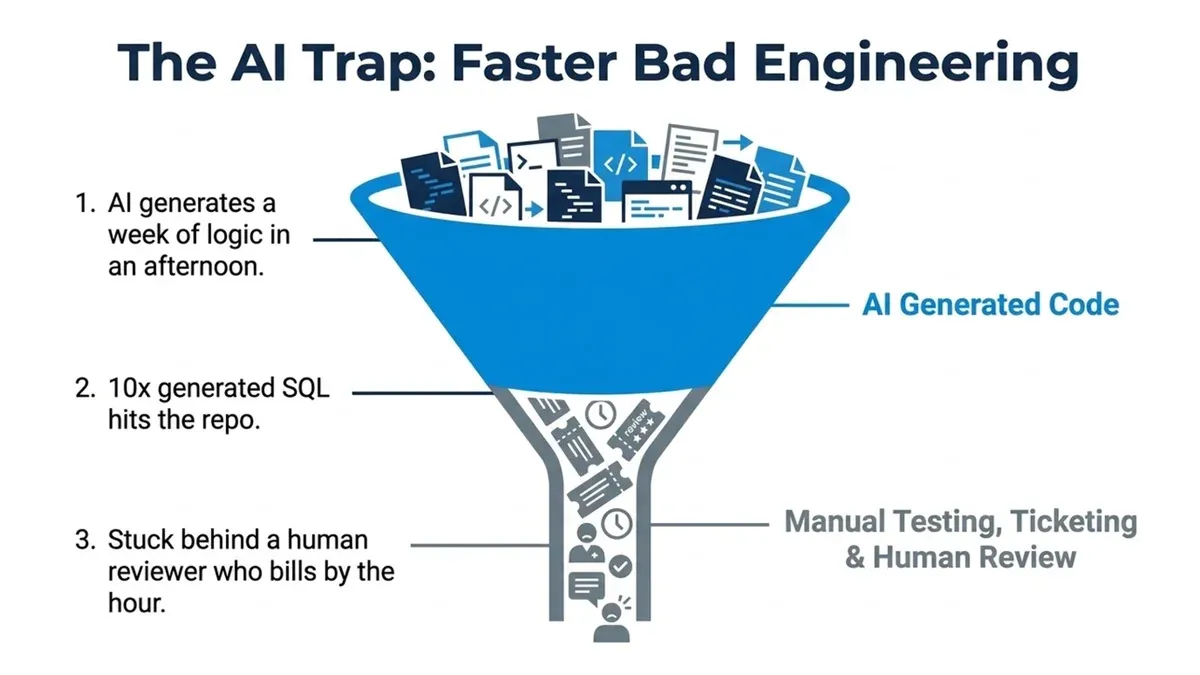
Here’s the trap. AI alone speeds up one station on the line, leaving the rest untouched. Your offshore partner will happily sell you “AI-enabled” developers who still bill by the hour and still file tickets. The output goes up. The overhead doesn’t move.
We put it this way in Where to Actually Start with DataOps in 2026: AI didn’t change what good data engineering means. It changed how fast bad data engineering happens. Four quarters after the agents show up, a typical repo holds about 10 times as much generated SQL as before, yet sits behind the same handful of tests. Everything in that gap was written without a check. Even teams with idempotent loads and clean review habits can’t read code faster than an agent writes it. That’s a faster line producing more defects, billed at whatever rate you negotiated.
Build an automated factory with AI agents as the workers
DataOps rebuilds the rest of the line so the faster station doesn’t flood the ones behind it. Every pipeline runs with tests on every table at every step. Freshness, row counts, schema drift, business rules, all checked automatically on every run. The difference from a monitoring tool is where the tests run: in CI, before the merge, against yesterday’s data, so a fanned-out join fails the build instead of the Monday dashboard. Deployments are versioned and automated. When a vendor changes a feed, the test fails before the report does. Change control still exists, but it approves within an hour rather than a week because the regression suite has already answered the question the CAB would have asked. Nobody files a ticket. Nobody waits for the morning standup in Bangalore.
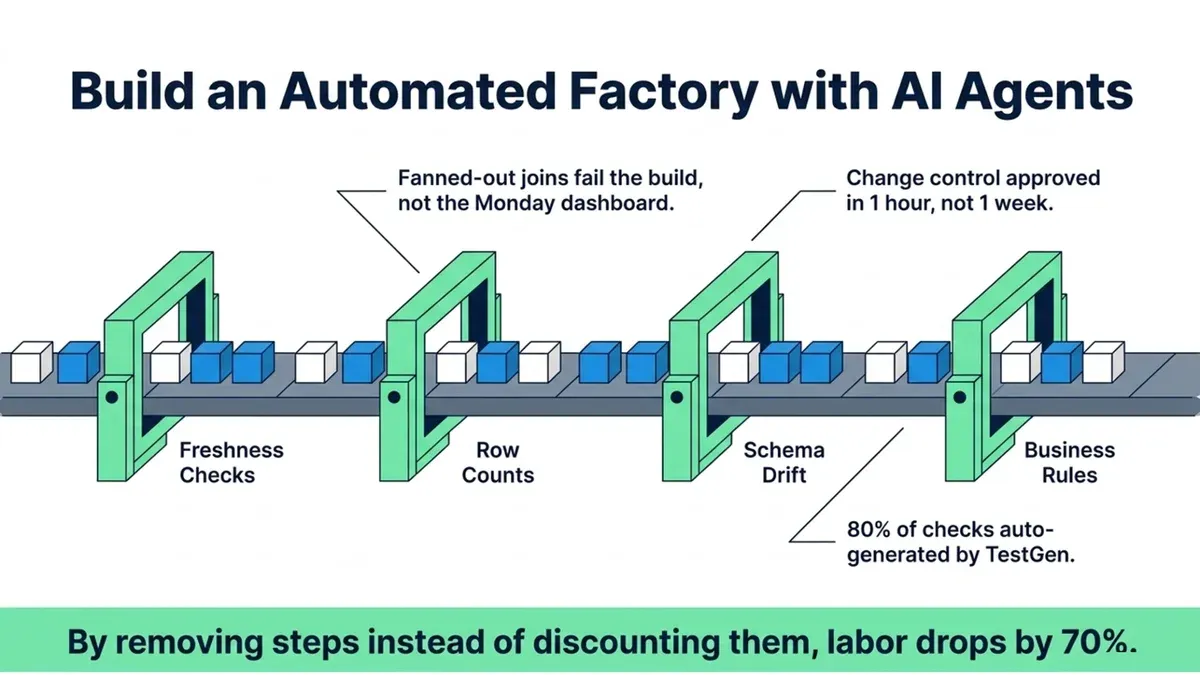
Requirements change shape too. Instead of a 40-page spec that goes stale the day it’s signed, you get acceptance tests that run forever. When sales ops says “a rep can’t hold two territories in the same week,” that becomes a test. When the IC analyst says “samples don’t count toward quota,” that becomes a test. TestGen profiles the data and generates about 80% of the checks. Your engineers write the 20% that encodes the business logic no profiler can infer, and that 20% is where the institutional knowledge that used to live in a contractor’s head now lives in your repo.
So the coding cost approaches zero. The production overhead approaches zero. The requirements cost drops hard. Stewardship and the odd ad hoc pull still take a human, and that human should be one of yours. What’s left is a small team of people who understand your brands, your data vendors, your field force, and your launch calendar. Somebody has to run the factory, own the test suite, and stop doing forensics, and that somebody is the manager who used to run the ticket queue. The savings come from removing steps, not discounting them. That’s the 70%.
The Indian outsourcers already know their time is closing
Don’t take our word for it. Watch the outsourcing industry. In June, Harvard Business Review argued that generative AI is eroding the labor arbitrage model that built the offshore business, with IT services the most exposed. Quartz reported that clients are reopening multi-year contracts within two years of signing because AI changed the economics mid-deal. Tata Consultancy Services now runs about 80% of its BPO contracts on outcome-based pricing, double the share since 2023. Infosys shed more than 8,000 workers in a single quarter, even as revenue grew.
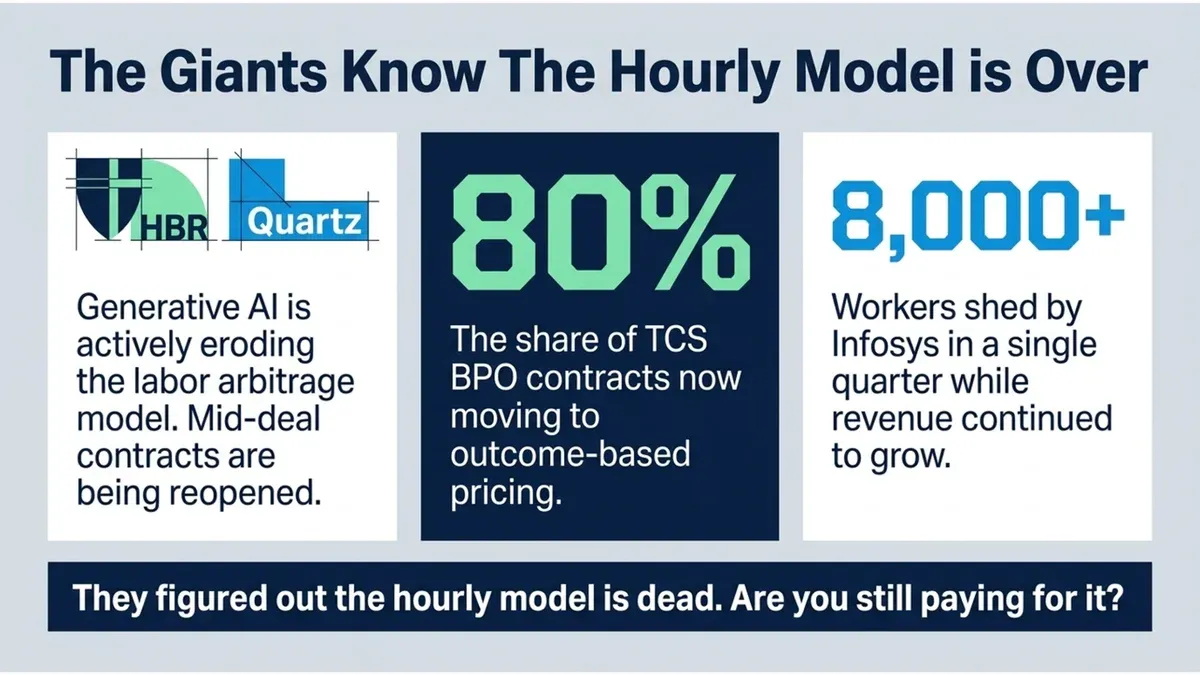
The giants are booking bigger profits with fewer people. They figured out the hourly model was over. The question is whether you’re still paying for it.
We have run commercial data teams this way for years, and the evidence is public
One small biotech cut its data bill by two-thirds when we replaced what they had. One and a half of our engineers built and ran the launch data platform for Cobenfy, and BMS bought the company for $14 billion. Three of our customers have been acquired for nearly $100 billion combined.
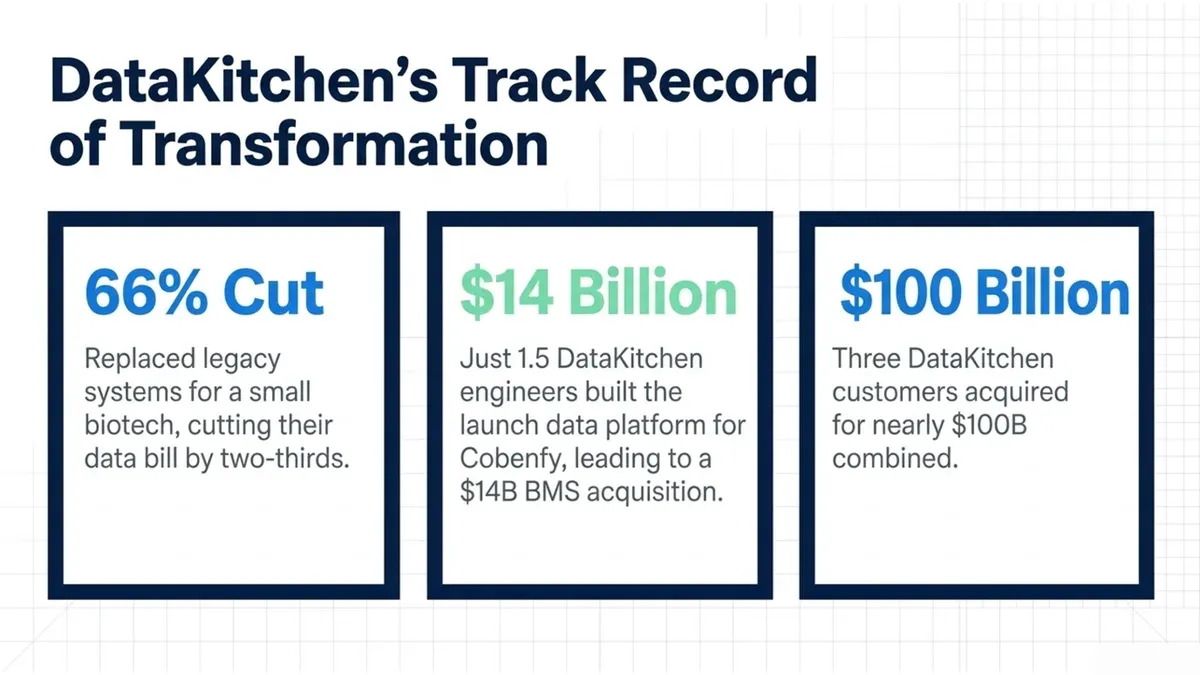
If you’re pre-launch and watching cash, this matters more. Every dollar going to offshore hours is a dollar not going to the launch.
| Resource | What it is | Reach for it when |
|---|---|---|
| Cut your commercial data costs | Web page | You want the take-over-and-run model priced out, and the quality argument beside it |
| We Have a Cadillac, We Need a Corolla | Customer story | You want the two-thirds cost cut line by line, including what got deleted |
| Hoarding cash before the FDA gate opens? | Blog post | Your launch is 12 to 24 months out and the data bill is the line you can move |
FAQ
What are the key points in this blog?
Offshoring commercial pharma data work lowered the wage on every step of the pipeline and never removed a step, so quality never improved. AI agents now write the code at near-zero cost, but on a manual assembly line that only produces defects faster. DataOps automation rebuilds the line with tests on every table, automated deployments, and change control that approves in an hour. Removing steps instead of discounting them cuts commercial data engineering labor by 70% or more.
What are the ages of commercial pharma data engineering?
Three: insource, outsource, and now agents. In 2006 you built in-house: a Princeton or Cambridge team wrote SQL by hand and loaded IQVIA files, slow but yours. In 2016 you sent the work offshore, buying Hyderabad hours at a third of the New Jersey rate plus handoffs and two-week turnarounds. In 2026 AI agents write the code and DataOps automation tests, deploys, and runs it. The first two ages moved the price of an hour. The third removes the hours.
Why did offshoring a commercial pharma data team never improve quality?
Because offshoring changed the labor rate, not the process. Coding is a small slice of what offshore hours buy. The rest is L1 and L2 support, chasing a vendor about a late file, the quarterly Veeva alignment load, ad hoc pulls for the brand team, HCP master data stewardship, and 7am forensics when the weekly claims file arrives with 40% fewer rows. Every handoff and every manual re-run still happened, in a cheaper time zone. Same defects, lower rate.
Can AI alone replace an offshore data engineering team?
No. A coding agent takes the cost of writing transformation logic to near zero, and a data engineer with one can produce a week of SQL in an afternoon. But AI speeds up one station on the line. The code still waits on manual deploys, a ticket queue, and a human reviewer who bills by the hour. Four quarters after the agents arrive, a typical repo holds about 10 times as much generated SQL behind the same handful of tests.
How does DataOps automation cut commercial data engineering labor by 70%?
By removing steps rather than discounting them. Every pipeline runs tests on every table at every step, covering freshness, row counts, schema drift, and business rules, in CI before the merge. Deployments are versioned and automated, and change control approves in an hour because the regression suite already answered its questions. DataOps TestGen generates about 80% of the checks and your engineers write the 20% that encodes business logic. In DataKitchen’s commercial pharma engagements that combination cuts data engineering labor by 70% or more.
Is the offshore hourly outsourcing model ending?
The outsourcers are acting like it is. In June 2026 Harvard Business Review argued that generative AI is eroding the labor arbitrage model behind offshore IT services. Quartz reported clients reopening multi-year contracts within two years of signing. About 80% of Tata Consultancy Services BPO contracts now run on outcome-based pricing, double the 2023 share, and Infosys cut headcount by 8,440 in the quarter ending March 2026 while revenue grew.